

J-PARC Project Newsletter No.103, July dispatch
★☆-------------------------------------------------------------------------------------------------
J-PARC Project Newsletter
No.103, July 2026
Japan Proton Accelerator Research Complex under joint operation by the
High Energy Accelerator Research Organization (KEK) and the Japan Atomic
Energy Agency (JAEA)
http://j-parc.jp/index-e.html
-------------------------------------------------------------------------------------------------☆★
HEADLINES AND CONTENTS
1. [Overview]
- RECOVERY FROM THE 50 GEV SUBSTATION FIRE AND RESUMPTION OF USER OPERATION
- STEADY PROGRESS TOWARD HIGHER BEAM POWER
2. [Accelerator Division]
- OPERATION STATUS OF THE ACCELERATORS
- DR. ADACHI KYOSUKE RECEIVED THE YOUNG PRESENTATION AWARD
3. [Particle and Nuclear Physics Division]
- FACILITY UPGRADES TOWARD THE WORLD'S HIGHEST-INTENSITY NEUTRINO BEAM AND PROGRESS IN IWCD CONSTRUCTION
- STATUS OF THE JSNS2 / JSNS2-II (SEARCH FOR STERILE NEUTRINOS AT J-PARC MLF, E56 / E82)
- SUCCESSFUL MEASUREMENT OF PHI MESONS PRODUCED ON NUCLEAR TARGETS
- STATUS OF THE COMET EXPERIMENT
- STATUS OF THE MUON g-2/ELECTRIC DIPOLE MOMENT (EDM) (E34)
4. [Materials and Life Science Division]
- NEUTRON SOURCE; CONTINUATION OF BEAM OPERATION AND PLANNING OF MAINTENANCE DURING THE LONG SUMMER SHUTDOWN
- NEUTRON INSTRUMENT AND SCIENCE; STUDENTS JOIN MLF RESEARCH PROGRAMS
- MUON SCIENCE FACILITY (MUSE); ACCEL KITCHEN HOSTS 2ND ANNUAL HIGH SCHOOL MUON BEAM EXPERIMENTS
5. [Quantum Beam Technology Division]
- INTRODUCTION OF THE QUANTUM BEAM TECHNOLOGY DIVISION
6. [Safety Division]
- J-PARC SAFETY DAY 2026
7. [Outreach Activities]
8. [Editorial Note]
PAST ISSUES ARE AVAILABLE FROM THE LINK BELOW.
http://j-parc.jp/c/en/topics/project-newsletter/index.html
☆-------------------------------------------------------------------------------------------------…
1. [Overview] by KOBAYASHI Takashi
…-------------------------------------------------------------------------------------------------★
-------------------------------------------------------------------------------------------------
RECOVERY FROM THE 50 GEV SUBSTATION FIRE AND RESUMPTION OF USER OPERATION
-------------------------------------------------------------------------------------------------
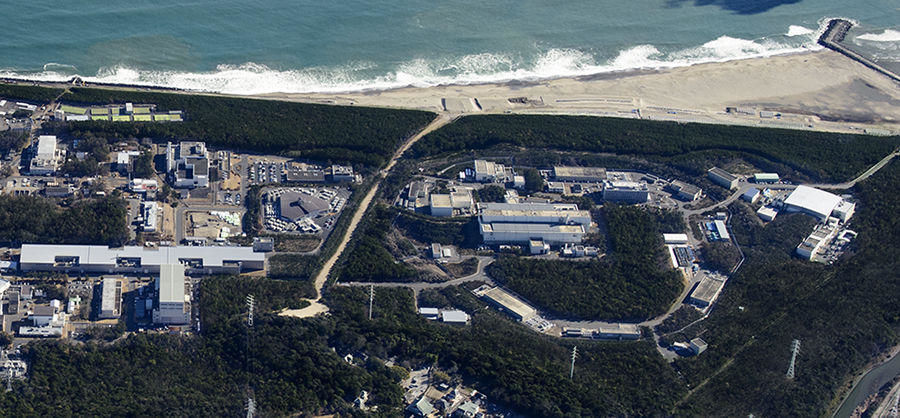
A fire that occurred in the 50 GeV substation on April 7 forced the suspension of user operations across J-PARC. Following a thorough investigation of the cause, inspections of related equipment, and implementation of preventive measures, MLF user operation resumed on June 1. However, just before the scheduled restart of the Main Ring, an unexpected failure of a high-voltage disconnecting switch was discovered in a receiving panel. Because replacement of the damaged component required a long lead time, MR user operation could not resume before the summer shutdown. We sincerely apologize to all users and collaborators whose research activities were delayed or canceled by these unforeseen events. We fully recognize the significant impact on the user community and are making every effort to strengthen the reliability of our facilities.
-------------------------------------------------------------------------------------------------
STEADY PROGRESS TOWARD HIGHER BEAM POWER
-------------------------------------------------------------------------------------------------
Despite these operational challenges, important technical progress was achieved. Stable MLF user operation resumed successfully after recovery, and Slow Extraction (SX) user operation reached the 100 kW level. J-PARC will continue to improve the reliability of accelerator operation while pursuing higher beam power to support world-leading science.
☆-------------------------------------------------------------------------------------------------…
2. [Accelerator Division] by YAMAMOTO Kazami
…-------------------------------------------------------------------------------------------------★
-------------------------------------------------------------------------------------------------
OPERATION STATUS OF THE ACCELERATORS
-------------------------------------------------------------------------------------------------
User operations were temporarily suspended during the final week of March due to scheduled maintenance work and accelerator beam tuning. Operations at MLF and HD subsequently resumed sequentially on April 1. However, this was interrupted when a fire broke out in a high-voltage switchboard inside the J-PARC 50 GeV substation at approximately 7:00 a.m. on April 7. Consequently, user operations were halted for approximately two months to allow time for investigating the cause of the fire and implementing preventative measures.
Investigations conducted at the accelerator facility determined that cable degradation was the primary cause of the incident. Following necessary repairs, MLF user operation resumed on June 1. MR operation was initially scheduled to restart for HD users on June 2; however, immediately prior to this restart, a malfunction was discovered in one of the high-voltage disconnecting switches. Since repairing the faulty component required more than a month, the MR operation for the first half of 2026 was canceled.
-------------------------------------------------------------------------------------------------
DR. ADACHI KYOSUKE RECEIVED THE YOUNG PRESENTATION AWARD
-------------------------------------------------------------------------------------------------
We are pleased to announce that Dr. ADACHI Kyosuke, a postdoctoral researcher in Accelerator Section II, received the Young Presentation Award from the Beam Physics Research Society/Young Researchers' Association for his presentation entitled "Optimization Study of Longitudinal Bunch Flattening in the J-PARC RCS."
In this study, he investigated a method for flattening the longitudinal beam bunch profile by applying a second-harmonic RF during the final stage of acceleration. This technique successfully reduced beam loss and is expected to make a significant contribution toward achieving even higher-intensity beam operation at J-PARC.
https://j-parc.jp/c/en/topics/2026/04/15001807.html
☆-------------------------------------------------------------------------------------------------…
3. [Particle and Nuclear Physics Division]
…-------------------------------------------------------------------------------------------------★
-------------------------------------------------------------------------------------------------
FACILITY UPGRADES TOWARD THE WORLD'S HIGHEST-INTENSITY NEUTRINO BEAM AND PROGRESS IN IWCD CONSTRUCTION (by ISHIDA Taku)
-------------------------------------------------------------------------------------------------
The J-PARC Neutrino Experimental Facility successfully achieved stable high-power beam operation at 900 kW from January to March 2026. Optimization efforts in the Main Ring (MR) accelerator, including a shorter repetition cycle and reduced beam losses, enabled efficient and reliable neutrino beam production. In February 2026, a beam extraction test corresponding to 1 MW beam power was also successfully carried out, marking an important milestone toward future beam power upgrades. These achievements represent a key step toward the Hyper-Kamiokande experiment, scheduled to begin operation in FY2028, and demonstrate the technical readiness required for long-term MW-class beam operation.
The Neutrino Experimental Facility is currently undergoing upgrades to support operation at 1.3 MW beam power. During the summer shutdown period of 2026, a new 1.3 MW production target will be installed, together with upgrades to the target helium cooling system, secondary beamline cooling-water system, and remote-maintenance capabilities for the final focusing horn section. Upon completion of these improvements, the neutrino beamline will be capable of accepting 1.3 MW-class proton beams, representing a major step forward in preparation for the high-intensity beam operation required by Hyper-Kamiokande.
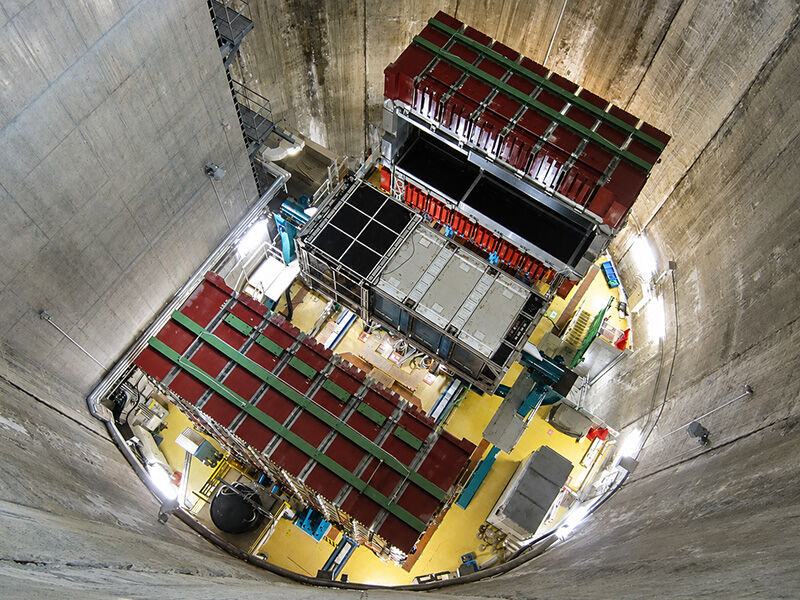
The Intermediate Water Cherenkov Detector (IWCD), currently under construction as the intermediate detector of the Hyper-Kamiokande project, is designed to measure the neutrino beam at different off-axis positions by moving vertically within a 48-meter-deep shaft. Full-scale shaft excavation began at the Tokai construction site in April 2026, and construction of the third caisson segment is currently underway. Construction activities are progressing toward completion in 2028 while continuously monitoring environmental impacts on the surrounding area.
-------------------------------------------------------------------------------------------------
STATUS OF THE JSNS2 / JSNS2-II (SEARCH FOR STERILE NEUTRINOS AT J-PARC MLF, E56 / E82) (by MARUYAMA Takasumi)
-------------------------------------------------------------------------------------------------
The JSNS2 (E56) / JSNS2-II (E82) collaboration investigates the anomaly reported by the LSND experiment, namely the observed excess of electron antineutrinos, through a direct measurement at the J-PARC Materials and Life Science Experimental Facility (MLF).
Data taking with both the near detector, located on the third floor of the MLF, and the far detector, installed outside the MLF building, for the current physics run has been completed. As of 14 June 2026, new physics data corresponding to 1.137×10²² Proton-On-Target (POT) have been accumulated with the near detector. This corresponds to approximately 23% of the total data accumulated between 2021 and 2024.
In parallel with the ongoing data-taking efforts, we have analyzed the data collected in 2022 and 2024. The results will be shown at the Neutrino 2026 conference held in June 2026.
The new far detector is currently in the commissioning phase. Effective passive shielding against neutron backgrounds is required and is being investigated through various measurements. Based on these studies, the number of neutrons originating from one of the MLF neutron beamlines has been reduced by approximately a factor of three. Further background reduction studies are ongoing.
-------------------------------------------------------------------------------------------------
SUCCESSFUL MEASUREMENT OF PHI MESONS PRODUCED ON NUCLEAR TARGETS (by NAKASUGA Satomi, OZAWA Kyoichiro)
-------------------------------------------------------------------------------------------------
Hadrons, including protons and neutrons, are composed of quarks, yet their observed masses are about two orders of magnitude larger than the masses of bare quarks. This discrepancy is thought to arise from the spontaneous breaking of approximate symmetry in the strong interaction. To explore how hadron masses are generated, the E16 experiment at the J-PARC Hadron Experimental Facility studies hadrons in a high-density environment using nuclear targets.
The experiment focuses on phi mesons, which are well suited for investigating in-medium mass modifications. By embedding the production process in atomic nuclei, the E16 experiment examines how the properties of hadrons change under dense conditions. To directly probe phi mesons inside nuclei, their decay into electron-positron pairs is measured, since these particles do not interact strongly with the surrounding nuclear medium and can carry clean information.
However, detecting these electrons is highly challenging. They must be distinguished from a large background of pi mesons, which are roughly 100 times more abundant. Moreover, the electron-positron decay channel is extremely rare, occurring in only about one out of every 10,000 phi meson decays. These constraints require a high-intensity proton beam and advanced detection techniques, capabilities that are currently realized at J-PARC.
After more than a decade of detector development and several years of commissioning, the E16 experiment has successfully observed phi meson decays into electron-positron pairs.
This marks the first measurement of this kind using nuclear targets in this energy range.
During commissioning in June 2024, the phi meson mass was reconstructed and its production yield evaluated. The results were published in Progress of Theoretical and Experimental Physics (S. Nakasuga et al., Prog. Theor. Exp. Phys. 2026, 043D03) and highlighted in a press release.
This achievement represents the first physics result obtained with the newly constructed high-momentum proton beamline, establishing an important step forward in expanding research capabilities at the J-PARC Hadron Experimental Facility.
-------------------------------------------------------------------------------------------------
STATUS OF THE COMET EXPERIMENT (by MIHARA Satoshi)
-------------------------------------------------------------------------------------------------
The COMET experiment aims to search for the lepton-flavor-violating muon reaction, mu-e conversion, with a sensitivity better than 10-14 in Phase I.
The COMET collaboration has been making steady progress toward the commissioning of the Detector Solenoid (DS). Preparations for the magnetic field mapping are now nearly complete. The required measurement instruments have been calibrated, and the field mapping campaign is ready to begin as soon as the magnet is available for operation.
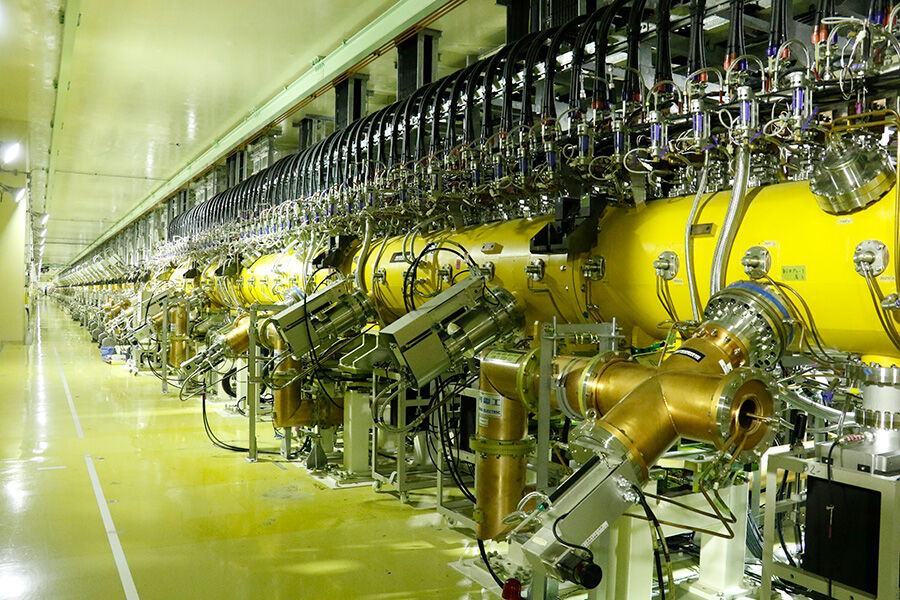
Assembly work has also started for the installation of the Central Drift Chamber (CDC), the experiment's central tracking detector, inside the DS. The CDC is first mounted in the support structure known as the Cradle. After the Cylindrical Trigger Hodoscopes (CTHs) are installed at both ends of the Cradle, the entire assembly will be inserted into the DS. The collaboration is currently carrying out the final adjustments in preparation for the installation.
-------------------------------------------------------------------------------------------------
STATUS OF THE MUON g-2/ELECTRIC DIPOLE MOMENT (EDM) (E34) (by MIBE Tsutomu)
-------------------------------------------------------------------------------------------------
The E34 collaboration aims for precision measurements of the muon anomalous magnetic moment and its electric dipole moment. In June, the collaboration collected data on characterizing ultra-slow muon generation and acceleration to 0.3 MeV at H2 area with the laser system for muonium ionization using a Lyman-α laser, Ultra-slow muon diagnosis beam line, and Radio Frequency Quadrupole cavity. These results and other updates were discussed in the collaboration meeting at J-PARC on June 24-26.
☆-------------------------------------------------------------------------------------------------…
4. [Materials and Life Science Division]
…-------------------------------------------------------------------------------------------------★
-------------------------------------------------------------------------------------------------
NEUTRON SOURCE; CONTINUATION OF BEAM OPERATION AND PLANNING OF MAINTENANCE DURING THE LONG SUMMER SHUTDOWN (by HARADA Masahide)
-------------------------------------------------------------------------------------------------
Beam operation of FY2026 at the MLF resumed on April 1 with the beam power of 780 kW, following a one-week break at the end of March, and continued stably until the fire incident at the J-PARC 50 GeV substation on April 7. After confirming the safety of both the MLF and the accelerators, the beam operation resumed on June 1 with a reduced power of 680 kW due to malfunction of the power supply unit of the proton beam transport line, which recovered to 780 kW on June 10. The beam operation will end on June 23 for the long summer shutdown.
During the long summer shutdown, we plan to carry out essential maintenance activities to ensure safe and stable beam operation. These include the used target vessel transport from the MLF to the RAM building, cutting of the used proton beam window, replacing air filters at hot cells, replacing the motor and power cable of the mercury pump and mercury target trolley, and other related tasks.
After all the maintenance work is completed, the beam operation will resume around October 22.
Awards:
Dr. WAKAI Eiichi, a Research Fellow at the J-PARC Center, received the 8th Achievement Award of the Materials Science and Technology Division, Atomic Energy Society of Japan.
He led research activities as the first JAEA contact person for the J-PARC RaDIATE collaboration.
https://www.j-parc.jp/c/en/topics/2026/05/19001830.html
-------------------------------------------------------------------------------------------------
NEUTRON INSTRUMENT AND SCIENCE; STUDENTS JOIN MLF RESEARCH PROGRAMS (by SANO Asami)
-------------------------------------------------------------------------------------------------
2026B Proposal Call and Review Status:
MLF resumed normal operation at the beginning of June and continued the remaining scheduled experiments for the 2026A cycle. The 2026A proposals that could not be carried out due to facility-related circumstances are scheduled to be carried over to the next cycle.
For the 2026B proposal call, MLF received 326 general proposals for neutron experiments.
The number of domestic proposals increased by 9% compared with the previous proposal call and accounted for 54% of all submissions. All proposals are currently under review.
Students in MLF Research Programs:
This fiscal year, MLF welcomed students as long-term research fellows. JAEA has accepted three students as interns, while KEK has accepted one student as a special joint-use researcher. All have already begun their research activities at MLF.
Awards:
A paper co-authored by Dr. HARJO Stefanus received the 16th Materia Award from the Journal of the Japan Institute of Metals and Materials. In addition, Dr. KAJIMOTO Ryoichi and Dr. NAKAMURA Mitsutaka received the Editors' Suggestion designation and were featured in Physical Review Letters for their collaborative research conducted at BL01 of MLF.
Scientific Achievements (Press Release):
BL11 on May 13 "Hydrogen in the Earth core inferred from neutron imaging and diffraction"
https://doi.org/10.1038/s41598-026-49969-z
BL18 on April 30 "Enhanced elastocaloric cooling beyond Clausius-Clapeyron limits"
https://doi.org/10.1038/s41467-026-72172-7
BL21 on April 7 "Bulk Amorphous Alumina: The Density-Driven Interplay of Pentahedral Pyramids and Octahedra for High Dielectric Permittivity"
https://doi.org/10.1021/jacs.5c22344
-------------------------------------------------------------------------------------------------
MUON SCIENCE FACILITY (MUSE); ACCEL KITCHEN HOSTS 2ND ANNUAL HIGH SCHOOL MUON BEAM EXPERIMENTS (by STRASSER Patrick)
-------------------------------------------------------------------------------------------------
The operation resumed at the beginning of April but was soon after suspended due to a fire that broke out in a high-voltage switchboard inside the J-PARC 50 GeV substation on April 7. After safety checks were performed and corrective measures taken, the user's program in MLF resumed on June 1 and was conducted smoothly until the end of the cycle. The general-use proposals scheduled during the suspension period will be conducted this autumn onwards when the operation resumes after the long summer shutdown. We are currently preparing for the summer maintenance work to resume beam operations in the fall.
Building on the success of last year's event, high school students supported by Accel Kitchen LLC returned to the D-line on June 20-21 to conduct real-world Muon Beam Experiments. Accel Kitchen (Kasoku Kitchen in Japanese) is an innovative Japanese educational organization and social enterprise that allows junior high and high school students to conduct real-world research in particle physics, cosmic rays, and radiation science. The project originally started as hands-on physics workshops at Tohoku University. It has since expanded into a nationwide network that connects students with bleeding-edge scientific research. In short, Accel Kitchen bridges the gap between high school classrooms and world-class particle physics labs. This year's program featured five experiments proposed by a team of 12 high school students, who were supported by four university students. The experiments were carried out as Instrumental Development Use in the D1 area. On the first day, the students toured the beamline and prepared their setups, followed by the active execution of their experiments on the second day.
The Muon Section entered the new fiscal year on April 1 with a shift in leadership. Dr. STRASSER Patrick has been appointed as the new Muon Section Leader, taking over from Dr. KAWAMURA Naritoshi, with Dr. TAKESHITA Soshi stepping in as Sub-Leader.
☆-------------------------------------------------------------------------------------------------…
5. [Quantum Beam Technology Division] by SHINOZAKI Shinichi
…-------------------------------------------------------------------------------------------------★
-------------------------------------------------------------------------------------------------
INTRODUCTION OF THE QUANTUM BEAM TECHNOLOGY DIVISION
-------------------------------------------------------------------------------------------------
The Quantum Beam Technology Division was established on April 1, 2026, as a core organization supporting the stable supply of quantum beams across the accelerator, MLF, hadron, and neutrino experimental facilities at J‑PARC. The Division takes an integrated and cross-disciplinary approach to technological development, covering everything from accelerators and targets to beamlines, with the aim of realizing highly reliable and stable beam delivery. Looking ahead, we will further promote the use of machine learning and artificial intelligence for equipment condition monitoring, anomaly prediction, and optimization of operational parameters, thereby advancing the sophistication of facility operations. In addition, we will work to enhance beam intensity and pursue system upgrades and improvements, contributing to the further advancement and diversification of user research. Building on a foundation of safe and stable operation, we will continue to support J‑PARC's research activities through the ongoing evolution of quantum beam infrastructure.
☆-------------------------------------------------------------------------------------------------…
6. [Safety Division] by BESSHO Kotaro
…-------------------------------------------------------------------------------------------------★
-------------------------------------------------------------------------------------------------
J-PARC SAFETY DAY 2026
-------------------------------------------------------------------------------------------------
The J-PARC Center annually holds "J-PARC Safety Day" around May 23-the date of the radioactive material leak incident in 2013. For FY2026, the event was held on May 22, with 379 staff members participating through a hybrid format.
The morning session, titled "Safety Information Exchange Meeting," featured reports from various facilities and sections detailing initiatives related to radiation safety. Topics covered included cooling water system issues, beam loss reduction strategies, improvements to workwear in controlled areas, and the management of radiation-induced degradation of LED lighting, leading to lively discussions among participants.
In the afternoon, the "Workshop for Fostering Safety Culture" took place. The session began with the J-PARC Safety Awards Ceremony, where the Hadron Section received the Award for Most Safety Best Practices, and three staff members were honored with the Safety Contribution Award.
Following the awards, Professor Tetsuya Takemi from the Disaster Prevention Research Institute at Kyoto University delivered an invited talk titled "The Mechanisms Behind Extreme Weather Events Such as Heavy Rain and Tornadoes, and How to Prepare for Them." He provided a detailed explanation of the mechanisms behind torrential rains, tornadoes, typhoons, and lightning, noting their characteristics in recent years.
Furthermore, he emphasized that since disaster risks are constantly changing due to factors like climate change and urban development, disaster preparedness measures must be continuously updated.
The day concluded with the screening of the documentary video, "The Radioactive Material Leak Incident at J-PARC: Toward the Resumption of the Hadron Experiment Facility." All participants reflected on their memories of the incident, reaffirming their commitment to ensuring that these critical lessons are never forgotten.
☆-------------------------------------------------------------------------------------------------…
7. [Outreach Activities]
…-------------------------------------------------------------------------------------------------★
★ The 15th Koshien of Science National Competition in Tsukuba (March 20-23)
https://www.j-parc.jp/c/en/topics/2026/05/28001818.html
★ KEK Exhibited at Nico Nico Chokaigi 2026 (April 25-26)
https://www.j-parc.jp/c/en/topics/2026/07/02001837.html
★ Outreach Lecture at National Institute of Technology, Akita College (May 8)
https://www.j-parc.jp/c/en/topics/2026/05/26001817.html
★ Outreach Lecture at Kanrin Japanese School, Aoba Ward, Yokohama City (May 27)
https://www.j-parc.jp/c/en/topics/2026/05/26001817.html
★ Outreach Lecture at Bakery Sasaki-tei, Kitashiobara Village, Yama District, Fukushima Prefecture (May 30)
https://www.j-parc.jp/c/en/topics/2026/05/26001817.html
★ Muographic Investigation of Ancient Burial Mounds in Tokai (May 31)
https://www.j-parc.jp/c/en/topics/2026/08/03001861.html
★ Outreach Lecture at Narusawa Elementary School, Hitachi City (June 2)
https://www.j-parc.jp/c/en/topics/2026/07/22001852.html
★ Outreach Lecture at Hakuoh University Ashikaga Junior High School, Tochigi Prefecture (June 6)
https://www.j-parc.jp/c/en/topics/2026/07/22001852.html
☆-------------------------------------------------------------------------------------------------…
8. [Editorial Note]
…-------------------------------------------------------------------------------------------------★
Past issues are available from the link below.
http://j-parc.jp/c/en/topics/project-newsletter/index.html
┏----…----…----…----…----…----…----…----…----…----…----…----…☆
┃ Editorial Board:
┃ OGURI Hidetomo (Chair) : oguri.hidetomo[at]jaea.go.jp
┃ SHOBUDA Yoshihiro: yoshihiro.shobuda[at]j-parc.jp
┃ OZAWA Kyoichiro: ozawa[at]post.kek.jp
┃ MARUSAWA Machiko: machiko[at]post.kek.jp
┃ Bruce YEE-RENDON: byee[at]post.j-parc.jp
┃ OGAWA China (Secretary) : ogawa.china[at]jaea.go.jp
┃ * Please replace "(at)" with "@" when you enter an email address.
★----…----…----…----…End of Letter…----…----…----…----…----