<?xml version="1.0" encoding="UTF-8"?>
<feed xmlns="http://www.w3.org/2005/Atom">
    <title>Press Release</title>
<link rel="alternate" type="text/html" href="index.html" />
    <link rel="self" type="application/atom+xml" href="atom.xml" />
    <id>tag:j-parc.jp,2019-02-25:/c/en/press-release/7</id>
    <updated>2026-09-01T02:41:33Z</updated>
    

<entry>
    <title>Muon Acceleration: From Demonstration to Implementation - Cooled muons accelerated to 0.3 MeV in the new dedicated experimental area - </title>
    <link rel="alternate" type="text/html" href="2026/08/31001875.html" />
    <id>tag:cms01.j-parc.jp,2026:/c/en/press-release//7.1875</id>

    <published>2026-08-31T05:00:00Z</published>
    <updated>2026-09-01T02:41:33Z</updated>

    <summary>J-PARC CenterHigh Energy Accelerator Res...</summary>
    <author>J-PARC</author>
    
        <category term="Materials and Life Science" />
    
    
    <content type="html" xml:lang="ja" xml:base="http://cms01.j-parc.jp/c/en/press-release/">
        <![CDATA[<p align="right"><span style="font-family: arial,helvetica,sans-serif;">J-PARC Center<br>High Energy Accelerator Research Organization (KEK) <br>Japan Atomic Energy Agency (JAEA) <br>The University of Tokyo<br>Tokai National Higher Education and Research System, Nagoya University<br>RIKEN</p>

<a name="fig1"></a>
<table>
<tbody>
<tr>
<td><a href="uploads/2026/20260831_01.png"><img alt="20260831_01" src="assets_c/2026/09/20260831_01-thumb-300xauto-11958.png" width="300" height="103" class="mt-image-center" style="text-align: center; display: block; margin: 0 auto 20px;" /></a></td>
</tr>
</tbody>
</table>
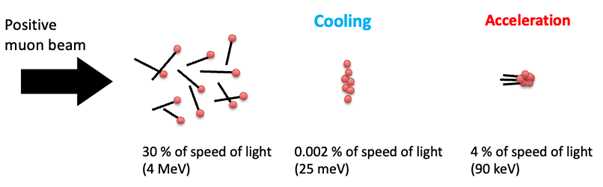
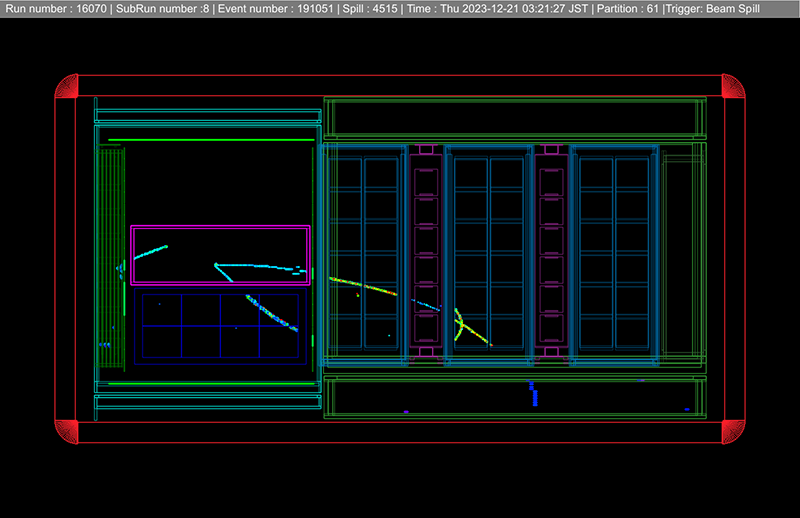
<p><span style="font-family: arial,helvetica,sans-serif;">Figure 1: Conceptual diagram of positive muon cooling and acceleration. Cooling the positive muons, whose directions and velocities are initially spread out, enabled efficient radio-frequency acceleration.</span></p>


<div class="wrap_blue">
<p><span style="font-family: arial,helvetica,sans-serif;">At the Materials and Life Science Experimental Facility (MLF) of the Japan Proton Accelerator Research Complex (J-PARC,<a name="BNo1"></a><a href="#No1" style="text-decoration: none"><span style="color: blue;"><strong> *1</strong></span></a>), muons were cooled from a kinetic energy of 4 MeV down to 25 meV (a reduction by a factor of about 160 million) and then accelerated to 0.3 MeV (approximately 8% of the speed of light) in the new experimental area dedicated to muon acceleration (Muon H2 Area,<a name="BNo2"></a><a href="#No2" style="text-decoration: none"><span style="color: blue;"><strong> *2</strong></span></a>). Compared with the world's first demonstration of muon acceleration in 2024, this represents three times the energy and 200 times the intensity (approximately 10 muons per second). This achievement marks an important step toward the operation of the world's only muon accelerator.</span></div>

<h3>Overview</h3>
<p><span style="font-family: arial,helvetica,sans-serif;">The muon is an elementary particle similar to the electron. Muons produced artificially with accelerators are used in a wide range of fields, including materials science, particle physics, and the transmission imaging of large structures. However, ordinary muon beams produced at accelerator facilities have widely spread directions and velocities, and cannot be accelerated as they are.
<br>A research group of KEK, the Japan Atomic Energy Agency, Okayama University, Nagoya University, Kyushu University, Ibaraki University, and Niigata University achieved the world's first demonstration of muon cooling ( <a name="BNo3"></a><a href="#No3" style="text-decoration: none"><span style="color: blue;"><strong>*3</strong></span></a>) and acceleration, using a method in which muons are first cooled to a nearly-at-rest state and then accelerated with a radio-frequency accelerating cavity (press release of May 2024, "World's first cooling and acceleration of muon - The first muon accelerator finally coming to a reality -"). This result was featured on the cover of <i>Physical Review Letters</i> and was selected for the journal's 2025 collection of notable papers, receiving high international recognition.
<br>This time, a research group of the J-PARC Center, KEK, the Japan Atomic Energy Agency, the University of Tokyo, Nagoya University, and RIKEN carried out a muon cooling and radio-frequency acceleration experiment in June 2026 in the experimental area (H2 Area) of the dedicated muon beamline (H-Line), newly constructed at MLF for the muon g-2/EDM experiment ( <a name="BNo4"></a><a href="#No4" style="text-decoration: none"><span style="color: blue;"><strong>*4</strong></span></a>, <a name="BNo5"></a><a href="#No5" style="text-decoration: none"><span style="color: blue;"><strong>*5</strong></span></a>), the transmission muon microscope, and the development of core technologies for artificial, transportable muon beams. As a result, muons were successfully accelerated to a kinetic energy of 0.3 MeV (approximately 8% of the speed of light). Compared with the 2024 demonstration (0.1 MeV, 0.05 muons per second), the group achieved three times the energy and 200 times the intensity (approximately 10 muons per second) in the area where the actual experiments will be performed.
<br>Because this achievement was obtained in the area where the actual experiments will be performed, the research has advanced significantly from the "demonstration" stage of muon acceleration to the "implementation" stage of producing beams for actual experiments. It marks an important step toward the operation of the world's only muon accelerator. The group aims to achieve acceleration to 4 MeV (approximately 30% of the speed of light) around 2027-28, establishing the key technologies for future artificial, transportable muon beams. Ultimately, the muons will be accelerated to even higher energies (above 200 MeV, more than about 90% of the speed of light) for high-precision tests of the Standard Model of particle physics through precision measurements of the muon g-2 and EDM, as well as for applied research in materials science and engineering with the transmission muon microscope.</span></p>

<h3>Research Group</h3>
<p><span style="font-family: arial,helvetica,sans-serif;">Particle and Nuclear Physics Division, J-PARC Center
<br>Materials and Life Science Division, J-PARC Center
<br>Accelerator Division, J-PARC Center
<br>Muon-Neutron Group, Institute of Particle and Nuclear Studies, KEK
<br>Muon Science Section, Institute of Materials Structure Science, KEK
<br>Accelerator Laboratory, KEK
<br>Department of Physics, Graduate School of Science, The University of Tokyo
<br>J-PARC Center, Japan Atomic Energy Agency
<br>Kobayashi-Maskawa Institute for the Origin of Particles and the Universe, Nagoya University
<br>Laboratory of High Energy Particle Physics, Department of Physics, Graduate School of Science, Nagoya University
<br>RIKEN Center for Advanced Photonics</p>


<h3>Background: From Demonstration to Implementation</h3>
<p><span style="font-family: arial,helvetica,sans-serif;">The world's first demonstration of muon cooling and acceleration in 2024 was performed in a general-purpose experimental area (S2 Area) of the MLF muon facility. The actual muon g-2/EDM experiment, however, will be conducted in the experimental area (H2 Area) of the dedicated beamline (H-Line), which delivers one of the world's highest-intensity pulsed muon beams. The H2 Area was completed in Japanese fiscal year 2024 and began operation in fiscal year 2025.
<br>The research group relocated the muon cooling apparatus (the cooled muon source) from the S2 Area to the H2 Area, and prepared and commissioned a newly built ultraviolet laser system that strips electrons efficiently, as well as the radio-frequency accelerating system for the cooled muons. In this experiment, these devices were combined to perform the entire sequence from muon cooling to acceleration for the first time in the actual experimental area.</span></p>


<h3>What Did We Find?</h3>
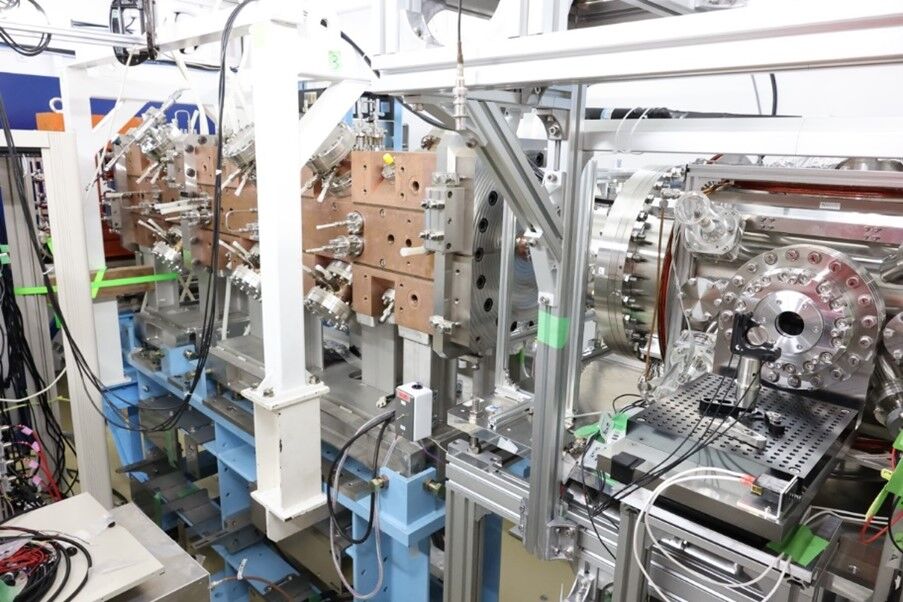
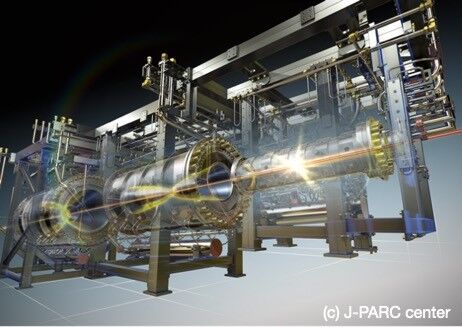
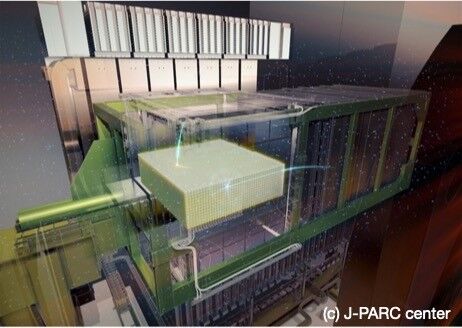
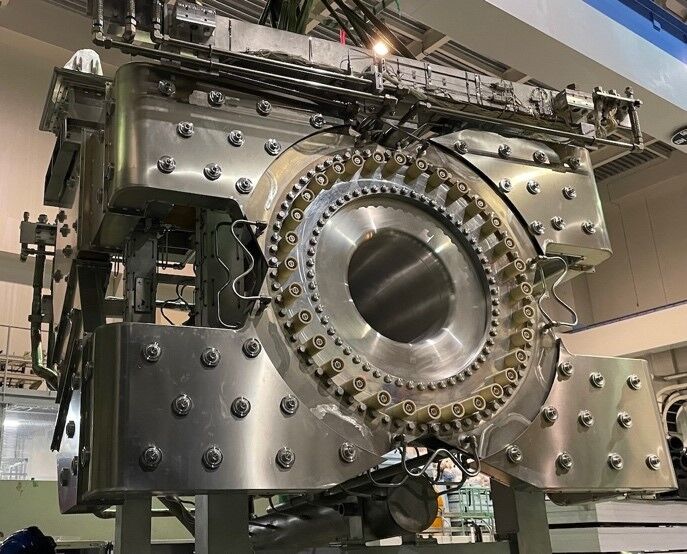
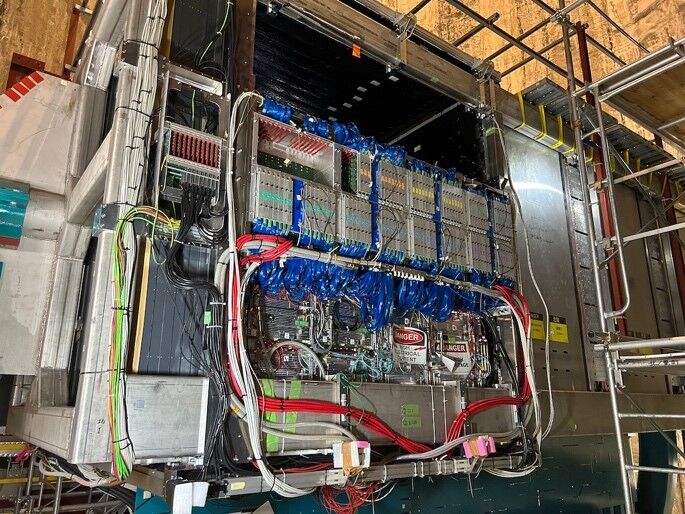
<p><span style="font-family: arial,helvetica,sans-serif;">The positive muon beam delivered to the H2 Area (approximately 30% of the speed of light, kinetic energy 4 MeV) was injected into a silica aerogel target to form muonium (a neutral atom consisting of a positive muon and an electron). By irradiating the muonium with a special ultraviolet laser (Figure 2) to strip the electrons, the group obtained positive muons cooled to a nearly-at-rest state (0.002% of the speed of light, kinetic energy 25 meV). These muons were then injected into the radio-frequency accelerating system and successfully accelerated to a kinetic energy of 0.3 MeV (approximately 8% of the speed of light) (Figure 3).
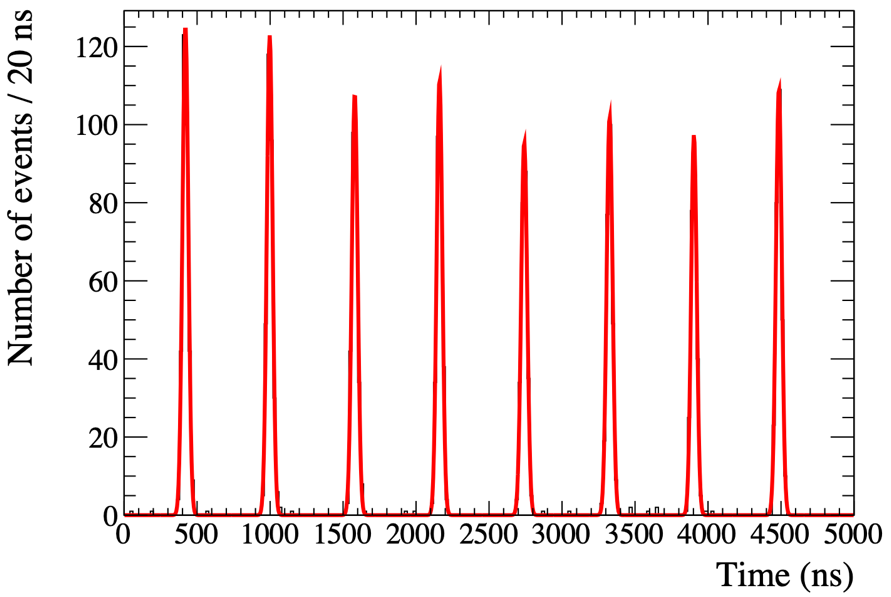
<br>The data show that the intensity of the accelerated muons was approximately 10 muons per second, 200 times that of the 2024 demonstration (0.05 muons per second) (Figure 4). This is a major advance in both beam quality and intensity toward the realization of the world's first accelerated-muon facility.</span></p>

<p><a name="fig2"></a><a href="uploads/2026/20260831_02.jpg"><img alt="20260831_02" src="assets_c/2026/09/20260831_02-thumb-300xauto-11959.jpg" width="300" height="169" class="mt-image-center" style="text-align: center; display: block; margin: 0 auto 20px;" /></a></p>
<p align="center"><span style="font-family: arial,helvetica,sans-serif;">Figure 2: The newly built laser system, which can strip electrons efficiently.</p>

<p><a name="fig3"><a href="uploads/2026/20260831_03.png"><img alt="20260831_03" src="assets_c/2026/09/20260831_03-thumb-300xauto-11962.png" width="300" height="168" class="mt-image-center" style="text-align: center; display: block; margin: 0 auto 20px;" /></a></p>
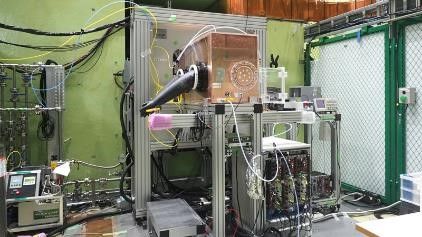
<p align="center"><span style="font-family: arial,helvetica,sans-serif;">Figure 3: he apparatus installed in the H2 Area (from back to front: the muon cooling apparatus, the accelerating system, and the beam diagnostics).</p>

<p><a name="fig4"><a href="uploads/2026/20260831_04.png"><img alt="20260831_04" src="assets_c/2026/09/20260831_04-thumb-300xauto-11964.png" width="300" height="111" class="mt-image-center" style="text-align: center; display: block; margin: 0 auto 20px;" /></a></p>
<p align="center"><span style="font-family: arial,helvetica,sans-serif;">Figure 4: Signal of muons accelerated to 0.3 MeV, measured at the exit of the accelerating system.</p>

<h3>How Will the World Change?</h3>
<p><span style="font-family: arial,helvetica,sans-serif;">There are many accelerator facilities in the world, but no muon accelerator yet exists. With this achievement, the construction and commissioning toward the world's first muon accelerator have started in its dedicated experimental area. The group will successively connect accelerating cavities, further accelerating the muons from the 0.3 MeV achieved this time to reach 4 MeV (approximately 30% of the speed of light) around 2027-28, thereby establishing the fundamental technologies required for artificial, transportable muon generation. Ultimately, the group aims to use a highly directional muon beam accelerated to energies above 200 MeV for ultra-precise tests of possible cracks in the Standard Model of particle physics (the muon g-2/EDM experiment). Accelerated muon beams are also expected to find a wide range of applications, such as the transmission muon microscope, which can observe materials with nanometer resolution, and the transmission imaging of large structures.</span></p>


<h3>Glossary</h3>
<div style="margin-left: 50px;">
<p id="No1"><a href="#BNo1" style="text-decoration: none"><font color="blue"><strong><span style="font-family: arial,helvetica,sans-serif;">*1. Japan Proton Accelerator Research Complex (J-PARC) </strong></font></a>
<br />A large-scale research facility jointly operated by the High Energy Accelerator Research Organization (KEK) and the Japan Atomic Energy Agency (JAEA) in Tokai Village, Ibaraki Prefecture, Japan. World-leading research is conducted there in a wide range of fields, from academic studies in particle physics, nuclear physics, condensed matter physics, chemistry, materials science, and biology to applied research for industry. At the Materials and Life Science Experimental Facility (MLF) in J-PARC, the world's highest-intensity muon and neutron beams are used by researchers from around the world.</span></p>
</div>

<div style="margin-left: 50px;">
<p id="No2"><a href="#BNo2" style="text-decoration: none"><font color="blue"><strong><span style="font-family: arial,helvetica,sans-serif;">*2. H-Line and H2 Area</strong></font></a>
<br />A dedicated beamline (H-Line) newly constructed at the MLF muon facility to deliver one of the world's highest-intensity pulsed muon beams, and one of its experimental areas (H2 Area). The muon cooling apparatus and the linear accelerator are installed there.</span></p>
</div>

<div style="margin-left: 50px;">
<p id="No3"><a href="#BNo3" style="text-decoration: none"><font color="blue"><strong><span style="font-family: arial,helvetica,sans-serif;">*3. Muon cooling</strong></font></a>
<br />Muon cooling means aligning the directions and velocities of muons. A muon beam is injected into silica aerogel to form muonium (a neutral atom consisting of a positive muon and an electron) in a nearly-at-rest state, after which an ultraviolet laser strips the electrons, leaving only positive muons.</span></p>
</div>

<div style="margin-left: 50px;">
<p id="No4"><a href="#BNo4" style="text-decoration: none"><font color="blue"><strong><span style="font-family: arial,helvetica,sans-serif;">*4. Anomalous magnetic moment (g-2) </strong></font></a>
<br />The magnetic moment is one of the intrinsic properties of an elementary particle and is expressed as the product of a physical quantity called the Bohr magneton and a quantity called the g-factor. Quantum-mechanical effects appear as the deviation of the g-factor from 2, which is called the "anomalous magnetic moment" (g-2). It can be calculated with extremely high precision in the Standard Model.</span></p></div>
</div>

<div style="margin-left: 50px;">
<p id="No5"><a href="#BNo5" style="text-decoration: none"><font color="blue"><strong><span style="font-family: arial,helvetica,sans-serif;">*5. Electric dipole moment (EDM) </strong></font></a>
<br />The electric dipole moment (EDM) is a physical quantity that describes a separation of equal positive and negative charges in space. The EDM violates parity and time-reversal symmetries. For elementary particles, the Standard Model predicts extremely small EDM values, and no finite value has been measured to date.</span></p></div>

<h3>Acknowledgments</h3>
<p><span style="font-family: arial,helvetica,sans-serif;">This work was carried out under the J-PARC MLF experimental programs 2011MS06 and 2025MS06. This work was supported by the JST K Program JPMJKP24J4, and by JSPS KAKENHI 20H05625, 22K21350, 24H00023, 24K03211, 25K24694, and 26K21728.</span></p>


<h3>Contacts</h3>
<div style="margin-left: 40px;"><strong>&#60; For inquiries about the research &#62;</strong></div>
<div style="margin-left: 60px;">Tsutomu Mibe, Professor</div>
<div style="margin-left: 60px;">Institute of Particle and Nuclear Studies,</div>
<div style="margin-left: 60px;">High Energy Accelerator Research Organization (KEK)</div>
<div style="margin-left: 40px;">&nbsp;</div>


<div style="margin-left: 40px;"><strong>&#60; For media inquiries &#62;</strong></div>
<div style="margin-left: 60px;">Public Relations Section, J-PARC Center</div>
<div style="margin-left: 60px;">Tel: +81-29-287-9600</div>
<div style="margin-left: 60px;">Email : pr-section[at]j-parc.jp</div>
<div style="margin-left: 40px;">&nbsp;</div>

<div style="margin-left: 60px;">Public Relations Office,</div>
<div style="margin-left: 60px;">High Energy Accelerator Research Organization (KEK) </div>
<div style="margin-left: 60px;">Tel: +81-29-879-6047</div>
<div style="margin-left: 60px;">Email : press[at]kek.jp</div>
<div style="margin-left: 40px;">&nbsp;</div>

<div style="margin-left: 60px;">Media Relations Section, General Affairs Department,</div>
<div style="margin-left: 60px;">Japan Atomic Energy Agency (JAEA) </div>
<div style="margin-left: 40px;">&nbsp;</div>

<div style="margin-left: 60px;">Public Relations Office, Graduate School of Science / Faculty of Science,</div>
<div style="margin-left: 60px;">The University of Tokyo</div>
<div style="margin-left: 40px;">&nbsp;</div>

<div style="margin-left: 60px;">Public Relations Office, Kobayashi-Maskawa Institute for the</div>
<div style="margin-left: 60px;">Origin of Particles and the Universe (KMI), Nagoya University</div>
<div style="margin-left: 40px;">&nbsp;</div>

<div style="margin-left: 60px;">Press Office, Public Relations Division, RIKEN</div>
<div style="margin-left: 40px;">&nbsp;</div>

<div style="margin-left: 60px;">&nbsp; *Please replace "[at]" with "@"</div>
<div style="margin-left: 40px;">&nbsp;</div>]]>
        
    </content>
</entry>

<entry>
    <title>Mystery of Muon Behavior in Ice Solved - Quantum Effects Reveal the Key to a More Than 50-Year-Old Enigma - </title>
    <link rel="alternate" type="text/html" href="2026/07/10001844.html" />
    <id>tag:cms01.j-parc.jp,2026:/c/en/press-release//7.1844</id>

    <published>2026-07-10T05:00:00Z</published>
    <updated>2026-07-10T05:00:56Z</updated>

    <summary>High Energy Accelerator Research Organiz...</summary>
    <author>J-PARC</author>
    
        <category term="Materials and Life Science" />
    
    
    <content type="html" xml:lang="ja" xml:base="http://cms01.j-parc.jp/c/en/press-release/">
        <![CDATA[<p align="right"><span style="font-family: arial,helvetica,sans-serif;">High Energy Accelerator Research Organization (KEK) <br />J-PARC Center</p>

<div class="wrap_blue">
<h3>Executuve Summary</h3>
<p><span style="font-family: arial,helvetica,sans-serif;"><font color="blue"><strong>Question</strong></font><br />&nbsp;&lowast; The muon is an unstable elementary particle with a short lifetime of approximately two microseconds. During this brief window, it acts as a probe of its environment. When injected into liquid water, the muon attempts to sense the surrounding molecules through their magnetic fields; however, because these molecules move on timescales significantly shorter than a microsecond, the muon detects nothing. In contrast, when the water freezes, the muon instantly detects the magnetic fields of the water molecules, causing its spin orientation to undergo rapid relaxation. While this phenomenon has been observed since muon research started over five decades ago, no one had been able to accurately explain the underlying mechanism-nor had anyone realized that the key to this mystery lay in the system's quantum nature. 
<br /><font color="blue"><strong>Findings</strong></font><br />&nbsp;&lowast; Using a muon beam at J-PARC (Japan Proton Accelerator Research Complex), we observed 'quantum coherence'-a state in which quantum wave properties are preserved-in muon spins within ice. In this state, a muon replaces a hydrogen (proton) atom in a water molecule to form a unique molecule called MuOH. By modeling the magnetic field that the muon spin perceives from the surrounding nuclear spins of hydrogen atoms, we have successfully explained previously mysterious signal variations, including the spin depolarization caused by magnetic field fluctuations and the observed shifts in rotation frequency. 
<br /><font color="blue"><strong>Meaning</strong></font><br />&nbsp;&lowast; We have demonstrated the fundamental quantum effects in water-a ubiquitous substance in our world. As water serves as a foundational molecule across physics, chemistry, and biology, this discovery provides a new perspective that could impact a wide range of scientific fields. </span></div>

<a name="fig1"></a>
<table>
<tbody>
<tr>
<td><a href="uploads/2026/20260710e_01.png"><img alt="20260710e_01" src="assets_c/2026/07/20260710e_01-thumb-280xauto-11777.png" width="280" height="267" class="mt-image-center" style="text-align: center; display: block; margin: 0 auto 20px;" /></a></td>
</tr>
</tbody>
</table>
<p><span style="font-family: arial,helvetica,sans-serif;">&nbsp; Figure 1: Conceptual illustration of the quantum behavior of muons in water. The blue sphere (muon) replaces a hydrogen atom in a water molecule to form "MuOH" molecule. Below freezing temperatures, the muon interacts with the surrounding water molecules (represented by wavy lines) through an invisible force. The thickness of the wavy lines indicates the strength of this interaction. </span></p>

<h3>Summary</h3>
<p><span style="font-family: arial,helvetica,sans-serif;">&nbsp; When muon is injected into ice, it replaces a hydrogen atom in a water molecule to form a unique molecule called MuOH. We discovered that the muon's spin within this molecule exhibits 'quantum coherence,' synchronizing its quantum waves with the nuclear spins of the surrounding hydrogen atoms. This phenomenon accounts for the long-standing mystery behind the signal variations observed below freezing point. </span></p>

<h3>Overview</h3>
<p><span style="font-family: arial,helvetica,sans-serif;">&nbsp; We have discovered a new quantum mechanism within ice. When muons are injected into water, they replace one of the hydrogen atoms in a water molecule (H<sub>2</sub>O) to form a unique species known as "MuOH". Our findings reveal that the muon spin within this molecule exhibits 'quantum coherence'-a state in which its quantum waves synchronize with the nuclear spins of surrounding hydrogen atoms. This interaction accounts for the signal variations observed in ice-based muon experiments, resolving a mystery that has persisted for decades. </span></p>

<h3>Research Group</h3>
<p><span style="font-family: arial,helvetica,sans-serif;">&nbsp; High Energy Accelerator Research Organization (KEK), Institute of Materials Structure Science: Amba Datt Pant (Researcher), Akihiro Koda (Professor), Katsuhiko Ishida (Researcher), Jumpei G. Nakamura (Engineer), Shoichiro Nishimura (Assistant Professor), Masatoshi Hiraishi (Researcher), Koichiro Shimomura (Professor) University of Göttingen, Germany: Burkhard Geil (Professor) Tribhuvan University, Nepal: Anjan Dahal (Researcher), Anup Shrestha (Researcher), Hari Shankar Mallik (Assistant Professor) </span></p>

<h3>A Message from the Researcher</h3>
<p><span style="font-family: arial,helvetica,sans-serif;">&nbsp; Amba Datt Pant, Researcher, KEK : After years of dedicated effort, our team has successfully uncovered a quantum effect in water, resolving a mystery that has persisted for over 50 years. This discovery marks a pivotal step in the use of muons to study hydrated materials and biological systems, paving the way for innovative applications in hypoxia imaging. </span></p>

<h3>Research Background and Objectives</h3>
<p><span style="font-family: arial,helvetica,sans-serif;">&nbsp; Muon beams act as a 'specialized microscope' for probing the microscopic properties of matter and life. They hold great promise for exploring biological phenomena-such as the functions of proteins and DNA-and for advancing medical applications. We are currently exploring the possibility of utilizing the high-intensity muon beam at J-PARC for cancer research (KAKENHI Grants 21K15583 and 26H01510). However, before we can achieve this, we must first establish a thorough understanding of what muons can reveal about the fundamental building blocks of life, such as water and amino acids. Although water is ubiquitous, it exhibits diverse characteristics depending on temperature and pressure. Despite over 50 years of research into the behavior of muons in water, the underlying microscopic mechanisms and their quantum nature have remained poorly understood. Therefore, we chose to begin our research with the most fundamental substance of all: water. </span></p>

<h3>The Research Motivation</h3>
<p><span style="font-family: arial,helvetica,sans-serif;">&nbsp; The turning point in our research occurred when we observed that a fraction of the muon signal from aqueous biological samples closely resembled that of pure water. This realization led us to prioritize a fundamental study of water itself before attempting to analyze more complex biological systems. We meticulously verified these results through repeated experiments and subsequently developed a model to explain the underlying quantum behavior. </span></p>

<h3>Key Challenges We Overcame</h3>
<p><span style="font-family: arial,helvetica,sans-serif;">&nbsp; The greatest challenge was re-envisioning this established field from a new perspective. We had to move beyond conventional thinking and adopt a rigorous quantum mechanical approach to truly understand how muon signals behave in both water and ice. Developing a theoretical model that incorporates these quantum interactions-and accurately explains our experimental data-was a significant hurdle that we successfully overcame through persistent effort.  </span></p>

<h3>What We have Discovered?</h3>
<p><span style="font-family: arial,helvetica,sans-serif;">&nbsp; When a muon beam is injected into water, the charge state of the muons changes depending on whether the water is in a liquid or solid state. In liquid water, muons capture an electron to form "muonium" (a hydrogen atom analog where the proton is replaced by a muon), and muon bound to surrounding molecules (Figure 2). In ice, however, we have observed that the muonium structure is slightly distorted, and that unique "MuOH" molecule, as well as other distinct muon-related species. </span></p>

<p><a name="fig2"></a><a href="uploads/2026/20260710e_02.png"><img alt="20260710e_02" src="assets_c/2026/07/20260710e_02-thumb-280xauto-11779.png" width="280" height="249" class="mt-image-center" style="text-align: center; display: block; margin: 0 auto 20px;" /></a></p>
<p align="center"><span style="font-family: arial,helvetica,sans-serif;">&nbsp; Figure 2: Schematic illustration showing the difference in muon states in water and ice, as observed in conventional experiments. </p>

<p><span style="font-family: arial,helvetica,sans-serif;">&nbsp; Signals (Figure 3) obtained by applying a magnetic field (20 G) to muons and measuring their spin evolution over time reveals a distinct difference between liquid water and ice. In liquid water, a coherent oscillation signal, analogous to the wobbling of a spinning top, persists for a long duration. In contrast, in ice, the oscillation decays rapidly (relaxation), accompanied by a slight shift in the oscillation period (frequency shift). 
<br />&nbsp; Despite over 50 years of research, these signal decays and frequency shifts in ice remained poorly understood. We proposed a model in which the muon spins within MuOH molecules 'interact quantum-mechanically' with the surrounding water molecules. Using this model, we successfully and consistently explained the experimental data without the need for ad-hoc mathematical adjustments. Furthermore, we confirmed the validity of this model through experiments with heavy water (D<sub>2</sub>O), leading to the discovery of a 'quantum effect' of muons in ice. </span></p>

<a name="fig3"></a>
<table>
<tbody>
<tr>
<td><a href="uploads/2026/20260710e_03.png"><img alt="20260710e_03" src="assets_c/2026/07/20260710e_03-thumb-280xauto-11781.png" width="280" height="211" class="mt-image-center" style="text-align: center; display: block; margin: 0 auto 20px;" /></a></td>
</tr>
</tbody>
</table>
<p><span style="font-family: arial,helvetica,sans-serif;">&nbsp; Figure 3: Muon spin rotation signals in liquid water (red circles) and ice (black circles). In liquid water, coherent oscillations persist, whereas in ice, the signal undergoes rapid decay (relaxation) and a frequency shift. This behavior is attributed to quantum-mechanical interactions of muon spins. </span></p>

<h3>How Will This Change the Scientific World?</h3>
<p><span style="font-family: arial,helvetica,sans-serif;">&nbsp; Water is essential for life on Earth. Gaining a deeper understanding of the microscopic quantum behavior within water is critical for advancing both biology and physics. This discovery unveils a fundamental scientific mechanism, offering new insights that are expected to drive innovation across a wide range of research fields. </span></p>

<a name="fig4"></a>
<table>
<tbody>
<tr>
<td><a href="uploads/2026/20260710e_04.jpg"><img alt="20260710e_04" src="assets_c/2026/07/20260710e_04-thumb-80xauto-11783.jpg" width="80" height="80" class="mt-image-center" style="text-align: center; display: block; margin: 0 auto 20px;" /></a></td>
<td><a href="uploads/2026/20260710e_05.jpg"><img alt="20260710e_05" src="assets_c/2026/07/20260710e_05-thumb-80xauto-11785.jpg" width="80" height="80" class="mt-image-center" style="text-align: center; display: block; margin: 0 auto 20px;" /></a></td>
</tr>
</tbody>
</table>

<h3>Acknowledgments</h3>
<p><span style="font-family: arial,helvetica,sans-serif;">&nbsp; The muon experiments were performed at the Materials and Life Science Experimental Facility of the J-PARC under a user program (Proposals 2022B0087, 2023B0217 and 2024A0304) at MLF, J-PARC. This work is supported by Grant-in-Aid for Scientific Research of the Ministry of Education, Culture, Sports, Science and Technology (MEXT), Japan, (KAKENHI Grant No. 21K15583). The spin-polarization function was developed with partial support from KAKENHI (Grant No. 22K05275). </span></p>

<h3>Paper information</h3>

<p><table class="table table-responsive">
<tbody>
<tr>
<th>Title</th>
<td>Origin of muon spin relaxation and frequency shift in frozen water explained by spin-dipole quantum coherences</td>
</tr>
<tr>
<th>Authors</th>
<td>Amba Datt Pant, Akihiro Koda, Burkhard Geil, Katsuhiko Ishida, Anjan Dahal, Anup Shrestha, Hari Shankar Mallik, Jumpei G. Nakamura, Shoichiro Nishimura, Masatoshi Hiraishi, and Koichiro Shimomura</td>
</tr>
<tr>
<th>Journal</th>
<td>Physical Review B (published online on July 7, 2026)</td>
</tr>
<tr>
<th>DOI</th>
<td><a href="https://doi.org/10.1103/jvjm-bn2q" style="text-decoration: none" target="_blank"><span style="color: blue;">https://doi.org/10.1103/jvjm-bn2q</span></td>
</tr>
<tr>
<th>Other related recent papers</th>
<td>1. Amba Datt Pant, Akihiro Koda, Burkhard Geil, Katsuhiko Ishida, Roshan Pudasaini, Kazuaki Kuwahata, Masanori Tachikawa, Stephen P. Cottrell, Jumpei G. Nakamura, Shoichiro Nishimura, and Koichiro Shimomura, Muon Species in Frozen D2O Observed with Zero-field Muon Spin Precession, Journal of the Physical Society of Japan 95,1 (2026) 014603. 
<br />2. Amba Datt Pant, Akihiro Koda, Burkhard Geil, Katsuhiko Ishida, Rajendra Adhikari, Kazuaki Kuwahata, Masanori Tachikawa, and Koichiro Shimomura, Formation and structure of MuOH in ice studied by muon spin rotation, Physical Review B 110, 10 (2024) 104104.</td>
</tr>
</tbody>
</table></p>


<h3>Contact</h3>
<div style="margin-left: 40px;"><strong>&#60; For research-related inquiries &#62;</strong></div>
<div style="margin-left: 60px;">High Energy Accelerator Research Organization (KEK) </div>
<div style="margin-left: 60px;">Muon Science Section, Institute of Materials Structure Science (IMSS) </div>
<div style="margin-left: 60px;">Professor Koichiro Shimomura</div>
<div style="margin-left: 40px;">&nbsp;</div>
<div style="margin-left: 40px;"><strong>&#60; For media inquiries &#62;</strong></div>
<div style="margin-left: 60px;">High Energy Accelerator Research Organization (KEK) </div>
<div style="margin-left: 60px;">Public Relations Office</div>
<div style="margin-left: 60px;">Email : press[at]kek.jp</div>
<div style="margin-left: 40px;">&nbsp;</div>
<div style="margin-left: 60px;">J-PARC</div>
<div style="margin-left: 60px;">PR section</div>
<div style="margin-left: 60px;">Email : pr-section[at]j-parc.jp</div>
<div style="margin-left: 40px;">&nbsp;</div>
<div style="margin-left: 60px;">&nbsp; *Please replace "[at]" with "@"</div>
<div style="margin-left: 40px;">&nbsp;</div>
<div style="margin-left: 40px;">&nbsp;</div>]]>
        
    </content>
</entry>

<entry>
    <title>&quot;Rival&quot; neutrino experiments NOvA and T2K publish first joint analysis</title>
    <link rel="alternate" type="text/html" href="2025/10/23001631.html" />
    <id>tag:cms01.j-parc.jp,2025:/c/en/press-release//7.1631</id>

    <published>2025-10-23T00:00:00Z</published>
    <updated>2025-10-24T00:13:38Z</updated>

    <summary> High Energy Accelerator Research Organi...</summary>
    <author>J-PARC</author>
    
        <category term="Neutrino" />
    
    
    <content type="html" xml:lang="ja" xml:base="http://cms01.j-parc.jp/c/en/press-release/">
        <![CDATA[<p align="right"><span style="font-family: arial,helvetica,sans-serif;">
High Energy Accelerator Research Organization<br />
The University of Tokyo<br />
J-PARC Center</p>

<p><span style="font-family: arial,helvetica,sans-serif;">&nbsp; The T2K experiment in Japan and the NOvA experiment in the United States conducted a joint analysis and published their first results in the journal Nature. Both are long-baseline neutrino oscillation experiments using accelerators, and by leveraging their different baselines and energy conditions, they achieved precision measurements of neutrino oscillations. As a result, they succeeded in reducing the uncertainty in the differences between neutrino masses to below 2%. Although the ordering of the three neutrino masses is still unknown, their results show that depending on this ordering, the magnitude of CP symmetry violation-a difference in behavior between particles and antiparticles-would be strongly constrained. This achievement marks an important step toward uncovering CP symmetry violation in neutrinos and the origin of the matter-antimatter asymmetry in the universe. The joint analysis combined ten years of T2K data collected since 2010 and six years of NOvA data collected since 2014, and it also demonstrates the strength of collaboration between two international experiments that are competitive yet complementary. </span></p>

<p><a name="fig1"></a><a href="uploads/2025/20251023-090002_01e.jpg"><img alt="20251023-090002_01e" src="assets_c/2025/10/20251023-090002_01e-thumb-400xauto-10634.jpg" width="400" height="225" class="mt-image-center" style="text-align: center; display: block; margin: 0 auto 20px;" /></a></p>
<p align="left"><span style="font-family: arial,helvetica,sans-serif;">Fig. 1 : T2K in Japan (left) and NOvA in the United States (right) are both long-baseline experiments: they each shoot an intense beam of neutrinos that passes through both a near detector close to the neutrino source and a far detector hundreds of kilometers away. Both experiments compare data recorded in each detector to learn about neutrinos' behavior and properties.</p>

<h3>Context</h3>
<p><span style="font-family: arial,helvetica,sans-serif;">&nbsp; When the universe began, physicists expect there should have been equal amounts of matter and antimatter. But if that were so, the matter and antimatter should have perfectly canceled each other out, resulting in total annihilation.
<br />&nbsp; And yet, here we are. Somehow, matter won out over antimatter - but we still don't know how or why. 
<br />&nbsp; Physicists suspect the answer may lie in the mysterious behavior of abundant yet elusive particles called neutrinos. Specifically, learning more about a phenomenon called neutrino oscillation - in which neutrinos change types, or flavors, as they travel - could bring us closer to an answer. 
<br />&nbsp; The international collaborations representing two neutrino experiments, T2K in Japan and NOvA in the United States, recently combined forces to produce their first joint results, published today in the journal Nature. This initial joint analysis provides some of the most precise neutrino-oscillation measurements in the field. 
<br />&nbsp; "These results are an outcome of a cooperation and mutual understanding of two unique collaborations, both involving many experts in neutrino physics, detection technologies and analysis techniques, working in very different environments, using different methods and tools," says T2K collaborator Tomáš Nosek. </span></p>

<h3>Different experiments, common goals</h3>
<p><span style="font-family: arial,helvetica,sans-serif;">&nbsp; Despite their ubiquity, neutrinos are very difficult to detect and study. Even though they were first seen in the 1950s, the ghostly particles remain deeply enigmatic. Filling in gaps in our knowledge about neutrinos and their properties may reveal fundamental truths about the universe. 
<br />&nbsp; T2K and NOvA are both long-baseline experiments: they each shoot an intense beam of neutrinos that passes through both a near detector close to the neutrino source and a far detector hundreds of miles away. Both experiments compare data recorded in each detector to learn about neutrinos' behavior and properties. 
<br />&nbsp; NOvA, the NuMI Off-axis νe Appearance experiment, sends a beam of neutrinos 810 kilometers from its source at the U.S. Department of Energy's Fermi National Accelerator Laboratory near Chicago, Ill., to a 14,000-ton liquid-scintillator detector in Ash River, Minnesota. 
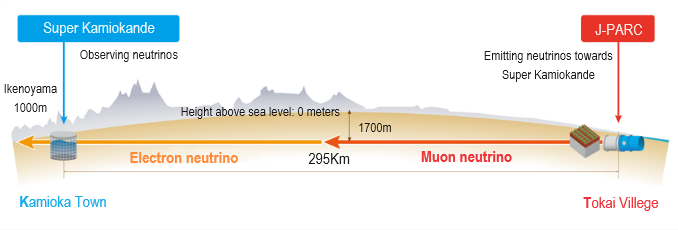
<br />&nbsp; The T2K experiment's neutrino beam travels 295 kilometers from Tokai to Kamioka - hence the name T2K. Tokai is home to the Japan Proton Accelerator Research Complex (J-PARC) and Kamioka hosts the Super-Kamiokande neutrino detector, an enormous tank of ultrapure water located a kilometer underground. 
<br />&nbsp; Since the experiments have similar science goals but different baselines and different neutrino energies, physicists can learn more by combining their data. 
<br />&nbsp; "By making a joint analysis you can get a more precise measurement than each experiment can produce alone," says NOvA collaborator Liudmila Kolupaeva. "As a rule, experiments in high-energy physics have different designs even if they have the same science goal. Joint analyses allow us to use complementary features of these designs." 
<br />&nbsp; As long-baseline experiments, NOvA and T2K are ideal for studying neutrino oscillations, a phenomenon that can provide insight into open questions like charge-parity violation and the neutrino mass ordering. Two experiments with different baselines and energies have a better chance of disentangling the two effects than one experiment alone. </p>

<h3>Interrogating neutrino oscillations</h3>
<p><span style="font-family: arial,helvetica,sans-serif;">&nbsp; The mystery of neutrino mass ordering is the question of which neutrino is the lightest. But it isn't as simple as placing particles on a scale. Neutrinos have miniscule masses that are made up of combinations of mass states. There are three neutrino mass states, but, confusingly, they don't map to the three neutrino flavors. In fact, each flavor is made of a mix of the three mass states, and each mass state has a different probability of acting like each flavor of neutrino. 
<br />&nbsp; There are two possible mass orderings, called normal or inverted. Under the normal ordering, two of the mass states are relatively light and one is heavy, while the inverted ordering has two heavier mass states and one light. 
<br />&nbsp; In the normal ordering, there is an enhanced probability that muon neutrinos will oscillate to electron neutrinos but a lower probability that muon antineutrinos will oscillate to electron antineutrinos. In the inverted ordering, the opposite happens. However, an asymmetry in the neutrinos' and antineutrinos' oscillations could also be explained if neutrinos violate CP symmetry - in other words, if neutrinos don't behave the same as their antimatter counterparts. 
<br />&nbsp; The combined results of NOvA and T2K do not favor either mass ordering. If the neutrino mass ordering is found to be normal, NOvA's and T2K's results are less clear on CP symmetry, requiring additional data to clarify. However, if future results show the neutrino mass ordering is inverted, the results published today provide evidence that neutrinos violate CP symmetry, potentially explaining why the universe is dominated by matter instead of antimatter. 
<br />&nbsp; "Neutrino physics is a strange field. It is very challenging to isolate effects," says Kendall Mahn, co-spokesperson for T2K. "Combining analyses allows us to isolate one of these effects, and that's progress." 
<br />&nbsp; The combined analysis does provide one of the most precise values of the difference in mass between neutrino mass states, a quantity called Δm232. With an uncertainty below 2%, the new value will enable physicists to make precision comparisons with other neutrino experiments to test whether the neutrino oscillation theory is complete. </p>

<h3>What's next</h3>
<p><span style="font-family: arial,helvetica,sans-serif;">&nbsp; These first joint results do not definitively solve any mysteries of neutrinos, but they do add to physicists' knowledge about the particles. Plus, they validate the impressive collaborative effort between two competing - yet complementary - experiments. 
<br />&nbsp; The NOvA collaboration consists of more than 250 scientists and engineers from 49 institutions in eight countries. The T2K collaboration has more than 560 members from 75 institutions in 15 countries. The two collaborations began active work on this joint analysis in 2019. It combines 6 years of data from NOvA, which began collecting data in 2014, and a decade of data from T2K, which started up in 2010. Both experiments continue to take data, and efforts are already underway to update the joint analysis with the new data. 
<br />&nbsp; "The joint analysis work has benefited both collaborations," says Patricia Vahle, co-spokesperson for NOvA. "We have a much better mutual understanding of the strengths and challenges of the different experimental setups and analysis techniques." 
<br />&nbsp; NOvA and T2K are the only currently operating long-baseline neutrino experiments. Their initial combined results lay a foundation for forthcoming neutrino experiments that will answer the questions around neutrinos unambiguously. 
<br />&nbsp; The Fermilab led Deep Underground Neutrino Experiment is under construction in Illinois and South Dakota in the U.S. With its longer baseline of 1,300 kilometers, DUNE will be more sensitive to neutrino mass ordering and could give physicists a conclusive answer shortly after it turns on in the early years of the next decade. 
<br />&nbsp; In Japan, Hyper-Kamiokande, the successor to Super-Kamiokande, is currently under construction in an underground mine in Kamioka, Hida City, Gifu Prefecture, with experiments scheduled to begin in 2028. Hyper-Kamiokande will conduct highly sensitive searches for CP symmetry violation through high-statistics measurements made possible by a detector about eight times larger and an intense neutrino beam. 
<br />&nbsp; Many physicists hope these next-generation neutrino experiments can come together - as NOvA and T2K have already done - to make progress on their shared scientific goals to learn more about neutrinos and their unusual properties. 
<br />&nbsp; "As shown in this very analysis, there are no truly 'rivaling' experiments because they all share a common goal of scientific study of a phenomenon," says Nosek. "Collaborating is naturally important for the transfer of knowledge, know-how and experience, and for sharing resources, ideas and tools. The T2K-NOvA collaboration is not merely a sum of T2K and NOvA collaborations. It is much, much more." </p>

<table>
<tbody>
<tr>
<td style="border-color: #ffffff;"><a href="uploads/2025/20251023-090002_02e.jpg"><img alt="20251023-090002_02e" src="assets_c/2025/10/20251023-090002_02e-thumb-200xauto-10636.jpg" width="200" height="133" class="mt-image-center" style="text-align: center; display: block; margin: 0 auto 20px;" /></a></td>
<td style="border-color: #ffffff;"><a href="uploads/2025/20251023-090002_03e.jpg"><img alt="20251023-090002_03e" src="assets_c/2025/10/20251023-090002_03e-thumb-200xauto-10638.jpg" width="200" height="133" class="mt-image-center" style="text-align: center; display: block; margin: 0 auto 20px;" /></a></td>
</tr>
</tbody>
</table>
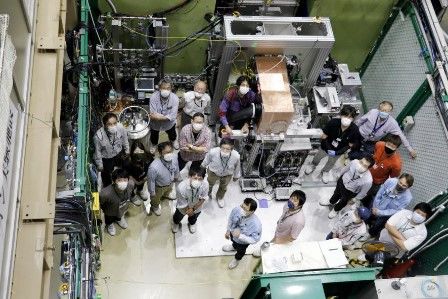
<p align="center"><span style="font-family: arial,helvetica,sans-serif;">Fig. 2: The T2K collaboration (left) and the NOvA collaboration (right). </span></p>

<h3>Publication Details</h3>
<div style="margin-left: 60px;">Title: Joint neutrino oscillation analysis from the T2K and NOvA experiments
<br />Authors: S.Abubakar et al. (NOvA and T2K collaboration)
<br />Journal: Nature Vol. 646, pp.818-824, on October 22, 2025
<br /><a href="https://www.nature.com/articles/s41586-025-09599-3" style="text-decoration: none" target="_blank"><font color="blue">https://www.nature.com/articles/s41586-025-09599-3</font></a></div>

<h3>Media contacts for further inquires</h3>

<div style="margin-left: 60px;"><strong>Globally: </strong></div>
<div style="margin-left: 60px;">Dr. Ken Sakashita, Spokesperson, KEK/J-PARC (Tokai, Japan) </div>
<div style="margin-left: 60px;">Dr. Kendall Mahn, International Co-Spokesperson, Michigan State University (Michigan, USA) </div>
<div style="margin-left: 40px;">&nbsp;</div>

<div style="margin-left: 60px;"><strong>About KEK: </strong></div>
<div style="margin-left: 60px;">PR office, High Energy Accelerator Research Organization (KEK, Japan) </div>
<div style="margin-left: 60px;">Email: press[at]kek.jp</div>
<div style="margin-left: 40px;">&nbsp;</div>

<div style="margin-left: 60px;"><strong>About ICRR</strong></div>
<div style="margin-left: 60px;">PR Office, Kamioka Observatory, Institute for Cosmic Ray Research, The University of Tokyo (ICRR, Japan) </div>
<div style="margin-left: 40px;">&nbsp;</div>

<div style="margin-left: 60px;"><strong>About J-PARC</strong></div>
<div style="margin-left: 60px;">PR section, J-PARC</div>
<div style="margin-left: 60px;">Email: pr-section[at]j-parc.jp</div>

<div style="margin-left: 40px;">&nbsp;</div>
<div style="margin-left: 60px;">&nbsp; *Please replace "[at]" with "@"</div>
<div style="margin-left: 40px;">&nbsp;</div>

]]>
        
    </content>
</entry>

<entry>
    <title>A Lightweight Flexible Alloy for Extreme Temperatures</title>
    <link rel="alternate" type="text/html" href="2025/02/27001478.html" />
    <id>tag:cms01.j-parc.jp,2025:/c/en/press-release//7.1478</id>

    <published>2025-02-27T05:00:00Z</published>
    <updated>2025-02-27T06:31:24Z</updated>

    <summary><![CDATA[ &nbsp; Researchers at Tohoku University...]]></summary>
    <author>J-PARC</author>
    
        <category term="Materials and Life Science" />
    
    
    <content type="html" xml:lang="ja" xml:base="http://cms01.j-parc.jp/c/en/press-release/">
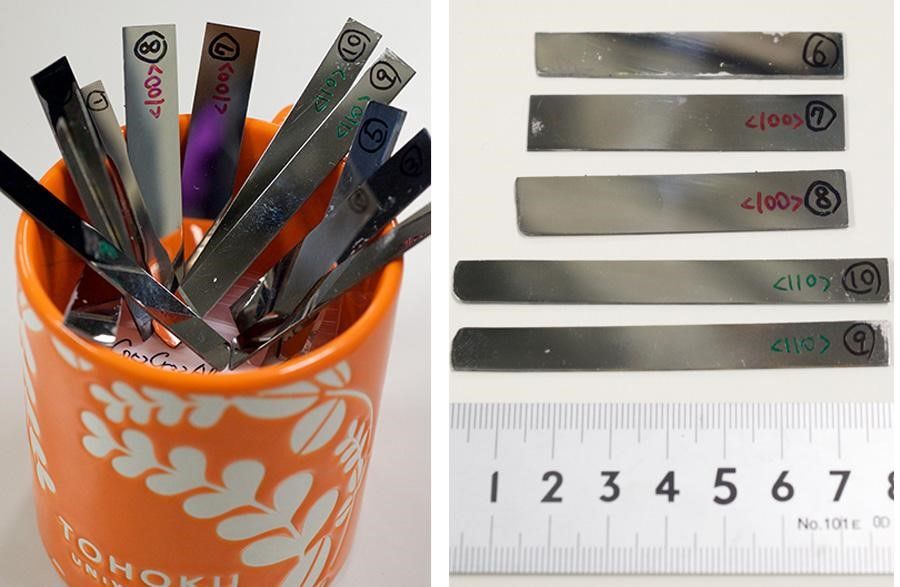
        <![CDATA[<p><a name="fig1"></a><a href="uploads/2025/20250227_01.jpg"><img alt="20250227_01e" src="assets_c/2025/02/20250227_01-thumb-350xauto-9512.jpg" width="350" height="233" class="mt-image-center" style="text-align: center; display: block; margin: 0 auto 20px;" /></a></p>

<p><span style="font-family: arial,helvetica,sans-serif;">&nbsp; Researchers at Tohoku University have developed a groundbreaking titanium-aluminum (Ti-Al)-based superelastic alloy. This new material is not only lightweight but also strong, offering the unique superelastic capability to function across a broad temperature range--from as low as -269&deg;, the temperature of liquid helium, to +127&deg;, which is above the boiling point of water. This discovery holds significant potential for a variety of applications, including those in space exploration and medical technology. </span></p>

<p><span style="font-family: arial,helvetica,sans-serif;">&nbsp; Sheng Xu, an Assistant Professor at Tohoku University's Frontier Research Institute for Interdisciplinary Sciences, emphasized the importance of the alloy's wide operational temperature range. "This alloy is the first of its kind to maintain superelasticity at such an extreme range of temperatures while remaining lightweight and strong, which opens up a variety of practical applications that were not possible before. The alloy's properties make it ideal for future space missions, such as creating superelastic tires for lunar rovers to navigate the extreme temperature fluctuations on the Moon's surface." </span></p>

<p><span style="font-family: arial,helvetica,sans-serif;">&nbsp; The alloy's flexibility at extremely low temperatures makes it a promising material useful at liquid hydrogen environment, holding promise for applications in the forthcoming Hydrogen Society and various other industries. Of course, the alloy can be used in everyday applications requiring flexibility, such as medical devices like stents. </span></p>

<p><a name="fig2"></a><a href="uploads/2025/20250227_02e.jpg"><img alt="20250227_02e" src="assets_c/2025/02/20250227_02e-thumb-400xauto-9507.jpg" width="400" height="233" class="mt-image-center" style="text-align: center; display: block; margin: 0 auto 20px;" /></a></p>


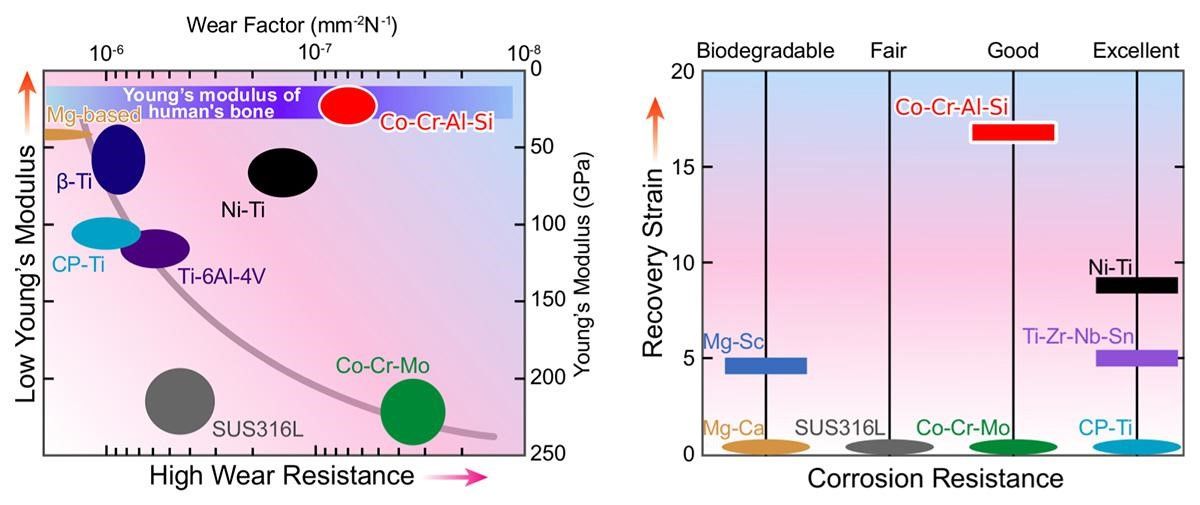
<p><span style="font-family: arial,helvetica,sans-serif;">&nbsp; Currently, most shape-memory alloys--materials capable of regaining their original shape after force is removed--are limited to specific temperature ranges. The new Ti-Al-based alloy overcomes this limitation, offering wide applicability in fields that require materials with exceptional strength and flexibility, from space exploration to everyday medical tools. </span></p>

<p><span style="font-family: arial,helvetica,sans-serif;">&nbsp; The research team employed advanced techniques such as rational alloy design and precise microstructure control. By using phase diagrams, the researchers were able to select alloy components and their proportions. Additionally, they optimized processing and heat treatment methods to achieve the desired material properties. </span></p>

<p><span style="font-family: arial,helvetica,sans-serif;">&nbsp; The implications of this study extend beyond immediate practical applications. "This discovery not only sets a new standard for superelastic materials but also introduces new principles for material design, which will undoubtedly inspire further breakthroughs in materials science," Xu added. </span></p>

<p><span style="font-family: arial,helvetica,sans-serif;">&nbsp; Details of the breakthrough were published in the journal Nature on February 26, 2025. </span></p>

<p><a name="fig3"></a><a href="uploads/2025/20250227_03e.jpg"><img alt="20250227_03e" src="assets_c/2025/02/20250227_03e-thumb-400xauto-9510.jpg" width="400" height="358" class="mt-image-center" style="text-align: center; display: block; margin: 0 auto 20px;" /></a></p>

<h3>Publication Details</h3>
<table class="table table-responsive">
<tbody>
<tr>
<th>Title</th>
<td>A lightweight shape-memory alloy with superior temperature fluctuation resistance</td>
</tr>
<tr>
<th>Authors</th>
<td>Yuxin Song<sup>#</sup>, Sheng Xu<sup>#*</sup>, Shunsuke Sato, Inho Lee, Xiao Xu, Toshihiro Omori<sup>*</sup>, Makoto Nagasako, Takuro Kawasaki, Ryoji Kiyanagi, Stefanus Harjo, Wu Gong, Tomáš Grabec, Pavla Stoklasová, Ryosuke Kainuma<sup>*</sup></td>
</tr>
<tr>
<th>Journal</th>
<td>Nature</td>
</tr>
<tr>
<th>DOI</th>
<td><a href="https://doi.org/10.1038/s41586-024-08583-7" style="text-decoration: none" target="_blank"><font color="blue">https://doi.org/10.1038/s41586-024-08583-7</font></a></td>
</tr>
</tbody>
</table>
<div style="margin-left: 40px;">&nbsp;</div>]]>
        
    </content>
</entry>

<entry>
    <title>Breakthrough in High-Performance Oxide-Ion Conductors Using Rubidium</title>
    <link rel="alternate" type="text/html" href="2025/02/21001472.html" />
    <id>tag:cms01.j-parc.jp,2025:/c/en/press-release//7.1472</id>

    <published>2025-02-21T05:00:00Z</published>
    <updated>2025-02-21T05:32:03Z</updated>

    <summary><![CDATA[ &nbsp; Rubidium could be the next key p...]]></summary>
    <author>J-PARC</author>
    
        <category term="Materials and Life Science" />
    
    
    <content type="html" xml:lang="ja" xml:base="http://cms01.j-parc.jp/c/en/press-release/">
        <![CDATA[<div class="wrap_blue">
<p><span style="font-family: arial,helvetica,sans-serif;"><b>&nbsp; Rubidium could be the next key player in oxide-ion conductors. Researchers at Institute of Science Tokyo have discovered a rare rubidium (Rb)-containing oxide-ion conductor, Rb<sub>₅</sub>BiMo<sub>₄</sub>O<sub>₁₆</sub>, with exceptionally high conductivity. Identified through computational screening and experiments, its superior performance stems from low activation energy and structural features like large free volume and tetrahedral motion. Its stability under various conditions offers a promising direction for solid oxide fuel cells and clean energy technologies. </b></span></p>
</div>

<p><span style="font-family: arial,helvetica,sans-serif;">&nbsp; Oxide-ion conductors enable oxide ions (O<sup>²⁻</sup>) to transport in solid oxide fuel cells (SOFCs), which can run on diverse fuels beyond hydrogen, including natural gas, and biogas, and even certain liquid hydrocarbons. This flexibility makes them particularly valuable during the transition to a hydrogen economy. While SOFCs hold transformative potential from an energy sustainability perspective, their widespread adoption is still challenged by their cost, durability, and operating temperature range. Overcoming these hurdles requires the development of better oxide-ion conductors, and researchers in the world are constantly trying out new materials with different chemical compositions. Could rubidium (Rb) be the key to high-performance oxide-ion conductors?  </span></p>


<p><span style="font-family: arial,helvetica,sans-serif;">&nbsp; A research team from Institute of Science Tokyo (Science Tokyo), Japan, led by Professor Masatomo Yashima at the Department of Chemistry, School of Science, set out to answer this question. They explored the untapped potential of Rb as the next major advancement in next major advance in oxide-ion conductor technology through a systematic and comprehensive approach. Their findings were published online in <a href="https://pubs.acs.org/doi/10.1021/acs.chemmater.4c03148" style="text-decoration: none" target="_blank"><font color="blue"><i>Chemistry of Materials</i></font></a> on February 2, 2025. </span></p>


<p><span style="font-family: arial,helvetica,sans-serif;">&nbsp; Since Rb<sup>+</sup> is one of the largest cations (second only to the cesium ion), crystalline Rb-containing oxides are expected to have a larger lattice and free volumes, potentially leading to lower activation energy for oxide-ion conductivity. Based on this idea, the researchers first performed a computational screening of 475 Rb-containing oxides using bond-valence-based energy calculations. They found that palmierite-type oxide materials, which have a crystal structure similar to the naturally occurring mineral palmierite, exhibited a relatively low energy barrier for oxide-ion migration. </span></p>

<p><span style="font-family: arial,helvetica,sans-serif;">&nbsp; Considering that several bismuth (Bi)-containing materials and molybdenum (Mo)-containing oxides exhibited high oxide-ion conductivity in previous studies, the team selected Rb<sub>5</sub>BiMo<sub>4</sub>O<sub>16</sub> as a promising candidate. To validate their selection, they conducted a series of experiments, including material synthesis, conductivity measurements, chemical and electrical stability tests, and detailed compositional and crystal structure analyses. They also performed theoretical calculations and ab initio molecular dynamics simulations to explore the underlying mechanisms behind the measured properties.  </span></p>

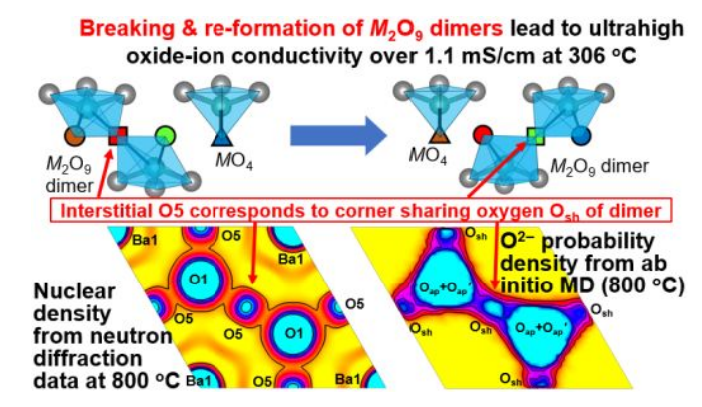
<p><span style="font-family: arial,helvetica,sans-serif;">&nbsp; The results were highly promising. As Yashima remarks, "Surprisingly, Rb<sub>5</sub>BiMo<sub>4</sub>O<sub>16</sub> exhibited a high oxide-ion conductivity of 0.14 mS/cm at 300&deg;, which is 29 times higher than that of yttria-stabilized zirconia at 300&deg; and comparable to the leading oxide-ion conductors with similar tetrahedral moieties." Several factors were identified by the research team to explain this exceptional oxide-ion conductivity. First, the large Rb atoms facilitate a low activation energy for oxide ion conductivity. This oxide-ion conductivity is further enhanced by the rotation and arrangement of the MoO<sub>₄</sub> tetrahedra within the crystal lattice. In addition, the anisotropic large thermal vibration of oxygen atoms in the material also contributes to oxide-ion conductivity. Finally, the presence of large Bi cations with a lone pair of electrons also plays an important role in lowering the activation energy for oxide-ion migration.  </span></p>

<p><span style="font-family: arial,helvetica,sans-serif;">&nbsp; Another remarkable aspect of Rb<sub>5</sub>BiMo<sub>4</sub>O<sub>16</sub> is its stability at high temperatures under various conditions, including CO<sub>2</sub> flow, wet air flow, wet 5% hydrogen in nitrogen flow, and its stability at about 21&deg; in water. "The discovery of Rb-containing oxides with both high conductivity and high stability may open a new avenue for the development of oxide-ion conductors," comments Yashima. "We expect that these advances will lead to new applications and markets for Rb, as well as contribute to lowering the operating temperature and reducing the cost of solid oxide fuel cells."</span></p>

<p><span style="font-family: arial,helvetica,sans-serif;">&nbsp; Further research in this field could pave the way for better oxide-ion conductors in sustainability-focused energy applications, as well as in devices like oxygen membranes, gas sensors, and catalysts. </span></p>

<h3>Reference</h3>
<table class="table table-responsive">
<tbody>
<tr>
<th>Authors</th>
<td>Yuta Yasui<sup>1</sup>, Kazuaki Jojima<sup>1</sup>, Kotaro Fujii<sup>1</sup>, Kazuhiro Mori<sup>2,3,4</sup>, and Masatomo Yashima<sup>1,*</sup></td>
</tr>
<tr>
<th>Title</th>
<td>High Oxide-Ion Conduction in Rb-Containing Oxides</td>
</tr>
<tr>
<th>Journal</th>
<td><i>Chemistry of Materials</i></td>
</tr>
<tr>
<th>DOI</th>
<td><a href="https://doi.org/10.1021/acs.chemmater.4c03148" style="text-decoration: none" target="_blank"><font color="blue">10.1021/acs.chemmater.4c03148</font></a></td>
</tr>
<tr>
<th>Affiliations</th>
<td><sup>1</sup> Department of Chemistry, School of Science, Institute of Science Tokyo, Japan
<br /> <sup>2</sup> Institute of Materials Structure Science, High Energy Accelerator Research Organization (KEK), Japan
<br /> <sup>3</sup> Graduate Institute for Advanced Studies, The Graduate University for Advanced Studies (SOKENDAI), Japan
<br /> <sup>4</sup> Graduate School of Science and Engineering, Ibaraki University, Japan
</td>
</tr>
</tbody>
</table>
<p><a href="uploads/2025/J-PARCPressRelease20250221_01e.jpg"><img alt="J-PARCPressRelease20250221_01e" src="assets_c/2025/02/J-PARCPressRelease20250221_01e-thumb-450xauto-9452.jpg" width="450" height="415" class="mt-image-center" style="text-align: center; display: block; margin: 0 auto 20px;" /></a></p>

<div style="margin-left: 40px;">&nbsp;</div>]]>
        
    </content>
</entry>

<entry>
    <title><![CDATA[Elucidating the redox potential regulation mechanism common to all living organisms by an &quot;electron carrier&quot; protein for energy acquisition]]></title>
    <link rel="alternate" type="text/html" href="2024/12/02001427.html" />
    <id>tag:cms01.j-parc.jp,2024:/c/en/press-release//7.1427</id>

    <published>2024-12-02T05:00:00Z</published>
    <updated>2024-12-02T06:20:04Z</updated>

    <summary> Osaka University Ibaraki University Uni...</summary>
    <author>J-PARC</author>
    
        <category term="Materials and Life Science" />
    
    
    <content type="html" xml:lang="ja" xml:base="http://cms01.j-parc.jp/c/en/press-release/">
        <![CDATA[<p align="right"><span style="font-family: arial,helvetica,sans-serif;">
Osaka University<br />
Ibaraki University<br />
University of Miyazaki<br />
Tokyo University of Pharmacy and Life Sciences<br />
Kurume University<br />
Ibaraki Prefecture<br />
J-PARC Center<br />
Comprehensive Research Organization for Science and Society (CROSS) <br />
Japan Synchrotron Radiation Research Institute（JASRI）</p>

<p><span style="font-family: arial,helvetica,sans-serif;">&nbsp; A research group led by Professor Yasutaka Kitagawa of Osaka University, Professor Kei Wada of Miyazaki University, and Professor Masaki Unno of Ibaraki University (in collaboration with researchers from Tokyo University of Pharmacy and Life Sciences, Kurume University, CROSS, and JASRI) has revealed a mechanism for controlling the potential of an "electron carrier" protein in the redox reaction that all organisms need to obtain energy. Based on experiments using the Ibaraki Biological Crystal Diffractometer (iBIX) at the Materials and Life Science Experimental Facility (MLF) in the Japan Proton Accelerator Research Complex (J-PARC), the precise 3D structure of the protein including hydrogen atoms was determined, and theoretical calculations using this data visualized the electronic structure of the iron-sulfur cluster. As the results, it was revealed, for the first time, that the electric potential of the iron-sulfur cluster changes dramatically depending on the presence or absence of a single hydrogen atom at an amino acid side chain, a so-called "nano-switch" mechanism. <br />&nbsp; This study was published in the online edition of the international scientific journal <a name="BNo1"></a><a href="#No1" style="text-decoration: none"><font color="blue"><i>eLife<sup>*1</sup></i></font></a> on November 15, 2024 (Reviewed Preprint). </p>

<p><a name="fig0"></a><a href="uploads/2024/20241202_00e.png"><img alt="20241202_00e" src="assets_c/2024/12/20241202_00e-thumb-400xauto-9104.png" width="400" height="226" class="mt-image-center" style="text-align: center; display: block; margin: 0 auto 20px;" /></a></p>

<div class="wrap_blue">
<h3>Points</h3>
<p><span style="font-family: arial,helvetica,sans-serif;">
<br />&nbsp;&lowast;&nbsp; Most reactions in living organisms involve the "electrons" transfer, which is called redox reaction. For example, respiration and photosynthesis can be classified as redox reactions. Some proteins that assist in the electron transfer contain irons and sulfurs.
<br />&nbsp;&lowast;&nbsp; Ferredoxin is a small protein that holds iron-sulfur clusters inside it and is known as the "electron carrier" in living organisms. Ferredoxin is a universal protein that is thought to be present in almost all living organisms, however, the mechanism by which ferredoxin stably carries electrons has remained a mystery to date.
<br />&nbsp;&lowast;&nbsp; In this study, we have succeeded in determining the precise three-dimensional structure of a ferredoxin at the hydrogen atomic level in experiments using a neutron beam. Visualizing hydrogen atoms in protein molecules using neutrons is extremely difficult, and only less than 0.2% of the entire protein three-dimensional structure database (Protein Data Bank; PDB) has been reported. 
<br />&nbsp;&lowast;&nbsp; Theoretical calculations using experimental geometry including hydrogen atoms were performed to elucidate the electronic structure of the iron-sulfur cluster in the ferredoxin. As a result, it was revealed, for the first time, that an amino acid residue (aspartic acid 64) located far from the iron-sulfur cluster has a significant effect on probability of electron transfer in the iron-sulfur cluster, and plays a role like a switch that controls the electron transfer in ferredoxin. Furthermore, it was shown that the mechanism is universal in various organisms.
<br />&nbsp;&lowast;&nbsp; The results will not only deepen our scientific understanding of biological reactions but also provide a major clue to the future development of ultra-sensitive sensors for oxygen and nitric oxide and novel drugs. </span></p></div>

<h3>Background</h3>
<p><span style="font-family: arial,helvetica,sans-serif;">&nbsp; In living organisms, electrons are constantly being transferred between substances. Donating electrons to a substance is called "reduction"; drawing electrons from a substance is called "oxidation". These repeated reactions are called "redox reactions". Respiration and photosynthesis are typical examples of redox reactions in living organisms. <br />&nbsp; In living organisms, various proteins assist in redox reactions, some of which contain clusters of iron and sulfur (iron-sulfur clusters), and these iron-sulfur clusters play important functions in the transfer of electrons between proteins. Ferredoxin, a small protein containing iron-sulfur clusters, is thought to be present in almost all living organisms and is a typical example of an "electron carrier". The history of ferredoxin research is old; it began 60 years ago. Various types of ferredoxins with various iron-sulfur clusters which contain different numbers of constituent irons and sulfurs have been discovered (<b>Figure 1</b>).</span></p>

<p><a name="fig1"></a><a href="uploads/2024/20241202_01e.png"><img alt="20241202_01e" src="assets_c/2024/12/20241202_01e-thumb-400xauto-9106.png" width="400" height="163" class="mt-image-center" style="text-align: center; display: block; margin: 0 auto 20px;" /></a></p>
<p><span style="font-family: arial,helvetica,sans-serif;">&nbsp;Figure 1. Examples of typical iron-sulfur clusters. The yellow-green spheres are sulfurs, and the gray spheres are irons. There are cases in which some of these are present in combination in a single protein molecule. The letters Cys represent sulfurs of cysteines in the protein. </p>

<p><span style="font-family: arial,helvetica,sans-serif;">&nbsp; While water flows from high to low by nature, electrons flow from low to high potential energy ( "potential" or "electrostatic potential" ). The potentials (redox potentials) of ferredoxins, which have various types of iron-sulfur clusters, are diverse and wide-ranging. Ferredoxins raise and lower the redox potentials of their iron-sulfur clusters like an elevator, sometimes giving electrons to other proteins and sometimes withdrawing them from others. However, how this is controlled remains unclear. <br />&nbsp; Although theoretical calculations based on a method called <a name="BNo2"></a><a href="#No2" style="text-decoration: none"><font color="blue">"density functional theory"<sup>*2</sup></font></a> can be used to study the <a name="BNo3"></a><a href="#No3" style="text-decoration: none"><font color="blue">electronic structure<sup>*3</sup></font></a> of ferredoxin, it requires an accurate 3D structure of ferredoxin including the hydrogen atoms for accurate calculations. However, since it is extremely difficult to determine the position of hydrogen atoms in a protein molecule, theoretical calculations for most proteins, including ferredoxin, have conventionally used "assumed" positions of hydrogen atoms. If the assumed positions of the hydrogen atoms differ from the exact ones, the most fundamental assumptions of the theoretical calculations would break down and the obtained conclusions would be meaningless. The research group, therefore, set out to experimentally determine the positions of hydrogen atoms in ferredoxin, and to elucidate the electronic structure of the iron-sulfur cluster based on experimental facts. </p>

<h3>Research Methods</h3>
<p><span style="font-family: arial,helvetica,sans-serif;">&nbsp; Currently, X-ray crystallography (Nobel Prize in Chemistry 1962) and cryo-electron microscopy (Nobel Prize in Chemistry 2017) are commonly used to analyze the 3D structure of proteins with resolutions at the atomic levels, however, these methods are not suitable for identifying the smallest hydrogen atom. In addition, even the protein structure prediction algorithm (AlphaFold), which won this year's (2024) Nobel Prize in Chemistry, cannot predict the exact locations of hydrogen atoms to date. Therefore, in this study, we used <a name="BNo4"></a><a href="#No4" style="text-decoration: none"><font color="blue">neutron crystallography<sup>*4</sup></font></a>, which can identify hydrogen atoms with the same degree of clarity as other atoms in proteins. <br />&nbsp; In this research, after overcoming the high hurdle of growing very large ferredoxin crystals, we patiently collected data using neutrons at the <a name="BNo5"></a><a href="#No5" style="text-decoration: none"><font color="blue">Ibaraki Biological Crystal Diffractometer (iBIX) <sup>*5</sup></font></a> in the Materials and Life Science Experimental Facility (MLF) at the <a name="BNo6"></a><a href="#No6" style="text-decoration: none"><font color="blue">Japan Proton Accelerator Research Complex (J-PARC) <sup>*6</sup></font></a> in Tokai-mura, Ibaraki Prefecture The data was collected using neutrons. <br />&nbsp; Furthermore, using the experimentally determined precise structure, the electrons in the iron-sulfur cluster were investigated by theoretical calculations based on quantum mechanics and quantum chemistry (density functional theory). The results obtained were verified by using various mutants of ferredoxin, in which one amino acid in ferredoxin was altered by gene manipulation, as a sample, and by conducting experiments in a chamber where oxygen was excluded to the utmost limit to prevent oxidation of the iron-sulfur clusters by air. </p>

<h3>Results</h3>
<p><span style="font-family: arial,helvetica,sans-serif;">&nbsp; In this study, the 3D structure of ferredoxin, which has four iron and four sulfur clusters in the molecule ([4Fe-4S]-type clusters; <b>Figure 1</b>), was determined by neutron crystallography, and the exact positions of atoms including hydrogen around the iron-sulfur cluster were experimentally determined (<b>Figure 2</b>). The actual positions of hydrogen atoms around the iron-sulfur cluster were found to be different from the previously predicted position (<b>Figure 3</b>). Based on the exact positions of the hydrogen atoms, the electronic structure around the iron-sulfur cluster was calculated theoretically, and it was found, for the first time, that electrons originating from the iron-sulfur cluster are distributed not only around the iron-sulfur cluster but also to aspartic acid 64 (Asp64) at a distance of more than 1 nm (nanometer = 0.000001 mm) away from the cluster. (<b>Figure 3 and Figure 4</b>). (1 nm is too long a distance in a protein molecule for direct interaction.) Interestingly, this electron distribution was observed only in the absence of a hydrogen atom (-COO-) in the side chain (carboxy group: -COOH) of Asp64, while in the presence of a hydrogen atom (-COOH), the electrons were distributed only around the iron-sulfur cluster (<b>Figure 4</b>). In fact, by measuring the rate at which the iron-sulfur cluster is oxidized and the redox potential, we proved that Asp64 has a significant effect on the reactivity of the iron-sulfur cluster. Although ferredoxin contains multiple aspartic acids, only Asp64 showed such a phenomenon. Furthermore, in ferredoxins from various microorganisms, aspartic acid residues in similar 3D positions were found to affect the electronic structure of the iron-sulfur cluster. <br />&nbsp; In this study, we elucidate for the first time in the world the existence of a "nano-switch mechanism" in which the presence or absence of a single hydrogen atom in the aspartic acid side chain changes the electronic state of the iron-sulfur cluster (<b>Figure 5</b>). This nano-switch mechanism has also been shown to be conserved in archaea and is believed to be widely used in the biological world. </p>

<p><a name="fig2"></a><img alt="20241202_02e" src="uploads/2024/20241202_02e.png" width="343" height="235" class="mt-image-center" style="text-align: center; display: block; margin: 0 auto 20px;" /></p>
<p><span style="font-family: arial,helvetica,sans-serif;">Figure 2. Left: The overall structure of [4Fe-4S]-type ferredoxin containing hydrogen atoms, which was successfully analyzed using neutrons in this study. Hydrogen atoms are highlighted by gray spheres. Right: An X-ray image of the overall structure of the same ferredoxin that was previously known. </p>

<p><a name="fig3"></a><img alt="20241202_03e" src="uploads/2024/20241202_03e.png" width="296" height="201" class="mt-image-center" style="text-align: center; display: block; margin: 0 auto 20px;" /></p>
<p><span style="font-family: arial,helvetica,sans-serif;">Figure 3. Structure around the iron-sulfur cluster. Hydrogen bonds are indicated by dotted lines. For example, threonine 63 was initially thought to be hydrogen bonded to the iron-sulfur cluster (circled in red), however, neutron crystallography showed that the hydrogen atom of its -OH was in the other direction, forming hydrogen bonds with the main chain of threonine 10. </p>

<p><a name="fig4"></a><img alt="20241202_04e" src="uploads/2024/20241202_04e.png" width="388" height="269" class="mt-image-center" style="text-align: center; display: block; margin: 0 auto 20px;" /></p>
<p><span style="font-family: arial,helvetica,sans-serif;">Figure 4. Structure around the iron-sulfur cluster. Hydrogen bonds are indicated by dotted lines. For example, threonine 63 was initially thought to be hydrogen bonded to the iron-sulfur cluster (circled in red), however, neutron crystallography showed that the hydrogen atom of its -OH was in the other direction, forming hydrogen bonds with the main chain of threonine 10. </p>

<p><a name="fig5"></a><a href="uploads/2024/20241202_05e.png"><img alt="20241202_05e" src="assets_c/2024/12/20241202_05e-thumb-400xauto-9111.png" width="400" height="198" class="mt-image-center" style="text-align: center; display: block; margin: 0 auto 20px;" /></a></p>
<p align="center"><span style="font-family: arial,helvetica,sans-serif;">Figure 5. A schematic drawing of the electron transfer mechanism by ferredoxin that revealed in this study. </p>

<h3>Future Expectations</h3>
<p><span style="font-family: arial,helvetica,sans-serif;">&nbsp; Iron-sulfur clusters in protein molecules are involved in various reactions that play fundamental roles in biological activities. The present redox potential control switch mechanism can be applied to the control of those reactions. For example, in proteins that detect oxygen (O<sub>2</sub>) and nitric oxide (NO) in vivo, it is the iron-sulfur cluster that detects very small amounts of gases. Also, in many microorganisms, including pathogenic bacteria, [4Fe-4S]-type iron-sulfur clusters in proteins play essential roles in energy acquisition. More recently, ferredoxin and iron-sulfur clusters have been found to play important roles in cancer cells. The findings of this research will not only deepen our scientific understanding of biological reactions but also provide a major clue for the future development of ultra-sensitive sensors of O<sub>2</sub> and NO and novel drugs (e.g., anti-cancer drugs, antibiotics against pathogens, etc.). </p>

<h3>Terminologies</h3>
<div style="margin-left: 50px;">
<p id="No1"><a href="#BNo1" style="text-decoration: none"><font color="blue"><strong><span style="font-family: arial,helvetica,sans-serif;">*1: <i>eLife</i></strong></font></a>
<br />&nbsp; eLife is a non-profit, open-access journal launched in 2012 for biomedical and life sciences. Although relatively new, it is already ranked #5 in the field of Biology and Biochemistry. <a href="https://research.com/journal/elife" style="text-decoration: none" target="_blank"><font color="blue">https://research.com/journal/elife</font></a></span></p></div>

<div style="margin-left: 50px;">
<p id="No2"><a href="#BNo2" style="text-decoration: none"><font color="blue"><strong><span style="font-family: arial,helvetica,sans-serif;">*2: Density Functional Theory Method</strong></font></a>
<br />&nbsp; The DFT (Density Functional Theory) method is widely known as a method that calculates energy from the electron density of atoms and molecules. It can be applied to molecules with large sizes such as proteins because it can estimate molecular energies accurately with a relatively smaller computational costs. Since accurate structural data of molecules are required for more reliable calculations, it is very important to obtain the coordinates of hydrogen atoms experimentally. </span></p></div>

<div style="margin-left: 50px;">
<p id="No3"><a href="#BNo3" style="text-decoration: none"><font color="blue"><strong><span style="font-family: arial,helvetica,sans-serif;">*3: electronic state</strong></font></a>
<br />&nbsp; The term "electronic state" refers to the distribution and energy of electrons in a material. The function expressing distribution of each electron is called the molecular orbital, which can be used to explain the chemical bonds between atoms and, in turn, the properties of molecules. </span></p></div>

<div style="margin-left: 50px;">
<p id="No4"><a href="#BNo4" style="text-decoration: none"><font color="blue"><strong><span style="font-family: arial,helvetica,sans-serif;">*4: neutron crystallography</strong></font></a>
<br />&nbsp; An analytical method to obtain the 3D structure of molecules in a crystal by irradiating neutrons into the crystal and measuring the diffracting intensity. It is like X-ray crystallography but allows detailed observation of hydrogen atoms (or hydrogen ions = protons) due to neutrons interacting with atomic nuclei. Since X-rays are scattered by electrons, the scattering from a hydrogen atom containing only one electron is very weak and is not suitable for identifying the hydrogen atoms in the molecule. However, whereas protein X-ray crystallography can be performed even with small crystals, very large crystals are required for protein neutron crystallography. Cryo-EM can identify hydrogen atoms more easily than X-ray crystallography; however, it is currently not applicable to small proteins such as ferredoxin. Neutron crystallography was the best way to reveal the structure of this ferredoxin at the hydrogen atom level, although it is very difficult to grow large crystals of proteins. </span></p></div>

<div style="margin-left: 50px;">
<p id="No5"><a href="#BNo5" style="text-decoration: none"><font color="blue"><strong><span style="font-family: arial,helvetica,sans-serif;">*5: Ibaraki Biological Crystal Diffractometer (iBIX) </strong></font></a>
<br />&nbsp; It is the world's highest-level single-crystal diffractometer for high-resolution protein crystallography using the powerful pulsed neutron source of J-PARC at one of the two neutron beamlines installed at MLF by Ibaraki Prefecture. </span></p></div>

<div style="margin-left: 50px;">
<p id="No6"><a href="#BNo6" style="text-decoration: none"><font color="blue"><strong><span style="font-family: arial,helvetica,sans-serif;">*6: Japan Proton Accelerator Research Complex (J-PARC) </strong></font></a>
<br />&nbsp; J-PARC is the generic name for the world's largest proton accelerator and experimental facilities with the world's highest beam intensity, jointly constructed by the Japan Atomic Energy Agency (JAEA) and the High Energy Accelerator Research Organization (KEK) in Tokai-mura, Ibaraki Prefecture, Japan. Using secondary particles such as neutrons, muons, mesons, and neutrinos that are produced when accelerated protons collide with a nuclear target, cutting-edge academic research and industrial applications in materials and life sciences, nuclear and particle physics, etc. At the Materials and Life Science Experimental Facility (MLF) within J-PARC, experiments can be conducted using the world's highest performance pulsed neutron and muon beams. </span></p></div>

<h3>Research Funds</h3>
<p><span style="font-family: arial,helvetica,sans-serif;">&nbsp; These results were obtained through the following research projects and financial supports. <br />&nbsp; ● Ministry of Education, Culture, Sports, Science and Technology Grants-in-Aid for Transformative Research Areas (A), and Japan Society for the Promotion of Science (JSPS), Grant in Aid for Scientific Researches (B) and (C) <br />&nbsp; ● Research Grant from Takeda Science Foundation, Enzyme Research Grant from the Japan Foundation for Applied Enzymology, and Ibaraki Prefecture Leading Research Project Fund (Sendo-kenkyu) </span></p>

<h3>Paper Information</h3>
<p><table class="table table-responsive">
<tbody>
<tr>
<th>Title</th>
<td>Protonation/deprotonation-driven switch for the redox stability of low potential [4Fe-4S] ferredoxin </td>
</tr>
<tr>
<th>Authors</th>
<td>Kei Wada*, Kenji Kobayashi†, Iori Era†, Yusuke Isobe, Taigo Kamimura, Masaki Marukawa, Takayuki Nagae, Kazuki Honjo, Noriko Kaseda, Yumiko Motoyama, Kengo Inoue, Masakazu　Sugishima, Katsuhiro Kusaka, Naomine Yano, Keiichi Fukuyama, Masaki Mishima, Yasutaka Kitagawa*, Masaki Unno*<br />*corresponding authors †equally contributed</td>
</tr>
<tr>
<th>Journal</th>
<td>eLife</td>
</tr>
<tr>
<th>Publish date</th>
<td>Nov. 15th, 2024 (Reviewed Preprint)</td>
</tr>
<tr>
<th>DOI</th>
<td><a href="https://doi.org/10.7554/eLife.102506" style="text-decoration: none" target="_blank"><font color="blue">10.7554/eLife.102506</font></a></td>
</tr>
</tbody>
</table></p>

<h3>Researchers Information</h3>
<p><span style="font-family: arial,helvetica,sans-serif;">&nbsp; Yasutaka Kitagawa<br />&nbsp;&nbsp;&nbsp;&nbsp; Graduate School of Engineering Science, Osaka University
<br />&nbsp; Kei Wada<br />&nbsp;&nbsp;&nbsp;&nbsp; Department of Medical Sciences, University of Miyazaki
<br />&nbsp; Masaki Unno<br />&nbsp;&nbsp;&nbsp;&nbsp; Graduate School of Science and Engineering, Ibaraki University
<br />&nbsp; Masaki Mishima<br />&nbsp;&nbsp;&nbsp;&nbsp; Department of Molecular Biophysics, Tokyo University of Pharmacy and Life Sciences
<br />&nbsp; Masakazu Sugishima<br />&nbsp;&nbsp;&nbsp;&nbsp; Department of Medical Biochemistry, Kurume University School of Medicine
<br />&nbsp; Katsuhiro Kusaka<br />&nbsp;&nbsp;&nbsp;&nbsp; Neutron Science and 20 Technology Center, Comprehensive Research Organization for Science and Society (CROSS)
<br />&nbsp; Naomine Yano<br />&nbsp;&nbsp;&nbsp;&nbsp; Structural Biology Division, Japan Synchrotron Radiation Research Institute (JASRI) </p>

]]>
        
    </content>
</entry>

<entry>
    <title>The World&apos;s Most Powerful Pulsed Neutron Source at J-PARC MLF Achieved Target Performance - Realizing Long-Term Operation at the World&apos;s Highest Intensity - </title>
    <link rel="alternate" type="text/html" href="2024/05/31001348.html" />
    <id>tag:cms01.j-parc.jp,2024:/c/en/press-release//7.1348</id>

    <published>2024-05-31T06:00:00Z</published>
    <updated>2024-05-31T07:08:44Z</updated>

    <summary><![CDATA[ Key Points of the Announcement &nbsp;&l...]]></summary>
    <author>J-PARC</author>
    
        <category term="Materials and Life Science" />
    
    
    <content type="html" xml:lang="ja" xml:base="http://cms01.j-parc.jp/c/en/press-release/">
        <![CDATA[<div class="wrap_blue">
<h3>Key Points of the Announcement</h3>
<p><span style="font-family: arial,helvetica,sans-serif;">
<br />&nbsp;&lowast;&nbsp; The pulsed neutron source at J-PARC's Materials and Life Science Experimental Facility (MLF) achieved its long-term operational goal of "continuous operation with a proton beam power equivalent to 1000 kW" starting from April 8, 2024. <br />&nbsp;&lowast;&nbsp; The neutron intensity per pulse has reached more than twice that of the SNS in the United States, which is the next highest intensity pulsed neutron source in the world. 
<br />&nbsp;&lowast;&nbsp; As a result, it is expected that advanced research in material science and life science using pulsed neutrons will be further accelerated and developed. </span></p></div>

<p><a name="fig1"></a><a href="uploads/2024/20240531_01e.png"><img alt="20240531_01e" src="assets_c/2024/05/20240531_01e-thumb-400xauto-8364.png" width="400" height="260" class="mt-image-center" style="text-align: center; display: block; margin: 0 auto 20px;" /></a></p>
<p align="center"><span style="font-family: arial,helvetica,sans-serif;">Figure 1 Comparison of pulsed neutron source performances in the world</p>
<p>&nbsp;</p>

<h3>Abstract</h3>
<p><span style="font-family: arial,helvetica,sans-serif;">&nbsp; The <a name="BNo2"></a><a href="#No2" style="text-decoration: none"><font color="blue">pulsed neutron source<sup>※2</sup></font></a> at the Materials and Life Science Experimental Facility (MLF) in <a name="BNo1"></a><a href="#No1" style="text-decoration: none"><font color="blue">J-PARC<sup>※1</sup></font></a> generates pulsed neutrons with the world's highest intensity by directing a <a name="BNo3"></a><a href="#No3" style="text-decoration: none"><font color="blue">proton beam<sup>※3</sup></font></a>, accelerated to near the speed of light, at a <a name="BNo4"></a><a href="#No4" style="text-decoration: none"><font color="blue">mercury target<sup>※4</sup></font></a> (Figure 2). This reaction shatters the atomic nuclei of the mercury. Increasing the output of the proton beam produces more neutrons, thereby accelerating experiments and research using neutrons. Experiments using pulsed neutrons are an extremely effective method for conducting advanced research in material science and life science. Major countries worldwide, including the United States, EU nations, and China, are competing to develop high-output, high-performance pulsed neutron sources. </span></p>

<p><a name="fig2"></a><a href="uploads/2024/20240531_02e.png"><img alt="20240531_02e" src="assets_c/2024/05/20240531_02e-thumb-autox360-8366.png" width="350" height="360" class="mt-image-center" style="text-align: center; display: block; margin: 0 auto 20px;" /></a></p>
<p><span style="font-family: arial,helvetica,sans-serif;">&nbsp;Inside the mercury target, mercury constantly flows at a velocity of approximately 1 m/s. The powerful proton beam interacts with the mercury nuclei to generate a large number of neutrons. </p>

<p align="center"><span style="font-family: arial,helvetica,sans-serif;">Figure 2 Mercury target and internal structure</p>

<p><span style="font-family: arial,helvetica,sans-serif;">&nbsp; The MLF pulsed neutron source was designed with the goal of injecting a proton beam with the power of 1000 kW. Since operations began in 2008, we have gradually increased the beam power by continuously improving and verifying various equipment, including the mercury target. Starting on April 8, 2024, we commenced operations at an equivalent beam power of 1000 kW, achieving long-term operation for over 50 days (Figure 3). </span></p>

<p><span style="font-family: arial,helvetica,sans-serif;">&nbsp; The muon source, installed upstream of the MLF pulsed neutron source, has also achieved the world's highest intensity and long-term operation simultaneously.</span></p>

<p><span style="font-family: arial,helvetica,sans-serif;">&nbsp; Going forward, we will continue to accumulate stable operational performance, promote facility advancements including extending equipment longevity, and contribute to generating more research achievements. </span></p>

<p><a name="fig3"></a><a href="uploads/2024/20240531_03e.png"><img alt="20240531_03e" src="assets_c/2024/05/20240531_03e-thumb-400xauto-8368.png" width="400" height="248" class="mt-image-center" style="text-align: center; display: block; margin: 0 auto 20px;" /></a></p>
<p align="center"><span style="font-family: arial,helvetica,sans-serif;">&nbsp; Figure 3　History of proton beam power at MLF</p>

<div style="margin-left: 50px;">
<p id="No1"><a href="#BNo1" style="text-decoration: none"><font color="blue"><strong><span style="font-family: arial,helvetica,sans-serif;">※1 J-PARC</strong></font></a>
<br />&nbsp; The high-intensity proton accelerator facility jointly operated by the Japan Atomic Energy Agency (JAEA) and the High Energy Accelerator Research Organization (KEK). J-PARC stands for Japan Proton Accelerator Research Complex. </span></p></div>

<div style="margin-left: 50px;">
<p id="No2"><a href="#BNo2" style="text-decoration: none"><font color="blue"><strong><span style="font-family: arial,helvetica,sans-serif;">※2 Pulsed neutron source</strong></font></a>
<br />&nbsp; A device that generates a large number of neutrons in a short time of one millionth of a second, which is the pulsed neutrons, and repeats this process. The J-PARC MLF has the capability to generate pulses 25 times per second. </span></p></div>


<div style="margin-left: 50px;">
<p id="No3"><a href="#BNo3" style="text-decoration: none"><font color="blue"><strong><span style="font-family: arial,helvetica,sans-serif;">※3 Proton beam</strong></font></a>
<br />&nbsp; Protons accelerated close to the light speed using an accelerator. The higher the power of the proton beam, the more protons enter the mercury target, resulting in more neutrons being produced. </span></p></div>

<div style="margin-left: 50px;">
<p id="No4"><a href="#BNo4" style="text-decoration: none"><font color="blue"><strong><span style="font-family: arial,helvetica,sans-serif;">※4 Mercury target</strong></font></a>
<br />&nbsp; A device in which mercury flows inside a stainless-steel container, and neutrons are generated through nuclear reactions with mercury by irradiating it with proton beam. </span></p></div>


]]>
        
    </content>
</entry>

<entry>
    <title>World&apos;s first cooling and acceleration of muon - The first muon accelerator finally coming to a reality. - </title>
    <link rel="alternate" type="text/html" href="2024/05/23001341.html" />
    <id>tag:cms01.j-parc.jp,2024:/c/en/press-release//7.1341</id>

    <published>2024-05-23T00:00:00Z</published>
    <updated>2024-05-23T01:17:05Z</updated>

    <summary><![CDATA[ Executive summary Question &nbsp;&lowas...]]></summary>
    <author>J-PARC</author>
    
        <category term="Materials and Life Science" />
    
    
    <content type="html" xml:lang="ja" xml:base="http://cms01.j-parc.jp/c/en/press-release/">
        <![CDATA[<div class="wrap_blue">
<h3>Executive summary</h3>
<p><span style="font-family: arial,helvetica,sans-serif;"><font color="blue"><strong>Question</strong></font>
<br />&nbsp;&lowast; If muons can be accelerated in an accelerator, it is expected to be useful in a variety of fields such as elementary particle physics, material and life sciences, and earth science. For example, such muons are useful for ultra-precise measurement of anomallous magnetic moment (g-2) and electric dipole moment (EDM) to study new theory beyond the standard model of elementary particles. But accelerating them is technically difficult. <br />
<font color="blue"><strong>Findings</strong></font>
<br />&nbsp;&lowast; Generally, muons created in an accelerator have large variations in direction and speed, making them unsuitable for acceleration. However, if a muon has a positive charge, it can be decelerated until it almost stops, and the direction and speed can be made uniform (cooled). For the first time in the world, the research group succeeded in accelerating a positive muon to approximately 4% of the speed of light. <br />
<font color="blue"><strong>Meaning</strong></font>
<br />&nbsp;&lowast; The research group demonstrated cooling and acceleration of positive muon for the first time after continuous development of cooling and acceleration technologies in the past. This is a major step towards enabling ultra-precise survey of physics beyond the standard model. In addition, this technology offers wide range of applications such as muon microscopy and other interdisciplinary research areas. </span></div>

<p><a name="fig1"></a><a href="uploads/2024/20240523_01e.png"><img alt="20240523_01e" src="assets_c/2024/05/20240523_01e-thumb-400xauto-8332.png" width="400" height="124" class="mt-image-center" style="text-align: center; display: block; margin: 0 auto 20px;" /></a></p>
<p align="center"><span style="font-family: arial,helvetica,sans-serif;">Figure 1 Cooling and accelerating a positive muon beam</p>
<p>&nbsp;</p>
<p><a name="fig2"></a><a href="uploads/2024/20240517_02em.jpg"><img alt="20240517_02em" src="assets_c/2024/05/20240517_02em-thumb-400xauto-8334.jpg" width="400" height="267" class="mt-image-center" style="text-align: center; display: block; margin: 0 auto 20px;" /></a></p>
<p align="left"><span style="font-family: arial,helvetica,sans-serif;">Figure 2 Experimental set up for muon cooling and acceleration at the J-PARC Materials and Life Science Experimental Facility (MLF). A positive muon beam enters from the right side, is cooled in the muon cooling chamber on the right and is accelerated in the radio-frequency acceleration cavity on the left. The accelerated muon beam is measured by a diagnostics system at the exit of the acceleration cavity.</p>


<h3>Overview</h3>
<p><span style="font-family: arial,helvetica,sans-serif;">&nbsp; A muon is an elementary particle like an electron. Muons were first discovered in 1936 as cosmic rays falling from the sky. Natural muons originated from cosmic rays have been used to see through the interior of large and/or thick objects, such as pyramids. Presently, muons can be produced in much higher intensity using accelerators for the use of various research and applications. </span></p>

<p><span style="font-family: arial,helvetica,sans-serif;">&nbsp; Creation of muons in an accelerator is in three steps. First, protons are accelerated to near the speed of light. When the accelerated protons hit material such as graphite, they create particles called pions, which decay to form muons. </span></p>

<p><span style="font-family: arial,helvetica,sans-serif;">&nbsp; At J-PARC, the high intensity proton accelerator in Tokai village, Ibaraki prefecture, approximately 100 million muons are produced per second. However, the direction and speed of each muon in the beam are quite different. There are some experiments where it can be used as is. But it is not suitable for a new experiment to measure of muon g-2/EDM with ultra-precision. </span></p>

<p><span style="font-family: arial,helvetica,sans-serif;">&nbsp; There are two types of muons with a negative charge and a positive charge, and they have a particle/antiparticle relationship. A muon with a positive charge is called a positive muon, and it can be decelerated until it almost stops to align its direction and speed (cooling). After they come to a near stop, they are accelerated by an electric field. At the end of this process, they become a highly directional. </span></p>

<p><span style="font-family: arial,helvetica,sans-serif;">&nbsp; However, muons are difficult to accelerate because they do not have the same direction or speed. The acceleration cavity used for acceleration is like a narrow tube. If the directions are different, it will not be possible to efficiently put the muons into the tube. Also, if the speeds are widely distributed, the efficiency of acceleration will be poor. </span></p>

<p><span style="font-family: arial,helvetica,sans-serif;">&nbsp; At J-PARC, positive muons having a speed of about 30% the speed of light produced in a proton accelerator are shot into a material called silica aerogel. Positive muons combine with electrons in silica aerogel to form neutral atoms called muoniums. By irradiating the muonium with a laser to strip off an electron, we obtain positive muons that have been slowed down (cooled) to a nearly stopped velocity at around 0.002% of the speed of light. </span></p>

<p><span style="font-family: arial,helvetica,sans-serif;">&nbsp; After that, a radio-frequency electric field is applied to accelerate the positive muons. Since the positive muon is almost stationary, the more it accelerates, the more directional it becomes, creating a much more directional muon beam that can be used for a variety of applications. </span></p>

<p><span style="font-family: arial,helvetica,sans-serif;">&nbsp; A joint research group consisting of KEK, Okayama University, Nagoya University, Kyushu University, Ibaraki University, Japan Atomic Energy Agency, and Niigata University conducted an experiment at the muon experimental facility in the J-PARC MLF. By combining muon cooling technology and radio-frequency acceleration technology, the research group successfully demonstrated that positive muons accelerate to approximately 4% of the speed of light for the first time in the world. </span></p>

<p><span style="font-family: arial,helvetica,sans-serif;">&nbsp; Muons have a lifetime of only about 2 microseconds (2 millionths of a second), and if they are not accelerated quickly, they will decay. Also, since it is 200 times heavier than an electron, it will need to be accelerated in stages, the research group plans to continue developing the remaining parts of acceleration technology and eventually accelerate it to 94% of the speed of light. </span></p>

<p><span style="font-family: arial,helvetica,sans-serif;">&nbsp; With the initial part of the muon acceleration technology now demonstrated, the world's first muon accelerator is now within sight. The year 2024 is the first year of muon acceleration. New research opportunities using accelerated muons will follow. </span></p>

<h3>Research group</h3>
<p><span style="font-family: arial,helvetica,sans-serif;">&nbsp; J-PARC center, Particle & Nuclear Physics Division, 
<br />&nbsp; Materials & Life Science Division Muon and Neutron group, Institute of Particle and Nuclear Studies, High Energy Accelerator Research Organization (KEK) 
<br />&nbsp; Muon Science Laboratory, Institute of Materials Structure Science, KEK
<br />&nbsp; Accelerator Laboratory, KEK
<br />&nbsp; Division of Quantum Universe, Research Institute for Interdisciplinary Science, Okayama University
<br />&nbsp; Nagoya University, Graduate School of Science, Department of Physics, High Energy Physics Laboratory
<br />&nbsp; Kobayashi-Maskawa Institute for the Origin of Particles and the Universe, Nagoya University
<br />&nbsp; Experimental Particle Physics Laboratory, Department of Physics, Faculty of Science, Kyushu University
<br />&nbsp; Research Center for Advanced Particle Physics, Kyushu University
<br />&nbsp; Ibaraki University Graduate School of Science and Engineering, Institute of Quantum Beam Science, Elementary particle physics laboratory
<br />&nbsp; Japan Atomic Energy Agency
<br />&nbsp; High Energy Physics Laboratory, Faculty of Science, Niigata University
<br />&nbsp; Quantum Research Center, Institute for Research Administration, Niigata University </span></p>

<h3>Contacts</h3>
<div style="margin-left: 60px;"><strong>High Energy Accelerator Research Organization (KEK, Japan) </strong></div>
<div style="margin-left: 60px;">Dr. Tsutomu Mibe</div>
<div style="margin-left: 40px;">&nbsp;</div>

<div style="margin-left: 60px;"><strong>About KEK</strong></div>
<div style="margin-left: 60px;">PR office, High Energy Accelerator Researc h Organization (KEK, Japan) </div>
<div style="margin-left: 60px;">Email : press[at]kek.jp</div>

<div style="margin-left: 40px;">&nbsp;</div>

<div style="margin-left: 60px;"><strong>About J-PARC</strong></div>
<div style="margin-left: 60px;"><strong>PR section, J-PARC</strong></div>
<div style="margin-left: 60px;">Email : pr-section[at]j-parc.jp</div>

<div style="margin-left: 40px;">&nbsp;</div>
<div style="margin-left: 60px;">&nbsp; *Please replace "[at]" with "@"</div>
<div style="margin-left: 40px;">&nbsp;</div>

]]>
        
    </content>
</entry>

<entry>
    <title>Significant Increase in Beam Power and Electric Power Efficiency of the J-PARC Main Ring Accelerator - A Powerful Driving Force for Neutrino Research - </title>
    <link rel="alternate" type="text/html" href="2024/01/17001276.html" />
    <id>tag:cms01.j-parc.jp,2024:/c/en/press-release//7.1276</id>

    <published>2024-01-17T05:00:00Z</published>
    <updated>2024-01-23T01:07:21Z</updated>

    <summary>J-PARC CenterHigh Energy Accelerator Res...</summary>
    <author>J-PARC</author>
    
        <category term="Accelerator" />
    
    
    <content type="html" xml:lang="ja" xml:base="http://cms01.j-parc.jp/c/en/press-release/">
        <![CDATA[<p align="right"><span style="font-family: arial,helvetica,sans-serif;">J-PARC Center<br />High Energy Accelerator Research Organization (KEK) <br />Japan Atomic Energy Agency (JAEA) </p>

<div class="wrap_blue">
<h3>Story of this research</h3>
<p><span style="font-family: arial,helvetica,sans-serif;"><font color="blue"><strong>Background</strong></font>
<br />&nbsp;&lowast; At Japan Proton Accelerator Research Complex (J-PARC) in Tokai Village, Ibaraki Prefecture, we accelerate high-intensity proton beams to near light speed, conducting experiments to observe and reveal unknown phenomena in elementary particles and atomic nuclei. We have continuously endeavored to increase 'beam power,' a key indicator determined by the number of accelerated protons supplied to experimental facilities, crucial for the success of our experiments. <br />
<font color="blue"><strong>Achievements</strong></font>
<br />&nbsp;&lowast; At the accelerator, 'Main Ring,' we have incrementally increased beam power since the start of operations in 2008. On December 25, 2023, we surpassed our initial target, achieving a beam power of 760 kW through significant enhancements. Efficiently recovering and reusing energy stored in the electromagnets not only allowed us to supply beam power 1.5 times greater with the same electricity consumption but also resulted in significant energy savings. <br />
<font color="blue"><strong>Meaning</strong></font>
<br />&nbsp;&lowast; At J-PARC, the 'T2K experiment' delves into neutrino fundamentals. Neutrino research in Japan is playing the leadingrole in the world, with Nobel Prizes being awarded. It is expected that the beam power increase will enhance the T2K experiment and the following Hyper-Kamiokande project will produce new results first in the world. </span></div>

<p><a name="fig0"></a><a href="uploads/2024/20240122_01e800.jpg"><img alt="20240122_01e800" src="assets_c/2024/01/20240122_01e800-thumb-350xauto-7844.jpg" width="350" height="234" class="mt-image-center" style="text-align: center; display: block; margin: 0 auto 20px;" /></a></p>
<p align="center"><span style="font-family: arial,helvetica,sans-serif;">Electromagnets at J-PARC's Main Ring</p>

<h3>50 words summary</h3>
<p><span style="font-family: arial,helvetica,sans-serif;">&nbsp; We surpassed our initial target, achieving a beam power of 760 kW, a crucial indicator at the Japan Proton Accelerator Research Complex (J-PARC), while concurrently achieving significant energy savings. This success paves the way for the Hyper Kamiokande project, with expectations of a drastic enhancement of the T2K experiment. </span></p>

<h3>Overview</h3>
<p><span style="font-family: arial,helvetica,sans-serif;">&nbsp; The Japan Proton Accelerator Research Complex (J-PARC) in Tokai Village, Ibaraki Prefecture, is a high-intensity proton accelerator facility jointly constructed and operated by the High Energy Accelerator Research Organization (KEK) and the Japan Atomic Energy Agency (JAEA). J-PARC conducts cutting-edge research across a wide range of research, including elementary particle physics, atomic nuclei physics, condensed matter physics, chemistry, material science, and biology. The administrative entity overseeing its operations is called the J-PARC Center. </span></p>

<p><span style="font-family: arial,helvetica,sans-serif;">&nbsp; The proton beam undergoes staged acceleration through three accelerators: a linear accelerator (LINAC), a circular accelerator called the Rapid-Cycling Synchrotron (RCS), capable of accelerating particles up to 3 GeV (gigaelectron volts, a unit of kinetic energy), and another circular accelerator called the Main Ring. Through these accelerators, proton beams are supplied to experimental facilities, including the Neutrino Experimental Facility. </span></p>

<p><a name="fig1"></a><a href="uploads/2024/20240122_02e800.jpg"><img alt="20240122_02e400" src="assets_c/2024/01/20240122_02e800-thumb-400xauto-7846.jpg" width="400" height="143" class="mt-image-center" style="text-align: center; display: block; margin: 0 auto 20px;" /></a></p>

<p><span style="font-family: arial,helvetica,sans-serif;">&nbsp; Accelerated protons collide with targets, generating particles (neutrons, K mesons, and neutrinos) used in experiments. Experiment sensitivity depends on the total produced particles, directly proportional to incident protons. Higher sensitivity requires more protons. Achieving this relies on <a name="BNo1"></a><a href="#No1" style="text-decoration: none">'beam power' (*1)</font></a>, the number of accelerated protons per unit time, measured in kilowatts (kW). </p>

<p><span style="font-family: arial,helvetica,sans-serif;">&nbsp; The Main Ring is a synchrotron circular accelerator initially designed with a target performance of 750 kW. Through numerous beam adjustments and improvements, the beam power reached 500 kW in 2019. Substantial upgrades to the accelerator were implemented, and since the fiscal year 2022, it has been in acceleration tuning operation. On December 25, 2023, it successfully achieved a record-breaking beam power of 760 kW, as shown in Graph 1. </p>

<p><a name="fig1"></a><a href="uploads/2024/20240122_03es.jpg"><img alt="20240122_03es" src="assets_c/2024/01/20240122_03es-thumb-350xauto-7848.jpg" width="350" height="214" class="mt-image-center" style="text-align: center; display: block; margin: 0 auto 20px;" /></a></p><p align="center"><span style="font-family: arial,helvetica,sans-serif;">Graph 1: Annual Maximum Beam Power of the Main Ring</span></p>

<p><span style="font-family: arial,helvetica,sans-serif;">&nbsp; We have implemented a technique that employs large-capacity capacitors for the power supplies for the electromagnets, utilizing magnetic force to guide the beam into a circular orbit. This innovative approach efficiently repurposes the energy stored in the magnets, enabling us to achieve a beam power of 760 kW with the same power consumption as before the Main Ring enhancement. This translates to an approximately 1.5 times increase in beam power without an increase in power consumption. </p>

<p><span style="font-family: arial,helvetica,sans-serif;">&nbsp; At the Neutrino Experimental Facility, which utilizes protons accelerated in the Main Ring, the apparatus for generating neutrinos has been strengthened to endure high beam power, with improvements in radiation shielding. On December 25, 2023, stable and continuous production of neutrinos was achieved at a record-breaking beam power of 760 kW. 
<div style="margin-left: 80px;">
<p id="No1"><a href="#BNo1" style="text-decoration: none"><font color="blue"><strong><span style="font-family: arial,helvetica,sans-serif;">※1. Beam power</strong></font></a>
<br />&nbsp; Beam power is the product of the kinetic energy of protons and the number of protons extracted per unit of time. It serves as a performance indicator for the accelerator and is the determining factor in the production of secondary and tertiary particles. </span></div></p>

<h3>A word from the researchers</h3>
<p><span style="font-family: arial,helvetica,sans-serif;">&nbsp; <strong>Professor IGARASHI Susumu from the Accelerator Division at J-PARC Center：</strong>&nbsp; Through the efforts of each team member and excellent teamwork in equipment upgrades and beam tunings, we have successfully reached a long-awaited goal that involved the dedication of many individuals. I am deeply moved and relieved by this accomplishment. Looking ahead, I am committed to continuing our research and striving for even higher achievements. </span></p>

<h3>Why did you start this research? </h3>
<p><span style="font-family: arial,helvetica,sans-serif;">&nbsp; One of the key experiments utilizing the J-PARC Main Ring beam is the <a name="BNo2"></a><a href="#No2" style="text-decoration: none"><font color="blue">T2K experiment (Tokai to Kamioka Long-baseline Neutrino Oscillation Experiment, *2)</font></a>. This experiment aims to investigate the fundamental properties of neutrinos, elementary particles. Protons accelerated up to 30 GeV in the Main Ring, are extracted and directed to the neutrino experimental facility, where they irradiate a target. </span></p>

<p><span style="font-family: arial,helvetica,sans-serif;">&nbsp; The neutrinos, created by converging the secondary particles generated there, are observed by the Super-Kamiokande detector located 295 km away in Kamioka-cho, Hida City, Gifu Prefecture. To precisely measure the changes caused by the long-distance flight of neutrinos, which have minimal interactions with matter, a substantial number of neutrinos are needed. This, in turn, requires a high beam power of protons, the particles generate neutrinos. 
<div style="margin-left: 80px;">
<p id="No2"><a href="#BNo2" style="text-decoration: none"><font color="blue"><strong><span style="font-family: arial,helvetica,sans-serif;">※2. T2K Experiment</strong></font></a>
<br />&nbsp; To solve the mystery of neutrinos, J-PARC's Main Ring and Experimental Facility generate a high-intensity neutrino beam directed 295 km to the Super-Kamiokande detector, a 50,000-ton water Cherenkov detector operated by Institute for Cosmic Ray Research, the University of Tokyo, located 1,000 meters underground in Kamioka, Hida City, Gifu Prefecture. </span></p></div></p>

<p><a name="fig2"></a><a href="uploads/2024/20240122_04e.png"><img alt="20240122_04e" src="assets_c/2024/01/20240122_04e-thumb-400xauto-7850.png" width="400" height="136" class="mt-image-center" style="text-align: center; display: block; margin: 0 auto 20px;" /></a></p><p align="center"><span style="font-family: arial,helvetica,sans-serif;">Overview of T2K Experiment</span></p>

<h3>Where did you put in the effort? </h3>
<p><span style="font-family: arial,helvetica,sans-serif;">&nbsp; The Main Ring, operating as a synchrotron-type accelerator, receives a 3 GeV beam from the preceding accelerator, accelerates it to 30 GeV, and emits a single pulse toward the experimental facility. The electromagnets' magnetic field is then adjusted back to 3 GeV for the next beam injection, and this cycle is repeated. To enhance the beam power in the Main Ring, the following modifications are necessary.
<div style="margin-left: 80px;"> ･ Increase the number of protons accelerated simultaneously (protons per pulse). </div><div style="margin-left: 80px;"> ･ Shorten the repetition cycle and raise the frequency of beam emission. </div></span></p>

<p><span style="font-family: arial,helvetica,sans-serif;">&nbsp; To increase accelerated protons, minimizing beam losses is crucial. Despite repulsive forces, protons undergo over 100,000 turns in the Main Ring. Precision adjustments to magnetic fields and RF accelerator voltages are necessary to minimize beam loss. Even minor errors in magnetic fields can lead to beam loss, so the magnets' fields are finely tuned. Beam tuning in front-end accelerators (Linac and RCS) collaborates to minimize Main Ring beam loss. Exploring optimal conditions, addressing instabilities, and adding equipment contributed to the Main Ring achieving a 500kW beam power in 2019, with 265 trillion protons per pulse, a world record for synchrotron-based proton accelerators. </p>

<p><span style="font-family: arial,helvetica,sans-serif;">&nbsp; The operation was on an extended pause starting in the summer of 2021, and a significant modification was implemented to reduce the cycle repetition period from 2.48 seconds to 1.36 seconds. </p>

<p><span style="font-family: arial,helvetica,sans-serif;">&nbsp; The modifications encompass various equipment, including devices for injecting the proton beam into the Main Ring, a radio frequency accelerator giving proton energy, a power supply for the main electromagnet to control the proton beam's orbit, and equipment for extracting the accelerated proton beam to the experimental facilities. Following the commissioning of the upgraded equipment and successful confirmation of its stable operation, beam tunings with a repetition rate of 1.36 seconds and beam supply operations to the neutrino experimental facility commenced in 2023. On December 25, the beam power reached 760 kW, as depicted in Graph 2. </p>

<p><a name="fig3"></a><a href="uploads/2024/20240122_05es.jpg"><img alt="20240122_05es" src="assets_c/2024/01/20240122_05es-thumb-350xauto-7852.jpg" width="350" height="199" class="mt-image-center" style="text-align: center; display: block; margin: 0 auto 20px;" /></a></p>
<div style="margin-left: 80px;"><span style="font-family: arial,helvetica,sans-serif;">Graph 2<br />In Graph 2, the red line shows the measured number of protons circling the main ring, while the blue line represents the beam energy. At 12:00 on December 25, the beam power was 763 kW, and 216 trillion protons were extracted. The cycle involves 'injection,' 'acceleration,' 'extraction,' and 'demagnetization,' repeating every 1.36 seconds. The beam current briefly drops to zero at extraction, indicating a pulsed extraction of the proton beam. </div><div style="margin-left: 350px;">&nbsp;</div>


<p><span style="font-family: arial,helvetica,sans-serif;">&nbsp; In the Neutrino Experimental Facility, electromagnets (electromagnetic horns) that collect secondary particles have been reinforced so that they can be excited with the Main Ring's 1.36-second cycle. Cooling systems for devices, such as the target, exposed to thermal shock from high-power pulsed proton beam irradiation, have been strengthened. Furthermore, facilities like radiation shielding have been reinforced to protect the surrounding environment. These improvements enable to utilize the Main Ring's performance, and to supply more neutrinos stablely for experiments than ever before. </p>

<p><span style="font-family: arial,helvetica,sans-serif;">&nbsp; The goal of accelerating a globally unprecedented number of protons, coupled with the challenging task of minimizing beam loss, took 15 years to achieve. This involved incrementally increasing beam power and making substantial improvements to the Main Ring to navigate unforeseen challenges. The efforts include repeated beam tunings and modifications of the Linac and RCS for the performance of the Main Ring. This accomplishment marks a significant milestone in our journey. </p>

<p><span style="font-family: arial,helvetica,sans-serif;">&nbsp; We will continue advancing beam tunings to further reduce beam loss and enhance overall operational stability. </p>

<h3>How would that change the world? </h3>

<p><span style="font-family: arial,helvetica,sans-serif;">&nbsp; The main aim of the T2K experiment is to search the differences in properties between neutrinos and antineutrinos, a phenomenon referred to as 'CP violation.' Understanding this distinction is crucial for unraveling why antimatter vanished, leaving only matter to shape the present cosmos, despite the same amount of matter and antimatter produced during the universe's birth. Achieving this objective necessitates thorough data acquisition. </p>

<p><span style="font-family: arial,helvetica,sans-serif;">&nbsp; In the future, toward the <a name="BNo3"></a><a href="#No3" style="text-decoration: none"><font color="blue">Hyper-Kamiokande Project (*3)</font></a>, the next-generation neutrino research following the T2K experiment, we plan to further reduce the repetition rate to 1.16 seconds and expand the RF accelerator to increase the number of extracted protons to 330 trillion, aiming to raise the beam power to 1.3 MW by 2028. </p>

<div style="margin-left: 80px;">
<p id="No3"><a href="#BNo3" style="text-decoration: none"><font color="blue"><strong><span style="font-family: arial,helvetica,sans-serif;">※3. Hyper-Kamiokande Project</strong></font></a>
<br />&nbsp; This experiment aims to complete the ununified theory of elementary particles and to explore the evolution of the universe by precisely observing proton decay and neutrinos. A new detector is under construction next to the Super-Kamiokande facility in Kamioka Town, Hida City, Gifu Prefecture. The detector, a cylindrical tank filled with ultrapure water, will have a diameter of 68 meters and a depth of 71 meters, with a sensitivity about 10 times higher than the Super-Kamiokande. The experiment is set to begin in 2027. </span></p></div>


<h3>Contact information</h3>
<div style="margin-left: 40px;"><strong>Research related inquiry</strong></div>
<div style="margin-left: 60px;"><strong>Main Ring</strong></div>
<div style="margin-left: 60px;">J-PARC Accelerator Division</div>
<div style="margin-left: 60px;">Prof. IGARASHI Susumu</div>

<div style="margin-left: 40px;">&nbsp;</div>

<div style="margin-left: 60px;"><strong>Neutrino Experimental Facility</strong></div>
<div style="margin-left: 60px;">J-PARC Particle & Nuclear Physics Division</div>
<div style="margin-left: 60px;">Prof. NAKADAIRA Takeshi</div>

<div style="margin-left: 40px;">&nbsp;</div>

<div style="margin-left: 40px;"><strong>Public relations</strong></div>
<div style="margin-left: 60px;"><strong>J-PARC Public Relations Section</strong></div>
<!-- <div style="margin-left: 60px;">Phone : 029 -287 -9600</div> -->
<div style="margin-left: 60px;">Email : pr-section[at]j-parc.jp</div>

<div style="margin-left: 40px;">&nbsp;</div>
<div style="margin-left: 60px;">&nbsp; *Please replace "[at]" with "@"</div>
<div style="margin-left: 40px;">&nbsp;</div>]]>
        
    </content>
</entry>

<entry>
    <title>T2K experiment enters a new phase with significantly improved sensitivity for its world leading neutrino oscillation research - Started data taking with upgraded accelerator neutrino beam and new detectors - </title>
    <link rel="alternate" type="text/html" href="2024/01/17001274.html" />
    <id>tag:cms01.j-parc.jp,2024:/c/en/press-release//7.1274</id>

    <published>2024-01-17T05:00:00Z</published>
    <updated>2024-01-23T01:09:04Z</updated>

    <summary>High Energy Accelerator Research Organiz...</summary>
    <author>J-PARC</author>
    
        <category term="Neutrino" />
    
    
    <content type="html" xml:lang="ja" xml:base="http://cms01.j-parc.jp/c/en/press-release/">
        <![CDATA[<p align="right"><span style="font-family: arial,helvetica,sans-serif;">High Energy Accelerator Research Organization (KEK) <br />Institute for Cosmic Ray Research, The University of Tokyo (ICRR) <br />J-PARC Center</p>

<p><span style="font-family: arial,helvetica,sans-serif;">&nbsp; The T2K Collaboration has started data taking using the enhanced neutrino beam and new neutrino near-detectors from December 2023. The KEK/J-PARC center has upgraded the main ring accelerator and the neutrino beamline to increase the beam power. T2K has also upgraded its neutrino production instruments. The stable operation of neutrino beam has been successfully achieved at a record high beam intensity (about 710 kW), an increase of about 40&#37; compared to before the upgrade. Furthermore, on December 25<sup>th</sup>, the continuous operation of neutrino beam has been successfully achieved at 760kW, which is greater than the initial design beam power. </span></p>

<p><span style="font-family: arial,helvetica,sans-serif;">&nbsp; The pulsed electromagnet (electromagnetic horn) system, the heart of the neutrino generator, was also upgraded. The current applied to the electromagnetic horn has been increased from 250 kA to 320 kA. This allowed us to increase the neutrino intensity by about 10&#37;. In addition, T2K installed new neutrino detectors that can measure neutrino interactions with even higher precision than before. The newly installed detectors consist of SuperFGD, which detects tracks around a neutrino interaction point inside the detector, High-Angle TPC, which measures momentum of particles emitted over a wide range of angles, and Time-of-Flight, which can detect incoming or outgoing particles and identify particles. Neutrino event candidates were successfully observed during a technical run of the new detectors after the start of beam operation. In 2020, the T2K gave the first hints that the symmetry between matter and antimatter could be violated in neutrino oscillations. With these enhancements, T2K will continue to lead the world in advancing the understanding of neutrino properties and unraveling the mystery of the absence of antimatter in the universe. </span></p>

<table>
<tbody>
<tr>
<td><a name="fig1-1"></a><a href="uploads/2024/20240116_Nu01-01.jpg"><img alt="20240116_Nu01-01" src="assets_c/2024/01/20240116_Nu01-01-thumb-300xauto-7790.jpg" width="300" height="212" class="mt-image-center" style="text-align: center; display: block; margin: 0 auto 20px;" /></a></td>
<td><a name="fig1-2"><a href="uploads/2024/20240116_Nu01-02.jpg"><img alt="20240116_Nu01-02" src="assets_c/2024/01/20240116_Nu01-02-thumb-300xauto-7792.jpg" width="300" height="213" class="mt-image-center" style="text-align: center; display: block; margin: 0 auto 20px;" /></a></td>
</tr>
</tbody>
</table>
<p align="center"><span style="font-family: arial,helvetica,sans-serif;">&nbsp; Fig. 1 : Illustration of the upgraded neutrino production devices (left) and the new neutrino detectors (right). </span></p>

<h3>Context</h3>
<p><span style="font-family: arial,helvetica,sans-serif;">&nbsp; T2K is an experiment to study <a name="BNo1"></a><a href="#No1" style="text-decoration: none"><font color="blue">neutrino oscillations<sup> (*1) </sup></font></a>by sending neutrinos produced at the Japan Proton Accelerator Research Complex (J-PARC) in Tokai, Ibaraki, to the neutrino near-detectors and the Super-Kamiokande detector in Kamioka, Hida, Gifu, about 300 km away. The T2K experiment started taking data in 2010 and directly observed electron neutrino appearance for the first time in the world in 2013. In 2014, we started measurements using an anti-neutrino beam to verify <a name="BNo2"></a><a href="#No2" style="text-decoration: none"><font color="blue">CP violation<sup> (*2) </sup></font></a>, and in 2020 we strongly restricted possible values of the neutrino <a name="BNo3"></a><a href="#No3" style="text-decoration: none"><font color="blue">CP phase<sup> (*3) </sup></font></a> for the first time. To obtain evidence of the CP violation, a more precise measurement is required to eliminate 0 and &#177;180 degrees from the possible range of CP phase with a high degree of confidence. However, in order to realize this, it is necessary to produce more neutrinos and to obtain a deeper understanding of the interactions between neutrinos and nucleus. </span></p>

<div style="margin-left: 50px;"><p id="No1"><a href="#BNo1" style="text-decoration: none"><font color="blue"><strong><span style="font-family: arial,helvetica,sans-serif;">(*1) Neutrino oscillation</strong></font></a>
<br />&nbsp; It is a phenomenon in which a neutrino changes into another type of neutrino as it travels through space. The discovery of this phenomenon showed that neutrinos have mass and earned Prof. Takaaki Kajita the Nobel Prize in Physics in 2015 (shared with Prof. Arthur McDonald). </span></p></div>

<div style="margin-left: 50px;">
<p id="No2"><a href="#BNo2" style="text-decoration: none"><font color="blue"><strong><span style="font-family: arial,helvetica,sans-serif;">(*2) CP violation</strong></font></a>
<br />&nbsp; The "C" in CP symmetry represents the "C transformation," which swaps the particle and the anti-particle (for example, swaps the electron and the positron), and the "P" represents the "P transformation," which swaps the directions of up, down, left, right, front and back with respect to space, as if they were mirror images. When the same physical phenomenon occurs with the same probability when the "C transformation" and the "P transformation" are performed, it is called "CP symmetry". When a phenomenon does not obey CP symmetry, it is called "CP violation". The CP violation is one of the conditions that explain the fact that the current universe is dominated by matter. However, the quark CP violation observed so far is so small that it cannot explain the amount of matter in the universe today. Therefore, the neutrino CP violation is expected to provide a major hint for the mystery. </span></p></div>

<div style="margin-left: 50px;">
<p id="No3"><a href="#BNo3" style="text-decoration: none"><font color="blue"><strong><span style="font-family: arial,helvetica,sans-serif;">(*3) CP phase</strong></font></a>
<br />&nbsp; The CP phase is a fundamental property of the "weak interaction" between elementary particles, introduced by Prof. Makoto Kobayashi and Prof. Toshihide Maskawa to explain CP violation in quarks. The CP phase can take values between -180 and 180 degrees, but for leptons such as electron and neutrino, the values have been completely unknown until recently. T2K experiment excluded nearly half of the range of possible values of the CP phase in 2020 with a confidence level of 99.7&#37; (3 sigma). </span></p></div>

<h3>Points of improvement</h3>
<p><span style="font-family: arial,helvetica,sans-serif;">&nbsp; The T2K Collaboration, an international collaborative experiment involving approximately 570 researchers from 78 research institutions in 14 countries, has launched a new phase of the experiment using an enhanced neutrino beam and new near-detectors. Neutrinos are produced from decayed pions or other particles produced in interactions between proton beams and a graphite target. The KEK/J-PARC Center upgraded the J-PARC main ring accelerator, including the power supply for the main magnet, to increase the repetition rate of the proton beam from 2.48 seconds to 1.36 seconds, which supplies more protons to the neutrino production target. The T2K experimental group upgraded, modified, and exchanged instruments in the neutrino beam facility such as targets, electromagnetic horns, and beam monitors. The beam commissioning was started in November 2023. The stable production of neutrino beam has been successfully achieved at a record high beam power (about 710 kW), an increase of about 40&#37; compared to before the upgrade. Furthermore, on December 25<sup>th</sup>, the continuous operation of neutrino beam has been successfully achieved at 760kW, which is greater than the initial design beam power. The heart of the neutrino generator is the electromagnetic horns (Fig.2). The current applied to the three electromagnetic horns was increased from 250kA to 320 kA by upgrading the power supply and other components, thereby improving the focusing efficiency of parent particles such as pions produced at the target. This improves the quality of the neutrino beam delivered to the Super-Kamiokande detector while increasing the number of neutrinos observed by about another 10&#37;. </span></p>

<p><a name="fig2"></a><a href="uploads/2024/20240116_Nu02.jpg"><img alt="20240116_Nu02" src="assets_c/2024/01/20240116_Nu02-thumb-400xauto-7794.jpg" width="400" height="323" class="mt-image-center" style="text-align: center; display: block; margin: 0 auto 20px;" /></a></p>
<p align="center"><span style="font-family: arial,helvetica,sans-serif;">&nbsp; Fig. 2: Upgraded 2<sup>nd</sup> electromagnetic horn with improved cooling capacity to enable neutrino production by high-intensity proton beams. </p>

<p><span style="font-family: arial,helvetica,sans-serif;">&nbsp; In addition, the T2K Collaboration has started observation using new neutrino near-detectors(Fig.3) at the Neutrino Monitor Building located 280 m downstream of the neutrino production target. By October 2023, three new types of detectors have been installed. A new detector, SuperFGD with a mass of approximately 2 tons of sensitive volume, is located at the center of the upgraded detectors. It has an innovative structure consisting of approximately 2 millions 1cm3 cubes each with 3 holes, made of plastic scintillator. Approximately 56,000 optical fibers penetrate the cubes from three directions and photodetectors are at the ends of the fibers. </span></p>

<p><span style="font-family: arial,helvetica,sans-serif;">&nbsp; Charged particles can be observed in high resolution from three projections and 3D tracks can be reconstructed. Below the SuperFGD, the first High Angle Time Projection Chambers (HATPC) has been installed. The HATPC is a gaseous detectors composed by two field cages that produce a uniform electric field and that uses, as readout system, resistive Micromegas modules. HATPC is an innovative detector that allow for an excellent reconstruction of the track trajectory and hence of the momentum of particles emitted by neutrino interactions in the SuperFGD. Finally, the detectors surrounding the SuperFGD and HATPC are Time-of-Flight detectors. It is used to determine the direction of particles and particle identification. T2K started measurements with the upgraded neutrino beam in December 2023 and succeeded in observing neutrino event candidates from the newly acquired data (Fig. 4, 5). </span></p>

<p><a name="fig3"></a><a href="uploads/2024/20240116_Nu03.jpg"><img alt="20240116_Nu03" src="assets_c/2024/01/20240116_Nu03-thumb-400xauto-7796.jpg" width="400" height="300" class="mt-image-center" style="text-align: center; display: block; margin: 0 auto 20px;" /></a></p>
<p align="center"><span style="font-family: arial,helvetica,sans-serif;">&nbsp; Fig. 3: A photo of the new detectors. </p>

<p><a name="fig4"></a><a href="uploads/2024/20240116_Nu04s.png"><img alt="20240116_Nu04s" src="assets_c/2024/01/20240116_Nu04s-thumb-400xauto-7798.png" width="400" height="259" class="mt-image-center" style="text-align: center; display: block; margin: 0 auto 20px;" /></a></p>
<p align="left"><span style="font-family: arial,helvetica,sans-serif;">&nbsp;Fig. 4: An event display of a neutrino interaction candidate in the SuperFGD with a track entering the bottom HATPC while another track is entering the original detectors. </p>

<p><a name="fig5"></a><a href="uploads/2024/20240116_Nu05.png"><img alt="20240116_Nu05" src="assets_c/2024/01/20240116_Nu05-thumb-400xauto-7800.png" width="400" height="268" class="mt-image-center" style="text-align: center; display: block; margin: 0 auto 20px;" /></a></p>
<p align="center"><span style="font-family: arial,helvetica,sans-serif;">&nbsp;Fig. Fig. 5: The beam timing structure observed with one of the new detectors, Time-of-Flight. </p>

<h3>Outlook</h3>
<p><span style="font-family: arial,helvetica,sans-serif;">&nbsp; With these improvements, the T2K experiment enters a new phase with an enhanced neutrino beam and novel new detectors. The J-PARC accelerator and neutrino experimental facility are undergoing an upgrade plan to further increase the output power to 1.3 MW (= 1300 kW) while supplying beams for the T2K experiment. Together with the upgraded neutrino production instruments such as the electromagnetic horns with improved focusing efficiency, it will be possible to observe about three times as many neutrino interactions (per unit time) as before, and to reduce the error originating from statistical variations (statistical error) in the observed data. In addition, the new detector can detect large angle scattering in the neutrino interactions, which was not possible with our original detector. This will enable a better understanding of the neutrino-nucleus interactions and therefore reduces the systematic errors. Furthermore, the Super-Kamiokande detector has also improved its detector performance with a much higher neutron detection efficiency by loading gadolinium in the water. The T2K experiment will significantly improve the sensitivity of the measurements through these improvements and proceed to verify the differences in neutrino and antineutrino behavior. The J-PARC high-intensity proton accelerator and neutrino experimental facility are expected to play a key role in the next generation of neutrino research. The new phase of the T2K experiment is an important step toward the next generation of experiments and T2K is expected to continue to lead the world in neutrino research unraveling the mystery of the missing antimatter from our universe. </span></p>

<h3>Media contacts for further inquires</h3>
<div style="margin-left: 40px;"><strong>Globally</strong></div>
<div style="margin-left: 40px;">Dr. Ken Sakashita, Spokesperson, KEK/J-PARC (Tokai, Japan)</div>

<div style="margin-left: 40px;">&nbsp;</div>

<div style="margin-left: 40px;"><strong>About KEK</strong></div>
<div style="margin-left: 40px;">PR office, High Energy Accelerator Research Organization (KEK, Japan) </div>
<div style="margin-left: 40px;">Email : press[at]kek.jp</div>
<div style="margin-left: 40px;">Phone : +81-29-879-6047</div>
<div style="margin-left: 40px;">&nbsp;</div>

<div style="margin-left: 40px;"><strong>About J-PARC</strong></div>
<div style="margin-left: 40px;">PR section, J-PARC</div>
<div style="margin-left: 40px;">Email : pr-section[at]j-parc.jp</div>
<!-- <div style="margin-left: 40px;">Phone : +81-29-284-4578</div> -->
<div style="margin-left: 40px;">&nbsp;</div>
<div style="margin-left: 40px;">&nbsp; *Please replace "[at]" with "@"</div>
<div style="margin-left: 40px;">&nbsp;</div>]]>
        
    </content>
</entry>

<entry>
    <title>Precision Spectroscopy Measurements of Muonic Helium Atoms</title>
    <link rel="alternate" type="text/html" href="2023/12/28001264.html" />
    <id>tag:cms01.j-parc.jp,2023:/c/en/press-release//7.1264</id>

    <published>2023-12-28T05:00:00Z</published>
    <updated>2023-12-28T05:00:53Z</updated>

    <summary>High Energy Accelerator Research Organiz...</summary>
    <author>J-PARC</author>
    
        <category term="Materials and Life Science" />
    
    
    <content type="html" xml:lang="ja" xml:base="http://cms01.j-parc.jp/c/en/press-release/">
        <![CDATA[<p align="right"><span style="font-family: arial,helvetica,sans-serif;">High Energy Accelerator Research Organization (KEK) <br />J-PARC Center<br />Nagoya University<br />Nagoya University School of Science, The University of Tokyo</p>

<div class="wrap_blue">
<h3>Story of this research</h3>
<p><span style="font-family: arial,helvetica,sans-serif;"><font color="blue"><strong>Question</strong></font><br />&nbsp;&lowast; Muonic helium is composed of an ordinary helium atom with one of its two electrons replaced by a negative muon. Precision spectroscopy measurements of its energy structure can be used to determine the mass of the negative muon and verify the current theory of particle physics. However, this will require a hundredfold improvement over the accuracy of previous measurements. <br />
<font color="blue"><strong>Findings</strong></font><br />&nbsp;&lowast; Muonic helium atom spectroscopy measurements at J-PARC MLF MUSE D-line were performed directly at zero magnetic field with a precision 3 times better than the previous measurement done in the 1980s. The result obtained is also more precise than the previous indirect measurement at high magnetic field improving the current world record precision by a factor of 1.5, establishing a highly precise spectroscopic method at J-PARC. <br />
<font color="blue"><strong>Meaning</strong></font><br />&nbsp;&lowast; This is an important milestone for the coming measurements at the H-line planned at high magnetic field that will allow us to measure the energy structure of muonic helium atoms a hundred times more precisely and determine the negative muon mass with greater precision to test <i>CPT</i> invariance by comparing the masses of positive and negative muons (second-generation leptons). </span></div>


<table>
<tbody>
<tr>
<td><a name="fig1-1"></a><a href="uploads/2023/20231228_01-01e.jpg"><img alt="20231228_01-01e" src="assets_c/2023/12/20231228_01-01e-thumb-300xauto-7703.jpg" width="300" height="225" class="mt-image-center" style="text-align: center; display: block; margin: 0 auto 20px;" /></a></td>
<td><a name="fig1-2"><a href="uploads/2023/20231228_01-02e.jpg"><img alt="20231228_01-02e" src="assets_c/2023/12/20231228_01-02e-thumb-300xauto-7702.jpg" width="300" height="226" class="mt-image-center" style="text-align: center; display: block; margin: 0 auto 20px;" /></a></td>
</tr>
</tbody>
</table>
<p><span style="font-family: arial,helvetica,sans-serif;">&nbsp; Figure 1: Experimental apparatus for muonic helium atom spectroscopy measurements in the D2 area of J-PARC MLF MUSE (left), and view of the experimental apparatus being assembled from above (right). </span></p>

<h3>80 words summary</h3>

<p><span style="font-family: arial,helvetica,sans-serif;">&nbsp; Precision spectroscopy measurements of the muonic helium atom energy structure were performed at J-PARC MLF MUSE D-line more precisely than previous measurements done 40 years ago, improving the current world record by a factor of 1.5. This is an important milestone for the coming measurements planned at the H-line with higher muon beam intensity and under a high magnetic field that will permit one to improve further the precision a hundred times and determine more precisely the negative muon mass. </span></p>

<h3>Overview</h3>

<p><span style="font-family: arial,helvetica,sans-serif;">&nbsp; A muonic helium atom, which is composed of an ordinary helium atom with one of its two electrons replaced by a negative <a name="BNo1"></a><a href="#No1" style="text-decoration: none"><font color="blue">muon<sup>※1</sup></font></a>, is a special atom that is not found in nature. It has a small energy level structure, called <a name="BNo2"></a><a href="#No2" style="text-decoration: none"><font color="blue">hyperfine structure<sup>※2</sup></font></a>, that results from the interaction between the remaining electron and the negative muon (due to the intrinsic properties of their respective spin). 

<br />&nbsp; Precision spectroscopy measurements of the muonic helium atom hyperfine structure are the only available experimental results for three-body muonic atoms (i.e., helium nucleus, electron, and negative muon) that can be used to verify and improve the current theory of particle physics for three-body atomic system and quantum electrodynamics (QED), which accurately describes how matter and light interact at the quantum level. It can also be used to determine the mass of the negative muon to test <i>CPT</i> invariance by comparing the masses of positive and negative muons (second-generation leptons). 

<br />&nbsp; The hyperfine structure of muonic helium atoms has only been measured twice in the 1980s at the Paul Scherrer Institute in Switzerland (directly at zero magnetic field) and Los Alamos National Laboratory in the United States (indirectly at high magnetic field). 

<br />&nbsp; In this study, we succeeded in measuring the hyperfine structure of muonic helium atoms directly at zero magnetic field using the Muon Science Facility (MUSE) D-line at the Materials and Life Science Experimental Facility (MLF) of the Japan Proton Accelerator Research Complex (<a name="BNo3"></a><a href="#No3" style="text-decoration: none"><font color="blue">J-PARC<sup>※3</sup></font></a>) with a precision 3 times better than the previous direct measurement. 

<br />&nbsp; The result obtained is also 1.5 times more precise than the previous indirect measurement at high field improving the current world record and establishing a highly precise spectroscopic method. It was also performed for the first time with methane admixture used as an electron donor to form neutral muonic helium atoms efficiently, the prerequisite to measuring the hyperfine structure. 

<br />&nbsp; This technique will soon be used at the H-line, which offers about ten times higher muon beam intensity than at the D-line and the possibility of longer measurement time. This will allow us to measure the hyperfine structure of muonic helium atoms at high magnetic field a hundred times more precisely and determine the negative muon mass with greater precision. 
<p id="No1"><a href="#BNo1" style="text-decoration: none"><font color="blue"><strong><span style="font-family: arial,helvetica,sans-serif;">※1 Muon</strong></font></a>
<br />&nbsp; A muon is an elementary particle with properties similar to the electron but with a mass about 200 times greater. Both positively and negatively charged muons exist. They can be found naturally in our surroundings, raining down to Earth from space as cosmic rays. However, muons decay in a very short time (about 2 microseconds lifetime). Negative muons can orbit nuclei the same way electrons do to produce a "muonic atom" with different characteristics from ordinary atoms because muons are much heavier. </span></p>

<p id="No2"><a href="#BNo2" style="text-decoration: none"><font color="blue"><strong><span style="font-family: arial,helvetica,sans-serif;">※2 Hyperfine structure (HFS) </strong></font></a>
<br />&nbsp; A small energy structure of an atom caused by the interaction between electrons and the nuclei. It is currently used in the cesium atomic clock to define the length of a second. </span></p>

<p id="No3"><a href="#BNo3" style="text-decoration: none"><font color="blue"><strong><span style="font-family: arial,helvetica,sans-serif;">※3 J-PARC</strong></font></a>
<br />&nbsp; J-PARC is a large-scale research facility jointly operated by the High Energy Accelerator Research Organization (KEK) and the Japan Atomic Energy Agency (JAEA) in Tokai-mura, Ibaraki Prefecture, Japan. J-PARC is a multi-purpose and multidisciplinary facility that is unique in the variety of secondary-particle beams produced and put to use in cutting-edge research across a wide range of scientific fields, from academic research in particle physics, nuclear physics, condensed matter physics, chemistry, materials science, and biology, to applied research in industrial fields. </span></p>

<h3>Research Group</h3>

<p><table class="table table-responsive">
<tbody>
<tr>
<th>Institute for Materials Structure Science (IMSS), <br />High Energy Accelerator Research Organization (KEK) </th>
<td>P. Strasser (lecturer), R. Iwai (research fellow), S. Kanda (assistant professor), S. Nishimura (special assistant professor), and K. Shimomura (professor). </td>
</tr>
<tr>
<th>Department of Physics, Nagoya University</th>
<td>S. Fukumura (graduate student), S. Kawamura (graduate student), M. Kitaguchi (associate professor), H. M. Shimizu (professor), and H. Tada (graduate student). </td>
</tr>
<tr>
<th>Graduate School of Science, The University of Tokyo</th>
<td>H. A. Torii (associate professor). </td>
</tr>
<tr>
<th>Graduate School of Arts and Sciences, The University of Tokyo</th>
<td> S. Seo (graduate student). </td>
</tr>
</tbody>
</table></p>

<h3>A word from the researchers</h3>
<p><span style="font-family: arial,helvetica,sans-serif;">&nbsp; There is nothing like good teamwork to achieve new scientific breakthroughs and reach exciting new frontiers. </span></p>

<h3>Why did you start this research? </h3>
<p><span style="font-family: arial,helvetica,sans-serif;">&nbsp; The hyperfine structure of muonic helium atoms can be precisely measured to determine the mass of negatively charged muons, one of the <a name="BNo4"></a><a href="#No4" style="text-decoration: none"><font color="blue">fundamental physical constants<sup>※4</sup></font></a>, and by comparing it with theoretical predictions, we can also verify the current theory of particle physics. However, there has been no precise measurement of the hyperfine structure of muonic helium atoms since their first measurements back in the 1980s. <br />&nbsp; In recent years, however, the <a name="BNo5"></a><a href="#No5" style="text-decoration: none"><font color="blue">MuSEUM<sup>※5</sup></font></a> collaboration at J-PARC has developed a technique for measuring the hyperfine structure of muonium. Muonium and muonic helium are very similar (Fig. 2), both hydrogen-like atoms. They have almost equal hyperfine structures, but these are inverted because of the opposite charge of the muon. The same microwave magnetic resonance technique has the potential to measure the hyperfine structure of muonic helium atoms with a precision up to nearly 100 times greater than the current level. That is how this research was initiated. </span></p>
<p id="No4"><a href="#BNo4" style="text-decoration: none"><font color="blue"><strong><span style="font-family: arial,helvetica,sans-serif;">※4 Fundamental physical constants</strong></font></a>
<br />&nbsp; Physical quantities that express the fundamental properties of the natural world and are universal, and immutable throughout the Universe. </span></p>
<p id="No5"><a href="#BNo5" style="text-decoration: none"><font color="blue"><strong><span style="font-family: arial,helvetica,sans-serif;">※5 MuSEUM Collaboration</strong></font></a>
<br />&nbsp; Abbreviation for "Muonium Spectroscopy Experiment Using Microwave". An experiment to investigate the energy structure of a special type of atom called muonium, in which an electron orbits around a positively charged muon. Muonium does not exist in nature. </span></p>
 

<p><a name="fig2"></a><a href="uploads/2023/20231228_02e.jpg"><img alt="20231228_02e" src="assets_c/2023/12/20231228_02e-thumb-300xauto-7706.jpg" width="300" height="103" class="mt-image-center" style="text-align: center; display: block; margin: 0 auto 20px;" /></a></p>
<p align="center"><span style="font-family: arial,helvetica,sans-serif;">&nbsp; Figure 2: Comparison between a muonium atom (left) and a muonic helium atom (right). </p>

<h3>Where did you get your inspiration? </h3>

<p><span style="font-family: arial,helvetica,sans-serif;">&nbsp; We noted that precisely determining the mass of negatively charged muons using muonic helium atoms allows for testing the <a name="BNo6"></a><a href="#No6" style="text-decoration: none"><font color="blue"><i>CPT</i> theorem<sup>※6</sup></font></a> by combining it with other experimental results on the mass of positively charged muons (antiparticles). 
<br />&nbsp; Additionally, the gas used in the experiment has distinctive characteristics. To form neutral muonic helium atoms, it is necessary to mix helium gas with a small amount of foreign gas that acts as an electron donor. Indeed, when the muon is captured by a helium atom, it quickly ejects both electrons and forms a singly charged muonic helium ion. Subsequently, it cannot capture an electron from neighboring helium atoms because its electron binding energy is much smaller, like hydrogen. In previous experiments performed in the 1980s, the noble gas xenon was used as an electron donor because it is easily ionizable. This time, we used methane (CH<sub>4</sub>) because it is more efficient, absorbs fewer muons than xenon, which has a higher atomic number, and is less expensive. </span></p>

<p id="No6"><a href="#BNo6" style="text-decoration: none"><font color="blue"><strong><span style="font-family: arial,helvetica,sans-serif;">※6	<i>CPT</i> theorem</strong></font></a>
<br />&nbsp; The <i>CPT</i> theorem says that the fundamental symmetry of physical laws under any combination of charge conjugation (<i>C</i>), parity inversion (<i>P</i>), and time reversal (<i>T</i>) holds for all physical phenomena. This means that any particle and its antiparticle must have the same mass, the same magnetic moment (with opposite sign), and the same lifetime. </span></p>

<p><a name="fig3"></a><a href="uploads/2023/20231228_03e.png"><img alt="20231228_03e" src="assets_c/2023/12/20231228_03e-thumb-400xauto-7708.png" width="400" height="160" class="mt-image-center" style="text-align: center; display: block; margin: 0 auto 20px;" /></a></p>
<p align="left"><span style="font-family: arial,helvetica,sans-serif;">&nbsp; Figure 3: Diagram showing the relationship between this research and other ongoing experiments at J-PARC and other research facilities. </p>


<h3>Where did you put in the effort? </h3>

<p><span style="font-family: arial,helvetica,sans-serif;">&nbsp; The precision of measuring the hyperfine structure of muonic helium atoms is mainly determined by the number of muonic helium atoms we can produce. On the other hand, muons captured by a helium atom decay in about 2 microseconds, so the precision of the measurement is essentially determined by the muon beam intensity and the measurement time. To improve the measurement precision as much as possible over a total beamtime of 15 days (carried out in three different cycles), we focused on optimizing the measurement conditions (Fig. 4) and studying different and more advanced analysis methods. We could measure the muonic helium hyperfine structure resonance curve with He + CH<sub>4</sub> (2%) at three different pressures (Fig. 5) and extrapolate to zero pressure to determine the muonic helium atom hyperfine structure frequency (Fig. 6). </span></p>

<p><a name="fig4"></a><a href="uploads/2023/20231228_04e.png"><img alt="20231228_04e" src="assets_c/2023/12/20231228_04e-thumb-400xauto-7710.png" width="400" height="241" class="mt-image-center" style="text-align: center; display: block; margin: 0 auto 20px;" /></a></p>
<p align="left"><span style="font-family: arial,helvetica,sans-serif;">&nbsp; Figure 4: Schematic view of the experimental setup to measure the hyperfine structure of muonic helium atoms at zero magnetic field. (&copy; 2023 American Physical Society) </p>

<p><a name="fig5"></a><a href="uploads/2023/20231228_05e.png"><img alt="20231228_05e" src="assets_c/2023/12/20231228_05e-thumb-autox317-7712.png" width="200" height="317" class="mt-image-center" style="text-align: center; display: block; margin: 0 auto 20px;" /></a></p>
<p align="left"><span style="font-family: arial,helvetica,sans-serif;">&nbsp; Figure 5: Muonic helium hyperfine structure resonance curve measured at zero field with He + CH<sub>4</sub> (2%) at (a) 3.0, (b) 4.0, and (c) 10.4 atm, respectively. The red solid lines represent the fitting results. (&copy; 2023 American Physical Society) </p>

<p><a name="fig6"></a><a href="uploads/2023/20231228_06e.png"><img alt="20231228_06e" src="assets_c/2023/12/20231228_06e-thumb-400xauto-7714.png" width="400" height="240" class="mt-image-center" style="text-align: center; display: block; margin: 0 auto 20px;" /></a></p>
<p align="left"><span style="font-family: arial,helvetica,sans-serif;">&nbsp; Figure 6: Muonic helium atom hyperfine structure frequency as a function of the He + CH<sub>4</sub> (2%) gas pressure (red circle). The red solid line shows the linear extrapolation to determine the hyperfine frequency at zero pressure. Previous results from Orth et al. (green diamond) and Gardner et al. (blue square) with the linear extrapolation (blue dashed line) measured with He + Xe(1.5%) are also shown for comparison. </p>

<h3>What did you find out? </h3>

<p><span style="font-family: arial,helvetica,sans-serif;">&nbsp; We succeeded in measuring the hyperfine structure of muon helium atoms with the world's highest precision and established the measurement technique using pulsed muons at J-PARC. The measurement results also show that the measurement precision can be improved by a factor of 100 using this technique and the high-intensity muon beams from MLF MUSE H-line at J-PARC. We are currently working on further technological developments to improve the measurement precision. </span></p>


<h3>How would that change the world? </h3>

<p><span style="font-family: arial,helvetica,sans-serif;">&nbsp; Compared to positively charged muons, negatively charged muons are measured less precisely in terms of mass, and the difference in properties due to the opposite charge has not yet been well studied. Suppose that more precise measurements of the hyperfine structure of muonic helium atoms are made based on this experiment. In this case, the difference in properties due to the charge, i.e., the difference between particles and antiparticles, could be clarified. <br />&nbsp; In addition, the theory of complex atoms composed of three or more particles is not well developed at present. Precise measurements of muonic helium atoms, which are composed of three particles (helium nucleus, electron, and muon), can be expected to provide a significant boost to verify and improve the current theory of particle physics. </span></p>

<h3>Acknowledgments</h3>
<table>
<tbody>
<tr>
<td><a href="uploads/2023/20231228_08-01e.png"><img alt="20231228_08-01e" src="assets_c/2023/12/20231228_08-01e-thumb-70xauto-7716.png" width="70" height="70" class="mt-image-center" style="text-align: center; display: block; margin: 0 auto 20px;" /></a></td>
<td><a href="uploads/2023/20231228_08-02e.png"><img alt="20231228_08-02e" src="assets_c/2023/12/20231228_08-02e-thumb-70xauto-7717.png" width="70" height="70" class="mt-image-center" style="text-align: center; display: block; margin: 0 auto 20px;" /></a></td>
</tr>
</tbody>
</table>


<p><span style="font-family: arial,helvetica,sans-serif;">&nbsp; The muon experiment at the Materials and Life Science Experimental Facility (MLF) of J-PARC was performed under a user program (Proposals No. 2020B0333, No. 2021B0169, No. 2022A0159). This work was supported by the JSPS KAKENHI Grant No. 21H04481. </span></p>

<h3>Paper Information</h3>

<p><span style="font-family: arial,helvetica,sans-serif;">&nbsp; "Improved Measurements of Muonic Helium Ground-State Hyperfine Structure at a Near-Zero Magnetic Field" , Physical Review Letters 131, 253003 (2023). 
<div style="margin-left: 80px;">DOI: <a href="https://link.aps.org/doi/10.1103/PhysRevLett.131.253003" style="text-decoration: none" target="_blank"><font color="blue">https://doi.org/ 10.1103/PhysRevLett.131.253003</font></a></div>
<div style="margin-left: 80px;">P. Strasser<sup>1,2,3</sup>, S. Fukumura<sup>4</sup>, R. Iwai<sup>1</sup>, S. Kanda<sup>1,2,3</sup>, S. Kawamura<sup>4</sup>, M. Kitaguchi<sup>4,5</sup>, S. Nishimura<sup>1,2</sup>, S. Seo<sup>6</sup>, H. M. Shimizu<sup>4</sup>, K. Shimomura<sup>1,2,3</sup>, H. Tada<sup>4</sup>, and H. A. Torii<sup>7</sup> (MuSEUM Collaboration)</div>
<div style="margin-left: 80px;">1) Muon Science Laboratory, Institute of Materials Structure Science (IMSS), High Energy Accelerator Research Organization (KEK) </div>
<div style="margin-left: 80px;">2) Muon Science Section, Materials and Life Science Division, J-PARC Center. </div>
<div style="margin-left: 80px;">3) Materials Structure Science Program, Graduate Institute for Advanced Studies, SOKENDAI. </div>
<div style="margin-left: 80px;">4) Department of Physics, Nagoya University. </div>
<div style="margin-left: 80px;">5) Kobayashi-Maskawa Institute, Nagoya University. </div>
<div style="margin-left: 80px;">6) Graduate School of Arts and Sciences, The University of Tokyo. </div>
<div style="margin-left: 80px;">7) School of Science, The University of Tokyo. </div>


<div style="margin-left: 40px;">&nbsp;</div>]]>
        
    </content>
</entry>

<entry>
    <title>Shedding Light on Unique Conduction Mechanisms in a New Type of Perovskite Oxide</title>
    <link rel="alternate" type="text/html" href="2023/11/17001241.html" />
    <id>tag:cms01.j-parc.jp,2023:/c/en/press-release//7.1241</id>

    <published>2023-11-17T06:00:00Z</published>
    <updated>2023-11-17T09:02:47Z</updated>

    <summary><![CDATA[&nbsp; The remarkable proton and oxide-i...]]></summary>
    <author>J-PARC</author>
    
        <category term="Materials and Life Science" />
    
    
    <content type="html" xml:lang="ja" xml:base="http://cms01.j-parc.jp/c/en/press-release/">
        <![CDATA[<p><span style="font-family: arial,helvetica,sans-serif;">&nbsp; The remarkable proton and oxide-ion (dual-ion) conductivities of hexagonal perovskite-related oxide Ba<sub>7</sub>Nb<sub>3.8</sub>Mo<sub>1.2</sub>O<sub>20.1</sub> are promising for next-generation electrochemical devices, as reported by scientists at Tokyo Tech. The unique ion-transport mechanisms they unveiled will hopefully pave the way for better dual-ion conductors, which could play an essential role in tomorrow's clean energy technologies. </span></p>

<p><div style="margin-left: 50px;"><a name="fig1"></a><a href="uploads/2023/20231117_01e.png"><img alt="20231117_01e" src="assets_c/2023/11/20231117_01e-thumb-400xauto-7465.png" width="400" height="232" class="mt-image-center" style="text-align: center; display: block; margin: 0 auto 20px;" /></a></p>
<p><span style="font-family: arial,helvetica,sans-serif;">Figure 1. The top figure shows the snapshot for the oxide-ion migration. The red and green oxide ions move by breaking and reforming of M2O9 dimers, which enables fast oxide-ion diffusion where the M cation is Nb5+ or Mo6+. The neutron scattering length density distribution from neutron diffraction data at 800 &#x2103; in the bottom left figure agrees with the time- and space-averaged probability density distribution of oxide ions from ab initio molecular dynamics simulations in the bottom right figure. The interstitial O5 atom in the bottom left figure corresponds to the corner-sharing oxygen atom (Osh in the bottom right figure and squares in the top figure). </span></div></p>


<p><span style="font-family: arial,helvetica,sans-serif;">&nbsp; Clean energy technologies are the cornerstone of sustainable societies, and solid-oxide fuel cells (SOFCs) and proton ceramic fuel cells (PCFCs) are among the most promising types of electrochemical devices for green power generation. These devices, however, still face challenges that hinder their development and adoption. </span></p>

<p><span style="font-family: arial,helvetica,sans-serif;">&nbsp; Ideally, SOFCs should be operated at low temperatures to prevent unwanted chemical reactions from degrading their constituent materials. Unfortunately, most known oxide-ion conductors, a key component of SOFCs, only exhibit decent ionic conductivity at elevated temperatures. As for PCFCs, not only are they chemically unstable under carbon dioxide atmospheres, but they also require energy-intensive, high-temperature processing steps during manufacture. </span></p>

<p><span style="font-family: arial,helvetica,sans-serif;">&nbsp; Fortunately, there is a type of material that can solve these problems by combining the benefits of both SOFCs and PCFCs: dual-ion conductors. By supporting the diffusion of both protons and oxide ions, dual-ion conductors can realize high total conductivity at lower temperatures and improve the performance of electrochemical devices. Although some perovskite-related dual-ion conducting materials such as Ba<sub>7</sub>Nb<sub>4</sub>MoO<sub>20</sub> have been reported, their conductivities are not high enough for practical applications, and their underlying conducting mechanisms are not well understood. </span></p>

<p><span style="font-family: arial,helvetica,sans-serif;">&nbsp; Against this backdrop, a research team led by Professor Masatomo Yashima from Tokyo Institute of Technology, Japan, decided to investigate the conductivity of materials similar to Ba<sub>7</sub>Nb<sub>4</sub>MoO<sub>20</sub> but with a higher Mo fraction (that is, Ba<sub>7</sub>Nb<sub>4-x</sub>Mo<sub>1+x</sub>O<sub>20+x/2</sub>). Their latest study, which was conducted in collaboration with the Australian Nuclear Science and Technology Organisation (ANSTO), the High Energy Accelerator Research Organization (KEK), and Tohoku University, <a href="https://doi.org/10.1021/acs.chemmater.3c02378" style="text-decoration: none" target="_blank"><font color="blue">was published in Chemistry of Materials</font></a>. </span></p>

<p><span style="font-family: arial,helvetica,sans-serif;">&nbsp; After screening various Ba<sub>7</sub>Nb<sub>4-x</sub>Mo<sub>1+x</sub>O<sub>20+x/2</sub> compositions, the team found that Ba<sub>7</sub>Nb<sub>3.8</sub>Mo<sub>1.2</sub>O<sub>20.1</sub> had remarkable proton and oxide-ion conductivities. "Ba<sub>7</sub>Nb<sub>3.8</sub>Mo<sub>1.2</sub>O<sub>20.1</sub> exhibited bulk conductivities of 11 mS/cm at 537 &#x2103; under wet air and 10 mS/cm at 593 &#x2103; under dry air. Total direct current conductivity at 400 &#x2103; in wet air of Ba<sub>7</sub>Nb<sub>3.8</sub>Mo<sub>1.2</sub>O<sub>20.1</sub> was 13 times higher than that of Ba<sub>7</sub>Nb<sub>4</sub>MoO<sub>20</sub>, and the bulk conductivity in dry air at 306 &#x2103; is 175 times higher than that of the conventional yttria-stabilized zirconia (YSZ)," highlights Prof. Yashima. </span></p>

<p><span style="font-family: arial,helvetica,sans-serif;">&nbsp; Next, the researchers sought to shed light on the underlying mechanisms behind these high conductivity values. To this end, they conducted ab initio molecular dynamics (AIMD) simulations, neutron diffraction experiments, and neutron scattering length density analyses. These techniques enabled them to study the structure of Ba<sub>7</sub>Nb<sub>3.8</sub>Mo<sub>1.2</sub>O<sub>20.1</sub> in greater detail and determine what makes it special as a dual-ion conductor. </span></p>

<p><span style="font-family: arial,helvetica,sans-serif;">&nbsp; Interestingly, the team found that the high oxide-ion conductivity of Ba<sub>7</sub>Nb<sub>3.8</sub>Mo<sub>1.2</sub>O<sub>20.1</sub> originates from a unique phenomenon (Figure). It turns out that adjacent (Nb/Mo)O<sub>5</sub> monomers in Ba<sub>7</sub>Nb<sub>3.8</sub>Mo<sub>1.2</sub>O<sub>20.1</sub> can form <i>M</i><sub>2</sub>O<sub>9</sub> dimers by sharing an oxygen atom on one of their corners (<i>M</i> = Nb/Mo cation). The breaking and reforming of these dimers gives rise to ultrafast oxide-ion movement in a manner analogous to a long line of people relaying buckets of water (oxide ions) from one person to the next. Furthermore, the AIMD simulations revealed that the observed high proton conduction was due to efficient proton migration in the hexagonal close-packed BaO<sub>3</sub> layers in the material. </span></p>

<p><span style="font-family: arial,helvetica,sans-serif;">&nbsp; Taken together, the results of this study highlight the potential of perovskite-related dual-ion conductors and could serve as guidelines for the rational design of these materials. "The present findings of high conductivities and unique ion migration mechanisms in Ba<sub>7</sub>Nb<sub>3.8</sub>Mo<sub>1.2</sub>O<sub>20.1</sub> will help the development of science and engineering of oxide-ion, proton, and dual-ion conductors," concludes a hopeful Prof. Yashima. </span></p>

<p><span style="font-family: arial,helvetica,sans-serif;">&nbsp; We hope further research leads us to even better conducting materials for next-generation energy technologies. </span></p>

<h3>Reference</h3>
<table class="table table-responsive">
<tbody>
<tr>
<th>Authors</th>
<td>Yuichi Sakuda<sup>1</sup>, Taito Murakami<sup>1</sup>, Maxim Avdeev<sup>1,2,3</sup>, Kotaro Fujii<sup>1</sup>, Yuta Yasui<sup>1</sup>, James R. Hester<sup>2</sup>, Masato Hagihala<sup>4</sup>, Yoichi Ikeda<sup>5</sup>, Yusuke Nambu<sup>5,6,7</sup>, and Masatomo Yashima<sup>1,*</sup></td>
</tr>
<tr>
<th>Title</th>
<td>Dimer-Mediated Cooperative Mechanism of Ultrafast-Ion Conduction in Hexagonal Perovskite-Related Oxides</td>
</tr>
<tr>
<th>Journal</th>
<td><i>Chemistry of Materials</i></td>
</tr>
<tr>
<th>DOI</th>
<td><a href="https://doi.org/10.1021/acs.chemmater.3c02378" style="text-decoration: none" target="_blank"><font color="blue">10.1021/acs.chemmater.3c02378</font></a></td>
</tr>
<tr>
<th>Affiliations</th>
<td><sup>1</sup> Department of Chemistry, School of Science, Tokyo Institute of Technology <br />
<sup>2</sup> Australian Centre for Neutron Scattering, Australian Nuclear Science and Technology Organisation (ANSTO) <br />
<sup>3</sup> School of Chemistry, The University of Sydney <br />
<sup>4</sup> Institute of Materials Structure Science, High Energy Accelerator Research Organization (KEK) <br />
<sup>5</sup> Institute for Materials Research, Tohoku University <br />
<sup>6</sup> Organization for Advanced Studies, Tohoku University <br />
<sup>7</sup> FOREST, Japan Science and Technology Agency 
</td>
</tr>
</tbody>
</table>


<div style="margin-left: 40px;">&nbsp;</div>]]>
        
    </content>
</entry>

<entry>
    <title>New Design Rule for High-Entropy Superionic Solid-State Conductors</title>
    <link rel="alternate" type="text/html" href="2023/07/07001178.html" />
    <id>tag:cms01.j-parc.jp,2023:/c/en/press-release//7.1178</id>

    <published>2023-07-07T10:19:51Z</published>
    <updated>2023-07-10T10:55:00Z</updated>

    <summary><![CDATA[&nbsp; Solid electrolytes with high lith...]]></summary>
    <author>J-PARC</author>
    
        <category term="Materials and Life Science" />
    
    
    <content type="html" xml:lang="ja" xml:base="http://cms01.j-parc.jp/c/en/press-release/">
        <![CDATA[<p><span style="font-family: arial,helvetica,sans-serif;"><b>&nbsp; Solid electrolytes with high lithium-ion conductivity can be designed for millimeter-thick battery electrodes by increasing the complexity of their composite superionic crystals, report researchers from Tokyo Tech. This new design rule enables the synthesis of high-entropy active materials while preserving their superionic conduction. </b></span></p>

<p><span style="font-family: arial,helvetica,sans-serif;">&nbsp; As the world transitions towards a greener and more sustainable energy economy, reliance on lithium (Li)-ion batteries is expected to rise. Scientists from across the globe are working towards designing smaller yet efficient batteries that can keep up with the ever-increasing demand for energy storage. In recent years, all-solid-state lithium batteries (ASSLBs) have captured research interest due to their unique use of solid electrolytes instead of conventional liquid ones. Solid electrolytes not only make the battery safer from leakage and fire-related hazards, but also provide superior energy and power characteristics. However, their stiffness results in poor wetting of the cathode surface and a lack of homogenous supply of Li ions to the cathode. This, in turn, leads to a loss of capacity in the solid-state battery. The issue becomes more pronounced in thick battery cathode electrode such as millimeter-thick one, which is a more advantageous electrode configuration for realizing inexpensive and high-energy-density battery package, compared to conventional electrode with typical thickness of < 0.1 mm. </span></p>


<p><span style="font-family: arial,helvetica,sans-serif;">&nbsp;Fortunately, a recent study published in Science found a way to overcome this problem. The paper--authored by a team of researchers led by Prof. Ryoji Kanno from Tokyo Institute of Technology (Tokyo Tech)--describes a new strategy to produce solid electrolytes with enhanced Li-ion conductivity. Their work establishes a design rule for synthesizing high-entropy crystals of lithium superionic conductors via the multi-substitution approach. </span></p>


<p><span style="font-family: arial,helvetica,sans-serif;">&nbsp; "Many studies have shown that inorganic ionic conductors tend to show better ion conductivity after multi-element substitution probably because of the flattened potential barrier of Li-ion migration, which is essential for better ion conductivity," points out Prof. Kanno. This was where they started their research. For the design of their new material, the team took inspiration from the chemical compositions of two well-known Li-based solid electrolytes: argyrodite-type (Li<sub>6</sub>PS<sub>5</sub>Cl) and LGPS-type (Li<sub>10</sub>GeP<sub>2</sub>S<sub>12</sub>) superionic crystals. They modified the LGPS-type Li<sub>9.54</sub>Si<sub>1.74</sub>P<sub>1.44</sub>S<sub>11.7</sub>C<sub>l0.3</sub> via multi-substitution and synthesized a series of crystals with composition Li<sub>9.54</sub>[Si<sub>1−δ</sub>M<sub>δ</sub>]<sub>1.74</sub>P<sub>1.44</sub>S<sub>11.1</sub>Br<sub>0.3</sub>O<sub>0.6</sub> (M = Ge, Sn; 0 ≤ δ ≤ 1). </span></p>


<p><span style="font-family: arial,helvetica,sans-serif;">&nbsp; The researchers used a crystal with Ge = M and δ = 0.4 as a catholyte in an ASSLB with an 1- or 0.8- millimeter-thick cathode. The former and latter ASSLB exhibited discharge capacities of 26.4 mAh cm<sup>−2</sup> at 25&#8451; (1 mm) and 17.3 mAh cm<sup>−2</sup> at −10 &#8451; (0.8 mm), respectively, with the area-specific capacity 1.8 and 5.3 times larger than those reported for previous state-of the-art ASSLBs, respectively. Theoretical calculations suggested that the enhanced conductivity of the solid electrolyte could be a result of the flattening of the energy barrier for ion migration, caused by a small degree of chemical substitution in the above-mentioned crystal. </span></p>


<p><span style="font-family: arial,helvetica,sans-serif;">&nbsp; This study provides a new way for preparing high-entropy solid electrolytes for millimeter-thick electrodes while preserving their superionic conduction pathways. "In effect, the proposed design rule lays a solid groundwork for exploring new superionic conductors with superior charge-discharge performance, even at room temperature," concludes Prof. Kanno. </span></p>

<h3>Reference</h3>
<p><span style="font-family: arial,helvetica,sans-serif;">&nbsp; Authors : Yuxiang Li<sup>1</sup>, Subin Song<sup>2</sup>, Hanseul Kim<sup>2</sup>, Kuniharu Nomoto<sup>1</sup>, Hanvin Kim<sup>1</sup>, Xueying Sun<sup>2</sup>, Satoshi Hori<sup>1</sup>, Kota Suzuki<sup>1</sup>, Naoki Matsui<sup>1</sup>, Masaaki Hirayama<sup>1,2</sup>, Teruyasu Mizoguchi<sup>3</sup>, Takashi Saito<sup>4,5,6</sup>, Takashi Kamiyama<sup>4,6</sup>, and Ryoji Kanno<sup>1</sup>,<sup>*</sup></span></p>

<p><span style="font-family: arial,helvetica,sans-serif;">&nbsp; Title : A lithium superionic conductor for millimeter-thick battery electrode</span></p>
<p><span style="font-family: arial,helvetica,sans-serif;">&nbsp; Journal : <i>Science</i></span></p>

<p><span style="font-family: arial,helvetica,sans-serif;">&nbsp; DOI：<a href="https://www.science.org/doi/10.1126/science.add7138" style="text-decoration: none" target="_blank"><font color="blue">10.1126/science.add7138</font></a></span></p>


<p><span style="font-family: arial,helvetica,sans-serif;">&nbsp; Affiliations : Yuta Yasui<sup>1</sup> Masataka Tansho<sup>2</sup>, Kotaro Fujii<sup>1</sup>, Yuichi Sakuda<sup>1</sup>, Atsushi Goto<sup>2</sup>, Shinobu Ohki<sup>2</sup>, Yuuki Mogami<sup>2</sup>, Takahiro Iijima<sup>3</sup>, Shintaro Kobayashi<sup>4</sup>, Shogo Kawaguchi<sup>4</sup>, Keiichi Osaka<sup>5</sup>, Kazutaka Ikeda<sup>6,7,8</sup>, Toshiya Otomo<sup>6,7,8,9</sup>, Masatomo Yashima<sup>1*</sup><br /><sup>*</sup> Corresponding author</span></p>
<p><span style="font-family: arial,helvetica,sans-serif;">&nbsp; Affiliations : <br />
&nbsp; <sup>1</sup> Research Center for All-Solid-State Battery, Institute of Innovative Research, Tokyo Institute of Technology <br />
&nbsp; <sup>2</sup> Department of Chemical Science and Engineering, School of Materials and Chemical Technology, Tokyo Institute of Technology <br />
&nbsp; <sup>3</sup> Institute of Industrial Science, the University of Tokyo <br />
&nbsp; <sup>4</sup> Neutron Science Division (KENS), Institute of Materials Structure Science, High Energy Accelerator Research Organization (KEK) <br />
&nbsp; <sup>5</sup> Department of Materials Structure Science, School of High Energy Accelerator Science, The Graduate University for Advanced Studies <br />
&nbsp; <sup>6</sup> Japan Proton Accelerator Research Complex (J-PARC) Center, Materials and Life Science Division</span></p>
<p><a href="uploads/2023/20230707Pressrelease_s.jpg"><img alt="20230707Pressrelease" src="assets_c/2023/07/20230707Pressrelease_s-thumb-600xauto-6949.jpg" width="600" height="600" class="mt-image-center" style="text-align: center; display: block; margin: 0 auto 20px;" /></a></p>

<div style="margin-left: 40px;">&nbsp;</div>]]>
        
    </content>
</entry>

<entry>
    <title>Discovering Hidden Order in Disordered Crystals</title>
    <link rel="alternate" type="text/html" href="2023/04/27001147.html" />
    <id>tag:cms01.j-parc.jp,2023:/c/en/press-release//7.1147</id>

    <published>2023-04-27T05:00:00Z</published>
    <updated>2023-04-27T07:36:42Z</updated>

    <summary><![CDATA[&nbsp; Researchers at Tokyo Tech have di...]]></summary>
    <author>J-PARC</author>
    
        <category term="Materials and Life Science" />
    
    
    <content type="html" xml:lang="ja" xml:base="http://cms01.j-parc.jp/c/en/press-release/">
        <![CDATA[<p><span style="font-family: arial,helvetica,sans-serif;">&nbsp; Researchers at Tokyo Tech have discovered hidden chemical order of the Mo and Nb atoms in disordered Ba<sub>7</sub>Nb<sub>4</sub>MoO<sub>20</sub>, by combining state-of-the-art techniques, including resonant X-ray diffraction and solid-state nuclear magnetic resonance. This study provides valuable insights into how a material's properties, such as ionic conduction, can be heavily influenced by its hidden chemical order. These results would stimulate significant advances in materials science and engineering.</span></p>

<p><span style="font-family: arial,helvetica,sans-serif;">&nbsp; Determining the precise structure of a crystalline solid is a challenging endeavor. Materials properties such as ion conduction and chemical stability, are heavily influenced by the chemical (occupational) order and disorder. However, the techniques that scientists typically use to elucidate unknown crystal structures suffer from serious limitations.</span></p>

<p><span style="font-family: arial,helvetica,sans-serif;">&nbsp; For instance, X-ray and neutron diffraction methods are powerful techniques to reveal the atomic positions and arrangement in the crystal lattice. However, they may not be adequate for distinguishing different atomic species with similar X-ray scattering factors and similar neutron scattering lengths.</span></p>

<p><span style="font-family: arial,helvetica,sans-serif;">&nbsp; To tackle this issue, a research team led by Professor Masatomo Yashima of Tokyo Institute of Technology (Tokyo Tech) in Japan sought to develop a novel and more powerful approach to analyze the order and disorder in crystals. They combined four different techniques to analyze the crystal structure of an important ionic conductor, Ba<sub>7</sub>Nb<sub>4</sub>MoO<sub>20</sub>. "We chose Ba<sub>7</sub>Nb<sub>4</sub>MoO<sub>20</sub> as Ba<sub>7</sub>Nb<sub>4</sub>MoO<sub>20-</sub>based oxides and related compounds are a class of emerging materials with interesting properties such as high ionic conduction and high chemical stability," explains Prof. Yashima. "However, given that both the Mo<sup>6+</sup> and Nb<sup>5+</sup> cations have similar scattering powers, all structural analyses of Ba<sub>7</sub>Nb<sub>4</sub>MoO<sub>20</sub> until now have been performed assuming complete Mo/Nb disorder."</span></p>

<p><span style="font-family: arial,helvetica,sans-serif;">&nbsp; As described in their recent paper published in Nature Communications, the researchers used an approach that combined two experimental techniques, resonant X-ray diffraction (RXRD) and solid-state nuclear magnetic resonance (NMR) aided by computational calculations based on density functional theory (DFT). The NMR provided direct experimental evidence that the Mo atoms occupy only the crystallographic <i>M</i>2 site in Ba<sub>7</sub>Nb<sub>4</sub>MoO<sub>20</sub>, indicating the chemical order of Mo atoms.</span></p>

<p><span style="font-family: arial,helvetica,sans-serif;">&nbsp; Next, the researchers used RXRD to quantify the occupancy factors of Mo and Nb atoms. They found that the occupancy factor of Mo atoms was 0.5 at the <i>M</i>2 site but zero at all other sites. Interestingly, the <i>M</i>2 site is close to the oxide-ion conducting, oxygen-deficient layer of Ba<sub>7</sub>Nb<sub>4</sub>MoO<sub>20</sub>. This suggests that the Mo atoms at the <i>M</i>2 site have key role in the high ion conduction of Ba<sub>7</sub>Nb<sub>4</sub>MoO<sub>20</sub>. Furthermore, DFT calculations indicated that the Mo ordering stabilizes Mo excess composition exhibiting high ionic conductivity. Positions, occupancy, and atomic displacements of protons and oxide ions were also determined by neutron diffraction.</span></p>

<p><span style="font-family: arial,helvetica,sans-serif;">&nbsp; "Our results demonstrate that the Mo order affects the material properties of Ba<sub>7</sub>Nb<sub>4</sub>MoO<sub>20</sub>," highlights Prof. Yashima. "In this regard, our work represents a major advance in our understanding of the correlation between the crystal structure and the material properties of ionic conductors." Further, in contrast to single-crystal X-ray and neutron diffraction, the proposed approach can even be extended to other polycrystalline and powdered samples.</span></p>

<p><span style="font-family: arial,helvetica,sans-serif;">&nbsp; Overall, the methodology presented in this study can open up new avenues for an in-depth analysis of chemical order/disorder in materials. In turn, this could lead to the development of physics, chemistry, and materials science and technology.</span></p>

<p><span style="font-family: arial,helvetica,sans-serif;">&nbsp; Only time will tell what other hidden orders and disorders we will stumble upon!</span></p>

<p><a name="fig1"></a><a href="uploads/2023/20230427_01es.jpg"><img alt="20230427_01es" src="assets_c/2023/04/20230427_01es-thumb-450xauto-6803.jpg" width="450" height="450" class="mt-image-center" style="text-align: center; display: block; margin: 0 auto 20px;" /></a></p>

<h3>Reference</h3>
<p><span style="font-family: arial,helvetica,sans-serif;">&nbsp; Journal : <i>Nature Communications</i></span></p>
<p><span style="font-family: arial,helvetica,sans-serif;">&nbsp; Title : Hidden chemical order in disordered Ba<sub>7</sub>Nb<sub>4</sub>MoO<sub>20</sub> revealed by resonant X-ray diffraction and solid-state NMR</span></p>
<p><span style="font-family: arial,helvetica,sans-serif;">&nbsp; Authors : Yuta Yasui<sup>1</sup> Masataka Tansho<sup>2</sup>, Kotaro Fujii<sup>1</sup>, Yuichi Sakuda<sup>1</sup>, Atsushi Goto<sup>2</sup>, Shinobu Ohki<sup>2</sup>, Yuuki Mogami<sup>2</sup>, Takahiro Iijima<sup>3</sup>, Shintaro Kobayashi<sup>4</sup>, Shogo Kawaguchi<sup>4</sup>, Keiichi Osaka<sup>5</sup>, Kazutaka Ikeda<sup>6,7,8</sup>, Toshiya Otomo<sup>6,7,8,9</sup>, Masatomo Yashima<sup>1*</sup><br /><sup>*</sup> Corresponding author</span></p>
<p><span style="font-family: arial,helvetica,sans-serif;">&nbsp; Affiliations : <br />
&nbsp; 1 Department of Chemistry, School of Science, Tokyo Institute of Technology, 2-12-1-W4-17, O-okayama, Meguro-ku, Tokyo, 152-8551, Japan. <br />
&nbsp; 2 NMR Station, National Institute for Materials Science (NIMS), 3-13 Sakura, Tsukuba, Ibaraki 305-0003, Japan. <br />
&nbsp; 3 Institute of Arts and Sciences, Yamagata University, 1-4-12 Kojirakawa-machi, Yamagata, Yamagata 990-8560, Japan. <br />
&nbsp; 4 Diffraction and Scattering Division, Japan Synchrotron Radiation Research Institute (JASRI), SPring-8, 1-1-1 Kouto, Sayo-cho, Sayo-gun, Hyogo 679-5198, Japan. <br />
&nbsp; 5 Industrial Application and Partnership Division, Japan Synchrotron Radiation Research Institute (JASRI), SPring-8, 1-1-1 Kouto, Sayo-cho, Sayo-gun, Hyogo 679-5198, Japan. <br />
&nbsp; 6 Institute of Materials Structure Science, High Energy Accelerator Research Organization (KEK), 203-1 Shirakata, Tokai, Ibaraki 319-1106, Japan. <br />
&nbsp; 7 J-PARC Center, High Energy Accelerator Research Organization (KEK), 2-4 Shirakata-Shirane, Tokai, Ibaraki 319-1106, Japan. <br />
&nbsp; 8 School of High Energy Accelerator Science, The Graduate University for Advanced Studies, 203-1 Shirakata, Tokai, Ibaraki 319-1106, Japan. <br />
&nbsp; 9 Graduate School of Science and Engineering, Ibaraki University, 162-1 Shirakata, Tokai, Ibaraki 319-1106, Japan.</span></p>
<p><span style="font-family: arial,helvetica,sans-serif;">&nbsp; DOI：<a href="https://www.nature.com/articles/s41467-023-37802-4" style="text-decoration: none" target="_blank"><font color="blue">10.1038/s41467-023-37802-4</font></a></span></p>
<p>&nbsp;</p>

<div style="margin-left: 40px;">&nbsp;</div>]]>
        
    </content>
</entry>

<entry>
    <title>Successful Nondestructive Two-dimensional Quantitative Analysis of Degradation of the Charging Capacity of Lithium-ion Secondary Batteries【AIST site】</title>
    <link rel="alternate" type="text/html" href="2023/02/10001108.html" />
    <id>tag:cms01.j-parc.jp,2023:/c/en/press-release//7.1108</id>

    <published>2023-02-10T08:30:00Z</published>
    <updated>2023-02-13T00:28:57Z</updated>

    <summary></summary>
    <author>J-PARC</author>
    
        <category term="Materials and Life Science" />
    
    
    <content type="html" xml:lang="ja" xml:base="http://cms01.j-parc.jp/c/en/press-release/">
        
        
    </content>
</entry>

</feed>